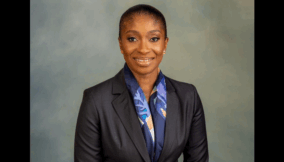
Meet Fred Deegbe, the Ghanian banker turned shoe-maker who inspired by the beauty of a pair of Oxford’s he bought, gave up a career in the finance sector and jumped head first in the murky waters of manufacturing.
Initially friends and family thought his choice unusual but after gaining international acclaim but with international media such as CNN running full length features on the elegance and quality of his wing-tipped footwares, his journey to success is one many across the West-African coast seek to emulate.
As the founder of one of the most popular brands on the shores of Ghana and beyond he is one of the few who has been able to
Drive his innovation from conception to finished product; a key hurdle most young, venture capitalists are faced with.
As unstable economic systems serve as detractors for the development in emerging markets, it can be a rough climb staying focused and determined to yield results against all odds.
Explaining how he was able to shift his paradigm from paying attention to the hindrances to being excellence-minded, he credits the prolific author of “Four Steps to Epiphany’, Steve Lank for teaching him the intricacies of strategic thinking and tenacity.
He further said, “Most people in Africa are afraid of untested African product. Though I think that the problem is not necessarily the consumer rather the problem is that those of us who have started things here have too optimistic expectations on how quickly things are supposed to take off.
“In most parts of the world, many companies would have been around for about 150 years before even getting any recognition. So I think that people need to be a little more patient and strategic when planning their corporate journey.”
Fred is also very critical of the attitude to business of some young entrepreneurs who complain about existing systems without seeking alternate means to create solutions to the problems. He said, “If there is no market for what you are doing that means you are wasting everybody’s time. Once you can prove that there is a market for it you can prove that there are people who are ready to pay down payment there are certain things you can do. For example, if you say you want to launch something in December, you start letting investors know what is coming and try to get some kind of commitment from them.”
With the continent plagued with social unrests and burdened with restrictive policy reforms, stakeholders say that these issues make it relatively difficult to do credible business without dealing with the taint of corruption.
Giving some tangible projections for governments across board to consider, he expressed “I think we need a lot more start-up oriented finance houses. A lot of the normal transaction institutions are like banks. I even had a bad experience with a client some times last year when we were trying to get a loan we had been banking for three years and all we wanted was US $500,000 but they still wouldn’t given us a loan without showing things that involved landed property.
“These institutions are not tailored to encourage start-up organization even when the people involved are ready to make sacrifices.
“Also we find that the tax cultures in most parts of Africa are really difficult to comprehend. I would like a situation where at least one year in tax rebates is given to a business to stabilize before they start paying those taxes,” he said.
With young business-minded people in other climes actively engaging in cross-border enterprise deals in a bid to drive company growth, however with the small number of African businesses registered to do business in more than their host nation’s, the vast opportunities that abound within the market remains untapped.
A reason cited for this misnomer is the high degree of regional bureaucracies.
As a young entrepreneur, Fred is making plans to break the cycle and push his business beyond the borders of Ghana. The only difference is that he is determined to do it strategically.
He says, “I believe that before that kind of move is made you should be able to find the right partner in the country you have your sights on. That person should be able to not only get you more clientele and also manage operations ones you decide to move into that country.
“This year is going to be our fourth year of doing business. This is the year we are in stock with retailers and other people that are interested in the brand in not only in Nigeria but in South Africa, in other parts of Africa as well. So I really think one has to be careful when you are crossing the border not to be so anxious rather the focus should be on building strong relationships that even when things are not going as planned, the team is committed enough to source other means of generating sales for you.
Although most indigenous manufacturing companies have been criticized for heavy pricing of products as they place premium value on their merchandize, the people behind the creation of these brand state that the stiff pricing structure running common is primarily driven by the exorbitant cost of raw materials and finding skilled workmanship can be a bit of challenge.
When asked if plans are in the works to transition the shoe-line from a luxury brand to making it more affordable for the mass market, Fred had a dynamic response saying, “Heel the world has never been positioned for the mass market.
“The reason we built heal the world was because we needed a brand that any pan- African can buy and feel that it has just the same as quality as Gucci, Louis Vuitton and Prada. It’s a thing of pride to wear the shoes and we want our clients to get that feeling,” he finished.
Rita Ohai

Join BusinessDay whatsapp Channel, to stay up to date
Open In Whatsapp