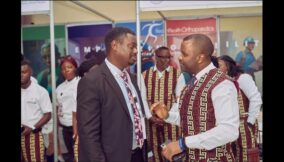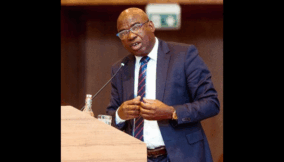
A major boost took place in the South-South to boost export through human capital development processes and training of practitioners in the freight forwarding and export practices.
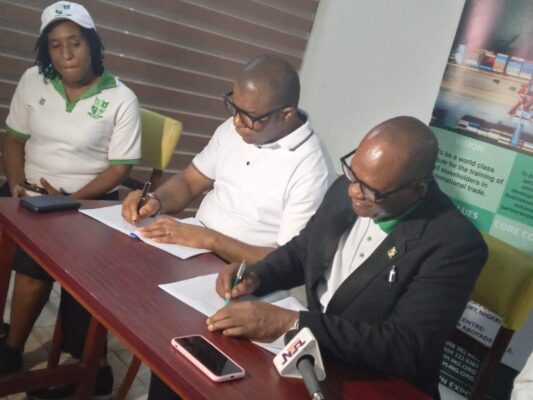
This took place when the Council for Regulation of Freight Forwarding practice in Nigeria led by Igwe Kingsley as CEO and Registrar signed a memorandum of understanding (MOU) with the Institute of Export Operations and Management (IEOM) led by Ofon Udofia, the executive secretary, for the training of practitioners in the Port Harcourt zone.

The deal was signed on Wednesday, April 29, 2026, at the headquarters of the IEOM at Ndoni Street in the New GRA.
According to Igwe, the new training centre in Port Harcourt is the only such training centre in the industry in the region.
It was disclosed that only about 1000 practitioners out of about 30,000 members are professionally trained.
Igwe said most of the flaws in the freight forwarding industry were not always due to laxity or purposeful intentions but ignorance.
Igwe speaks
So when I came on board, one of my priority areas is training of the freight forwarders. I’m a product of training. I undertook a lot of training from advanced professionals.
When I saw that gap here in Nigeria, I said, no, there is need for us to upskill these practitioners and I took it as one of my key points to ensure that even the practitioners themselves are properly trained on the job that they are doing.
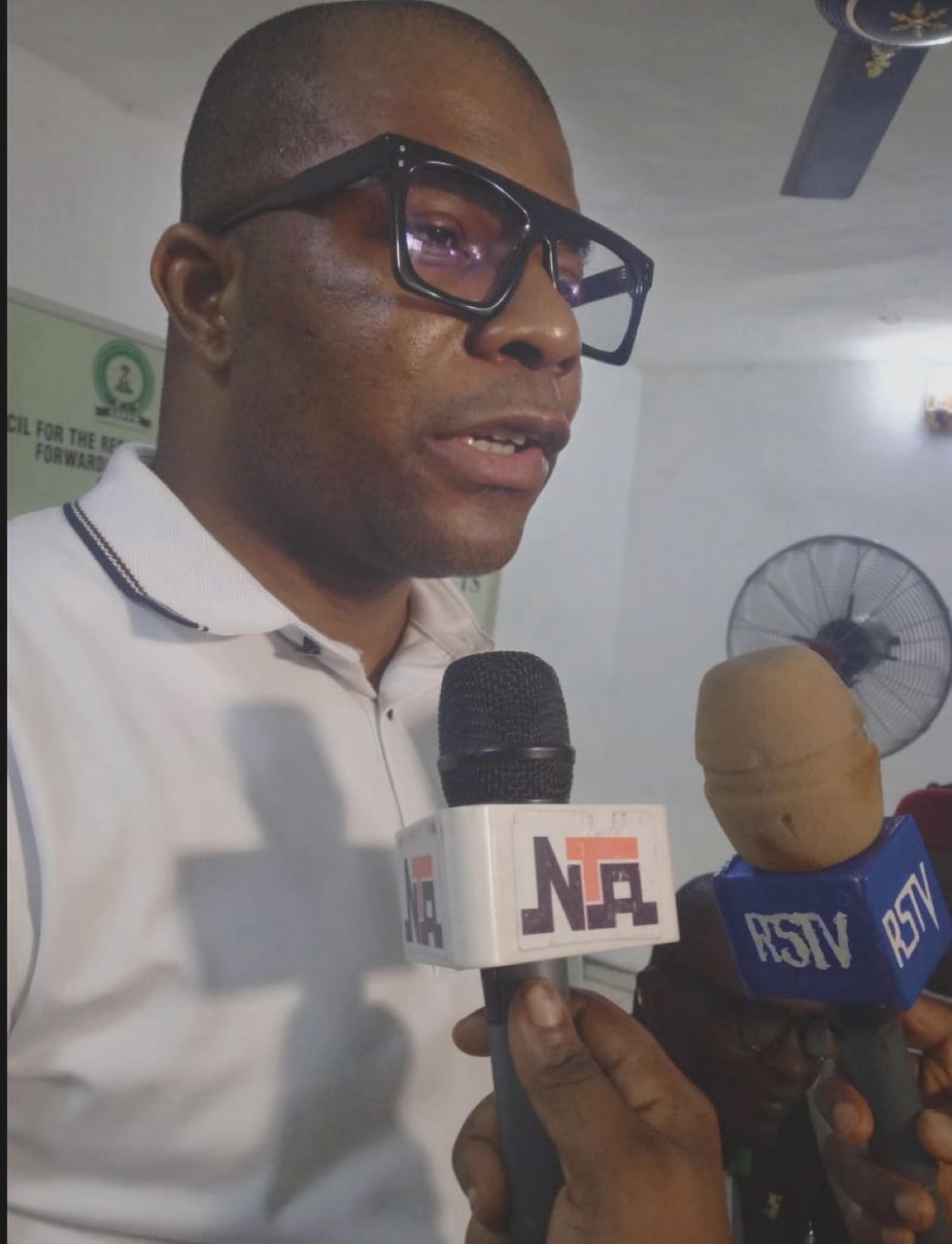
A lot of times when you hear about complaints in the port, we jump into conclusion that freight forwarders or customs agents are dubious. No, they are not. I am a living witness because I practise and have seen where the problems are.
We have regulations, but these regulations are enacted and kept at the shelves in the offices. Those at the helm of affair have not been able to expose these regulations and knowledge areas to the users, people who should use them on daily basis. That is why what is expected of them is not properly done when they engage in their services and then they are being accused of one thing or the other, No, it’s not their fault. I call it ignorance.
It is important to understand what knowledge we are talking about here. Dr. Odofia can bear me witness. During his programmes, he is not only telling you how to package products, that packaging has guided rules you must observe. This must be in line with international treaties and they are standardized. It’s not Nigeria that formulated it.
From packaging to labelling, there are standard rules to follow that are guided by global convention. So that is what we are bringing. That is the knowledge I’m talking about. Talk about Harmonised System (HS) Code.
World Custom Organization is a regulator of HS Code and they have come up with a very nice structure, very simplified method of identifying or classifying items so that it is uniform across the globe.
So whatever is identified, the code used in identifying this microphone, for example, in China, when you come to Nigeria, it’s still the same code. So China doesn’t export it on a different identity but Nigeria now accepts it on a different identity. That will cause a lot of conflicts. So that is what brought about the harmonized system of classification called the HS classification.

So now these people need to know what are those rules guiding this HS Code? How do you identify it? What do they mean? Each number represents something on that HS Code.
So when you are making your declarations, you do not default as long as you have observed the rules. This is the knowledge we are bringing to them. Apart from that also, there are practices and procedures, maybe the local ones here now.
Custom practices have to an extent been standardized, but not completely in Nigeria. In other climes, it is completely standardized, such that whatever process you undertake here in Onne, for example, is supposed to be the same process and stages that you follow when you go to Apapa. But here it is not 100%. We will get there.
Now, we need to also bring them to that level where they need to know at least the basic stages of operation, the procedures, whether custom procedures, court procedures, and every other practice and procedure in the logistics service chain, so they can be grounded.
This brings us to the national single window. There is need to know what it is all about; the structure and what is expected of practitioners.
For example, you want to process import license or export license permits and the rest of them. Which agency do you log in your application to? What is the role of those agencies when it comes to the declaration or clearance that you’re making and all of that? All of this matters, and that is why they need to know. If nobody puts them through and in order, the old mistakes will continue repeating themselves. Now, the consequence will be loss of revenue, especially for the federal government.
Lack of training has always placed Nigeria very low on global ranking on logistics and port processes. It will also tell largely enough on the Nigerian Logistics Performance Index, which is a global benchmark for measuring the efficiency of logistic services in any country. In the last reading (2022/23), Nigeria ranked about 88.
This means that in each criteria used for measuring logistics performance, Nigeria performed below average, we never cross average. Before then, Nigeria was ranked about 112. So people need to know all of this. By the time all of this is taken care of and people can easily and efficiently discharge their duties, then we’ll not be talking about problems around logistic services, we will now be talking about maybe infrastructure problem, which is beyond the average practitioner and the regulatory body here.
Udofia opens up
Speaking before signing the MOU, Udofia of IEOM said the Institute of Export Operations and Management was delighted to have this partnership with the Regulatory Council of Freight Forwarders in Nigeria.
He said: Our promise on this is we do all we can, as we’ve been doing, to make sure that people are trained, midwifed, and held into the operations. He rightly said, the knowledge gap in this ecosystem is very wide. You don’t do what you don’t know.
There is no university in Nigeria offering export or trade forwarding as a course. So, I am happy that we have come up with a professional body that will certify people, not only just certify people, but making them have confidence in themselves, making them proud of what they are doing. Now, we will be able to attain what the president is talking about. We cannot get a $1 trillion economy without trade.
The entire fighting in the world today, between many countries is nothing but trade war. So we cannot be at the backline watching them. What we intend to do as an institute in collaboration with the council is to pass knowledge; implement knowledge; and move knowledge. We will see how we can use the knowledge.
Nigerians are too intelligent. If a young man can sit down and do Yahoo and is getting money from people’s accounts, if such knowledge is transferred into meaningful things, transferred into clearing, forwarding of cargo, you will do more. So Nigerians are not dubious. They are honest. All they need is direction.
So in conjunction with the council, we are going to give the young people of this country; students, businessmen alike, a direction to do things right and still make money in a more prestigious way.
So on that note, I will say we sign the MOU and set the ball rolling.
Challenges of training in Niger Delta
Speaking further in an interview on challenges of training in the oil region, Udofia said: You know, we were answering an oil belt and we’re known for palm oil and later crude oil and gas. Crude oil actually spoiled this region because the IOCs were paying people to train young people bringing people to receive training, paying their transport and feeding them so they got used to that.
So the major challenge we have is that people don’t want to pay for training. They don’t want to pay for services. It becomes an issue because we are limited by guarantee and cannot train people free of charge. We are not funded by government. People are supposed to pay for their training but it is not in their upbringing.
The narrative is actually changing because a lot of people want to do export. We just concluded training of a batch today and we took them to the port, exposed them to Customs operations, took them to the terminal for them to really see the practical angle of it. So, I believe with this collaboration, people will be made to understand that knowledge is never free. We should also make adults to understand that.
Then besides that, we have also tried to find a way to bring the training a little bit cheaper and easier by building an academy, what we call IEOM Export Academy. Under that academy, we have something for the youth and students, what we call Student and Youth Export Development Programme.
If you see Chinese people coming into Nigeria, they caught them young to do things and export. They are taught to export, not to import, so we want to imbibe that in this collaboration to make sure our students are taught how to export, our students are also made to understand that you don’t just carry your portfolio and go to the port and become a forwarding agent, that you need to be educated.
So the major challenge we are having is still people not willing to pay. But I believe God that we are going to solve that very soon.

Join BusinessDay whatsapp Channel, to stay up to date
Open In Whatsapp