The Enugu State Government has reaffirmed its commitment to achieving an open defecation-free (ODF) status, despite concerns raised by UNICEF over the high number of children exposed to contaminated water due to inadequate sanitation facilities.
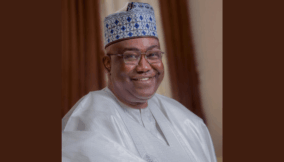
Peter Ndubuisi Mbah, governor Enugu state, represented by Chidiebere Onyia, the Secretary to the State Government, made this known during a two-day ODF roadmap review and stakeholders’ consultative workshop held in Enugu, organised by the State Ministry of Water Resources in collaboration with UNICEF.
Onyia described the ODF initiative as a crucial step toward protecting public health and restoring human dignity.
He stressed that the programme must be approached holistically, with government providing leadership, clear policy direction, and an enabling environment to ensure success across all local government areas.
“This is not just a plan but a call to action. We need a roadmap that delivers measurable results, not one that will be kept on the shelf,” Onyia said.
The workshop brought together stakeholders from government, development agencies, civil society, and the private sector to chart strategies for improved sanitation.
Onyia noted that open defecation is both an environmental and public health issue, requiring coordinated and sustained efforts.
He commended UNICEF, the State Commissioner for Water Resources, the Enugu State Rural Water Supply and Sanitation Agency (ENRUWASA), and the Civil Society for Basic Accountability (CSBA) for their roles in advancing sanitation efforts.
He also acknowledged the contributions of the Ministries of Education and Gender Affairs in promoting a multi-sectoral approach.
According to Onyia, achieving ODF status will depend on strong collaboration among all stakeholders, including increased private sector participation, particularly in urban areas where infrastructure must keep pace with rapid growth.
He also emphasised the need for improved access to water, noting that sanitation efforts cannot succeed without reliable water supply.
He urged stakeholders to move beyond policy formulation to implementation, with clear accountability and monitoring mechanisms saying “Plans often fail not because they are poorly designed, but because they lack ownership by those responsible for execution,” he added.
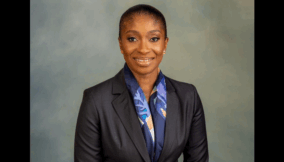
Emily Rand UNICEF’s Chief of Water, Sanitation and Hygiene (WASH) in Nigeria, highlighted the severe but preventable impact of poor sanitation on children’s health and that a high percentage of children are exposed contaminated water.
“For UNICEF, children remain the priority. Too many are exposed to unsafe water, and we already know the solution—access to toilets. The question is what we will do to ensure every child has one,” she said.
Rand called on communities and local leaders to take ownership of sanitation challenges, stressing that progress must begin at the grassroots level. She added that UNICEF will continue to support the government through capacity building, technical assistance, and system strengthening initiatives.
Ben Collins Ndu Jnr, state commissioner for Water Resources, described open defecation as a major health risk linked to diseases such as typhoid, cholera, and dysentery.
He cited the recent declaration of Igbo-Etiti Local Government Area as ODF as evidence that the goal is achievable, but noted that more work remains to be done.
“This workshop is about aligning priorities and mobilising the commitment needed to achieve a truly open defecation-free Enugu State,” Collins said.
He also acknowledged the support of development partners, including UNICEF and WaterAid Nigeria, urging stakeholders to focus on practical, results-driven strategies, emphasising that sustained investment and cross-sector collaboration will be critical to the success of the ODF roadmap.

Join BusinessDay whatsapp Channel, to stay up to date
Open In Whatsapp