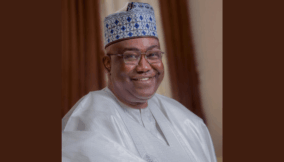
As political permutations gradually begin to take shape ahead of the 2027 general election, the situation in Enugu State presents an interesting case study. At the centre of this is Governor Peter Ndubuisi Mbah, whose administration appears to be positioning itself in a way that could limit the strength and cohesion of potential opposition forces.
Governor Mbah’s emergence in the 2023 governorship election was, by many accounts, not without its challenges. Despite being widely regarded as a strong candidate under the platform of the People’s Democratic Party (PDP), he had to contend with the wave of the “Obidient” movement, inspired by Peter Obi.
The movement resonated strongly among many Igbo voters who were driven by the aspiration for a president of Igbo extraction.
Nonetheless, the PDP’s longstanding dominance in Enugu State played a decisive role in securing Mbah’s victory. The state has historically maintained loyalty to the party, a factor that continues to shape its political landscape.
Looking ahead to 2027, analysts suggest that Mbah’s most formidable challenge might have arisen from a possible defection to the All Progressives Congress (APC). However, given the current political climate and the perceived weakening of opposition structures within the state, such a scenario appears unlikely to significantly alter the balance of power.
Beyond party politics, Governor Mbah has embarked on series of ambitious projects aimed at consolidating public support. His administration’s focus on grassroots development is evident in the rollout of Type-2 primary healthcare centres across the state’s 260 wards. These facilities, staffed with resident doctors, are designed to bring quality healthcare closer to the people.
In the education sector, the government has introduced Smart Green Schools across all wards, alongside plans for 17 Smart Secondary Schools—one in each local government area. These institutions are positioned as tuition-free and technologically driven, with the aim of equipping students with practical skills for self-reliance and employment.
To support this vision, the administration attracted investment from Haier, which is involved in the local production of digital learning tools such as tablets, laptops, and smart boards. This initiative not only supports the education system but also contributes to job creation.
The government has also focused on reviving moribund industries to stimulate economic growth. Notable among these are Nigergas Company Limited, one of Nigeria’s oldest gas bottling firms; the iconic Hotel Presidential, which has been fully reconstructed and recommissioned; the International Conference Centre; Sunrise Flour Mills; and Enugu United Palm Products Limited. These interventions, often executed through public-private partnerships, are aimed at industrial rejuvenation and employment generation.
However, the administration has not been without criticism. Concerns over taxation policies initially sparked public outcry, with residents and business owners lamenting increased financial burdens.
In response, the government established a review committee, leading to downward adjustments. More recently, authorities directed that petty traders without lock-up shops should be exempted from certain levies—a move seen as a relief for the informal sector.
Politically, Enugu’s zoning arrangement remains a critical factor. Since the return to democratic rule, the governorship has rotated among the three senatorial zones: Enugu East, Enugu West, and Enugu North. From Chimaroke Nnamani (Enugu East) to Sullivan Chime (Enugu West), and then Ifeanyi Ugwuanyi (Enugu North), the current cycle has returned power to Enugu East with Mbah.
This arrangement suggests that Enugu West may strongly support Mbah’s second-term bid in anticipation of reclaiming the governorship thereafter. Such political alignment could significantly reduce dissent from that zone.
Within Enugu East itself, Mbah appears to enjoy substantial backing from influential stakeholders.
A recent endorsement rally by Awkunanaw communities underscored this support, with notable figures such as Ken Nnamani and Jim Nwobodo lending their voices.
In Enugu North, the governor’s governance style and project delivery have reportedly helped him build bridges across political divides, further strengthening his position.
Taken together, these factors suggest that Governor Mbah has strategically positioned himself ahead of 2027. While opposition voices may exist, the interplay of incumbency, development initiatives, party dominance, and zoning dynamics could make it difficult for challengers to mount a formidable contest.
As the political season gradually unfolds, Enugu State will remain a key battleground to watch—one where strategy, structure, and sentiment will ultimately determine the outcome.

Join BusinessDay whatsapp Channel, to stay up to date
Open In Whatsapp