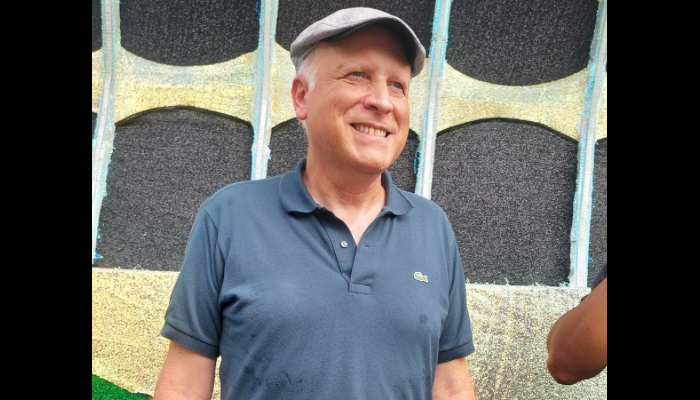
Coming to Nigeria in the capacity of the Ambassador of Portugal still excites Paulo Martins Santos.
Having been in that position for over two years now means that the Portuguese Ambassador has visited some parts of the country and is a bit knowledgeable about Nigeria.
But his visit to Cross River State, particularly, Calabar, the state capital, was memorable.
Ambassador Santos, who was among the high-network personalities at the 2025 Carnival Calabar, felt quite different in the city, fondly called ‘Canaan Land’ by the many who cherish its tranquility, unique culture and tourism trappings.
The visit, his first, was both historical and one filled with nostalgia.
The ambassador was proud of stepping his feet on the land once explored by his brave countrymen about 500 years ago, as the Portuguese were the first Europeans to set foot in Calabar.
Santo was at home in Calabar and had no culture shock at all.
“I have been travelling in this country. But when I arrived here, I really didn’t feel a big cultural shock because Portugal and the African continent in general have a very long history including Nigeria. We were the first European visiting this area,” the ambassador confessed.
“This happened more than 550 years ago. Of course, as you can imagine after all this time, there are a lot of shared experiences and shared history that makes Portuguese people really don’t feel much of a cultural shock whenever we come to Africa,” he explained.
In his case, he explained further that having been living in Nigeria for more than two years, he has long acclimatized to the country’s life and realities.
“Let’s say that I got used to all the Niger way of life and I feel very well in all corners of this country”.
In his assessment of the hospitality of the people he has been meeting in his visit, particularly in Calabar, Ambassador Santos confessed, “It can’t get any better than this again. I just arrived yesterday, but the opportunities that I have been given by the people here who have been hosting me and accompanying me are really interesting”.
Beyond being in Calabar and getting a good glimpse into what the city and what Cross River State represents, the ambassador also went briefly to Akwa Ibom State and had the opportunity to see a bit of the countryside of this country. “So far, I am very impressed with the places I have visited,” he enthused.
Narrowing his excitement to Calabar, the ambassador confessed once more saying, “It is a beautiful place. Of course, the fact that it is near the coast and the ocean for us Portuguese is always a big plus because we are maritime people. So, I couldn’t feel better than what I am feeling now,” he said.
Sharing his thoughts on the 20th edition of the Carnival Calabar, which he participated in, Santos was impressed by the great performances and huge crowd at the Carnival Calabar 2025, which was his first experience and visit to the city.
“Very good, because I already had the opportunity even if I just arrived yesterday, I had the opportunity to go straight to the Children’s Carnival.
‘So, the first lady was there and it was a beautiful parade. I thought it was more for children, but it was a very serious event.
“I was impressed by the quality of what we saw yesterday and I was told that was just the tip of the iceberg and that many other things would be coming.
“So, I am now looking forward today to the Bikers parade and tomorrow the big main event,” he confessed.
As well, he is impressed that the carnival has been sustained for 20 years and running. For him, 20 years is still a relatively short time for a tradition like this carnival, hence it needs, maybe more years for the festival to take hold globally.
Bearing the above in mind, Santos recommended a more global campaign for the carnival so that more people are made aware of it globally.
“People are aware of the carnivals in Brazil, which are the first and very big events and also some of the Caribbean festivals. But I think a lot of people, for instance in Africa and in Europe are not aware that this festival exists. So, that would be my recommendation to really try and make a sort of a global campaign to raise awareness that this festival exists, how good it is and to see if we can also attract a more global audience to it in the next editions,” he recommended.
Comparing notes, the Portuguese ambassador noted that like in Calabar, carnival in Portugal is a very big thing and that it is the reason carnival in Brazil is so big. “As you know, Brazil used to be a part of the Portuguese expansion, let’s say we were there for 300 years and it was mostly through us and our traditions that then the Brazilians made this a big event and now even much bigger than what it is in Portugal.
“But in Portugal, it is, let’s say, the original carnival that we have been celebrating since the Roman Empire. The carnival is a very old holiday in that part of Europe and it comes from the Roman Empire tradition. So, it is about 2,000 years old tradition”.
Having visited many states in the country, the most attractive thing in terms of culture, according to him, is the diversity of the country.
“It makes each state and sometimes even regions within the states to be very unique. So, whoever thinks that Nigeria is monolithic, that person is very wrong. There is a huge variety, a big palette, let’s say of cultural manifestations here and this is very much because of the structure of this country with all its different languages, religions and ethnicities. That for me is the most beautiful thing about Nigeria,” he noted.
He is also impressed that the diversity reflects in culture and culinary offerings too.
“I like jollof rice. I really got used to it”.
Meanwhile, Ambassador Santos’ visit is going to yield the expected fruit as he promised to become an ambassador of Nigerian culture to his people and other Europeans in Nigeria.
“I will be telling them about this carnival. We have a relatively big community of Portuguese people here. I will definitely tell them about this and recommend them to come next year,” he assured.
Looking at the rich and huge carnival float on a 12-kilometre carnival route, he called for the preservation of the float materials, instead of discarding them at the end of every year’s carnival.
“We usually keep the structures that we use for carnivals that are really relevant in terms of symbolism and history.
We keep them in museums. So, most of it is reused and recycled. But if some structure is really symbolic and relevant we keep it in a museum,” he concluded.

Join BusinessDay whatsapp Channel, to stay up to date
Open In Whatsapp