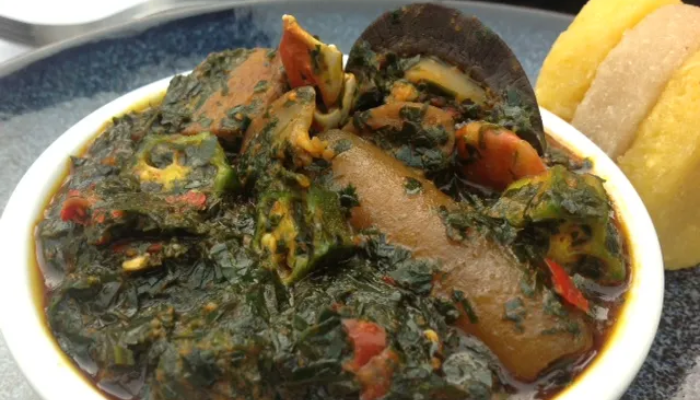
Editan soup is a nutritious, slightly bitter vegetable soup native to the Efik and Ibibio people of Cross River and Akwa Ibom states in Nigeria.
It is typically made with shredded editan leaves, waterleaf, assorted meats, seafood, and palm oil.
This soup is famous for its perfect balance of sweetness and bitterness.
It is pertinent to note Nigeria is well known for bitter soup.
Editan Soup, a unique Efik and Ibibio soup that tells the Unique Nigerian culinary story of the South South is an authentic food tradition.
My culinary conversations with Faustina Sanya, a Mass Communication Student of University of Lagos, one my young reporters, enabled us to take a swipe at this bitter delicacy.
Editan Soup, a cherished delicacy of the Efik and Ibibio people of Akwa Ibom and Cross River States is more than a simple meal.
Read also: 3 Ghanaian soups to recreate this weekend
It represents centuries of cultural wisdom, traditional food processing techniques, medicinal knowledge, social identity, and intergenerational heritage transmission.
These qualities make it a compelling candidate for inclusion on UNESCO’s Intangible Cultural Heritage (ICH) List.
Across many cultures, bitterness is often associated with discomfort, yet among the Efik and Ibibio people, bitterness is celebrated as a symbol of wellness, maturity, resilience, and nourishment.
At the centre of this culinary philosophy is the Editan leaf, a distinctive indigenous vegetable renowned for its naturally bitter taste and remarkable nutritional properties.
The story of Editan Soup began long before the cooking pot was placed on the fire.
It starts in family compounds, village farms, local markets, and community kitchens where knowledge about cultivating, harvesting, processing, and preparing the Editan leaf has been passed down from one generation to another.
Mothers teach daughters, grandmothers guide grandchildren, and experienced cooks mentor younger women and men on the delicate art of preparing the leaf correctly.
This transmission of knowledge embodies one of UNESCO’s key principles for intangible cultural heritage preservation.
What makes the soup particularly fascinating is the elaborate preparation process required to transform the bitter leaves into a celebrated delicacy.
The leaves are carefully shredded, pounded, and repeatedly washed in hot water to reduce excessive bitterness while retaining their unique character.
This balancing act requires skill, experience, and intuition.
Too little washing makes the soup overwhelmingly bitter while too much washing strips away both flavour and nutrients.
The process reflects an indigenous understanding of food science developed through generations of observation and practice.
The preparation itself is a cultural performance. Assorted meats, stockfish, smoked fish, periwinkles, crayfish, palm oil, and spices are all simmered into a rich broth before fresh waterleaf and the processed Editan leaves are introduced.
The result is however a deeply flavoured green soup that embodies the culinary identity of Southern Nigeria.
Served with fufu, eba, pounded yam, or semovita, this soup is often the centrepiece of family gatherings, traditional ceremonies, cultural festivals, and important social occasions.
Beyond its culinary appeal, Editan Soup occupies a unique position where food and traditional wellness intersect.
For centuries, local communities have valued the soup not merely as nourishment but as a functional food believed to support the overall health and vitality of the body.
This traditional knowledge remains one of the most compelling aspects of its cultural significance.
Modern nutritional studies on bitter leafy vegetables have highlighted the abundance of dietary fibre, vitamins, minerals, and antioxidants present in indigenous vegetables such as Editan.
The leaves contain Vitamin A, which supports healthy vision, skin health, and immune function, while Vitamin C helps strengthen the body’s natural defence system and promotes tissue repair.
The vegetable also provides essential minerals such as iron, calcium, potassium, and magnesium, all of which contribute to healthy bodily functions.
The high fibre content of Editan Soup supports digestive health by encouraging proper bowel movement and maintaining a healthy digestive system.
Even traditional healers and elders have long associated the soup with cleansing the body and promoting digestive wellness.
Today, nutritional science increasingly supports the importance of fibre-rich diets in maintaining gut health and reducing the risk of chronic illnesses.
Editan leaves are also rich in antioxidants, natural compounds that help protect the body’s cells against oxidative stress.
These protective substances may contribute to reducing inflammation and supporting long-term health. The soup’s combination of vegetables, seafood, and protein creates a nutrient-dense meal capable of supplying essential amino acids, healthy fats, vitamins, and minerals within a single serving.
In many Efik and Ibibio communities, Editan Soup has been recommended for women recovering after childbirth. Elders believe the nutrient-rich ingredients help restore strength, replenish blood, and accelerate recovery.
While some of these beliefs remain rooted in oral tradition, they form an important component of the cultural narratives surrounding the dish and illustrate how food functions as a repository of indigenous health knowledge.
There are also beautiful stories and folklore associated with Editan Soup. Among some communities, the dish is linked to fertility, vitality, and womanhood.
Stories passed down through generations speak of newly married women being taught the preparation of Editan Soup as a symbol of readiness to manage a household and preserve family traditions.
Whether viewed as folklore or cultural practice, these narratives demonstrate how food extends beyond nutrition to become a marker of identity and social belonging.
The cultural significance of Editan Soup extends further into agriculture and biodiversity conservation.
The continued cultivation of Editan plants encourages the preservation of indigenous crop varieties that might otherwise disappear under pressure from modern agricultural systems.
Protecting the culinary tradition therefore also contributes to safeguarding local biodiversity and sustainable food systems.
Around the world, UNESCO has increasingly recognised food-related traditions as important elements of humanity’s shared cultural heritage.
From the Mediterranean Diet to traditional Japanese Washoku cuisine and the culinary traditions of several nations, food heritage has become an essential component of global cultural preservation efforts and so. Nigeria’s rich culinary landscape deserves similar recognition.
Editan Soup stands as one of the country’s strongest examples of living food heritage.
The soup satisfies several UNESCO Intangible Cultural Heritage criteria.
It is a living tradition transmitted across generations and it promotes a sense of community identity and continuity as well as embodies indigenous knowledge relating to agriculture, nutrition, health, and food preparation.
It contributes to cultural diversity while encouraging sustainable practices.
Most importantly, it remains actively practised by communities that continue to cherish and preserve it.
As conversations around food heritage, cultural tourism, and indigenous knowledge gain momentum globally, Editan Soup offers Nigeria an opportunity to showcase a tradition that is uniquely African, deeply rooted in local history, and globally relevant.
The narrative is one of resilience, health, community, and cultural pride.
Far beyond its famous bitterness lies a rich heritage that deserves recognition, protection, and celebration.
In every steaming bowl of Editan Soup is a living archive of Efik and Ibibio history, a testament to ancestral wisdom, and a reminder that some of humanity’s greatest treasures are preserved not in museums but in kitchens, family recipes, and shared meals.
As Nigeria seeks culinary traditions worthy of UNESCO Intangible Cultural Heritage recognition, Editan Soup emerges not merely as a beloved regional delicacy but as a cultural treasure whose preservation would benefit future generations and enrich the world’s understanding of Africa’s remarkable food heritage.

Join BusinessDay whatsapp Channel, to stay up to date
Open In Whatsapp