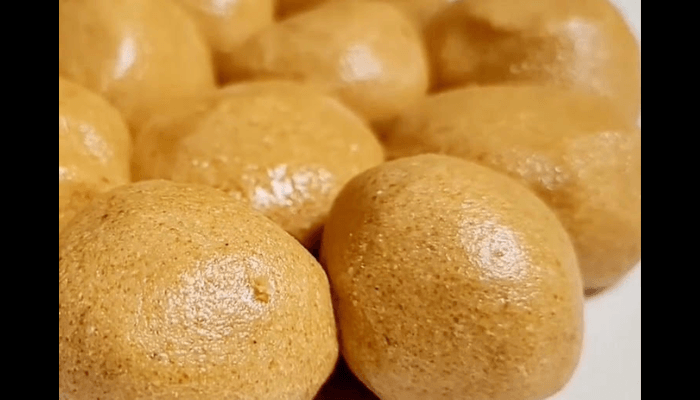
Maize-peanut balls (also known as dakua, dzowe or donkwa) is a street snack made from roasted, dried and milled maize and groundnuts. It is a Nigerian (Hausa) delicacy as well as a cereal and groundnut based snack.
It is mainly produced and eaten in the northern parts of Nigeria. However, today, the culinary story is quite different, Damkuwa or Dankwua as we used to pronounce it is now seen and eaten across our great nation, Nigeria.
So, in the bustling streets of Lagos, the vibrant markets of Kano, and the busy roadside stalls of Kaduna, this small, unassuming snack continues to connect people across cultures, classes, and generations.
This peanut-based delicacy may appear simple at first glance, but it carries within it a rich narrative of tradition, resilience, and identity that deserves global recognition by UNESCO.
It is basically prepared from mixtures of cereals, groundnut, ground pepper, ginger, some sugar and salt to taste. The ingredients are usually thoroughly mixed, pounded and moulded into balls that can be eaten without further processing.
It usually would have a careful mix of spices such as ginger and chili. Hand-moulded into small balls, it is sold in transparent nylons or paper wraps by street vendors, many of whom have inherited the craft through generations. Its preparation is both an art and a science, requiring precision in roasting, grinding, and mixing to achieve its distinctive taste and texture.
Dankuwa can also be produced from cereals like maize, millet and sorghum), tiger nuts and groundnuts. In the traditional method of dankua processing, the grains are usually cleaned, toasted and ground together to give a paste.
It is important for Dankwua to be added to the UNESCO Intangible Cultural Heritage (ICH) list because eating the snack remains a traditional practice that strengthens community identity, promotes social harmony, and this is being passed down through generations.
Visit any hausa community and notice the unity and oneness at the tray as each foodie picks the dankwua into the mouth.
Over the years, and even till now, eating and relishing this snack involves the use of songs, dances, and rituals to strengthen family ties, resolve conflict, and educate the youth about their history and values. This has also helped in promoting social harmony and education.
Inscribing this maize snack into the UNESCO ICH list would help ensure its preservation by safeguarding the skills and knowledge associated with it and raising awareness of its importance.
In strengthening community and identity, Dankwua serves as a social link, bringing members of a community together and giving them a strong sense of identity.
What makes Dankwa particularly remarkable is its role as a unifying street food. In a country as diverse as Nigeria, where food often marks ethnic boundaries, Dankwa transcends them. It is enjoyed by schoolchildren, traders, commuters, and professionals alike. Whether purchased at a motor park or shared among friends, it embodies the communal spirit that defines Nigerian life.
Infact, if not added to the list, the existence and continuity of the snack can be at risk of disappearing. This is because the practice of preparing and eating Dankwua faces challenges from being perceived as old-fashioned by new generations. Sourcing traditional materials could be a great challenge as well. This is because maize and other ingredients are getting scarce by the day.
Adding the snack to the ICH list, would help to ensure intergenerational transmission, especially as the knowledge and skills associated with Dankwua are usually transmitted from senior bearers to young people, a process that is crucial for its survival.
Adding it to the ICH list would increase the global visibility and awareness about the uniqueness of the snacks , encourage other communities with similar practices to safeguard their own heritage, and foster cultural dialogue through festivals and meetings.
In an era where globalization threatens to erode local food cultures, there is an urgent need to document and preserve indigenous culinary practices. This is where the recognition of Dankwa as an element of Intangible Cultural Heritage becomes crucial. UNESCO defines such heritage as traditions, expressions, and knowledge that communities recognize as part of their cultural legacy. Dankwa fits squarely within this definition because it is living, evolving, and community-driven.
Elevating Dankwa to the global stage would not only celebrate Nigeria’s rich food culture but also highlight the importance of street foods as carriers of history and identity. Around the world, similar traditional snacks have gained recognition for their cultural significance. Dankwa deserves no less. As Nigeria continues to tell its story through food, Dankwa stands as a powerful symbol of what lies beneath the surface of everyday life. It is a reminder that sometimes, the smallest things carry the biggest stories.
Lets visit the kitchen
Recipe for 8 servings
• 2 cups maize or any other grain
• 2 cups roasted groundnuts
• 2 cups sugar to taste
• 1 teaspoon salt to taste
• 12 pieces dry, red peppers
• 4 tablespoons ground ginger [optional]
• 1 cup of water for a little addition and moulding
Method
• Prepare the maize grains and groundnuts by cleaning them manually.
• Wash the maize thoroughly with clean water and soak in some water for hours.
• Drain and oven-dry for sixty minutes or until dry.
• Meanwhile, dehusk, decoat or peel the groundnut seeds.
• Mill both separately using a local mill, Buchi mixer or blender.
• Sieve the maize flour and groundnut paste separately before mixing them together .
• Add some table sugar and powdered red pepper as you mix thoroughly.
• If you can, blend them again and then mould into small sizeable balls.
• Serve warm as homemade healthy snacks

Join BusinessDay whatsapp Channel, to stay up to date
Open In Whatsapp