As the days go by and weeks turn into months, the Alliance of Sahel States (AES) is getting stronger.
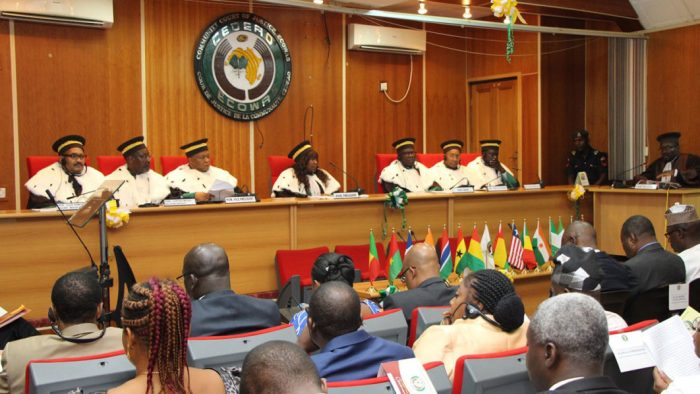
Formed by Burkina Faso, Mali and Niger; three erring member states of the Economic Community of West African States (ECOWAS), in September 2023, and elevated to a confederation on July 6, 2024, after their withdrew from the regional bloc, the new bloc has been firm in its resolve to be free from the influence of France, its colonial master and sadly, distancing itself from the ECOWAS too.
The insistence on freedom by the new bloc has been despite grave sanctions by ECOWAS, including a no-fly zone, border closures, among others, which were counterproductive and lifted later.
Many saw the lifting of the signal of weakness and that ECOWAS took the peace path to maintain regional integration and influence, but Omar Alieu Touray, president, ECOWAS Commission, noted that it was on humanitarian grounds to ease the suffering caused as a result of the blockade.
Amedu Kwasi, a Ghanaian-born security expert, lamented that in reality, the rejection of the olive branch by the Alliance of Sahel State and its smooth sailing since breaking away, has further weakened the ECOWAS and its influence in the region.
“It is sad that Alliance of Sahel State has emerged. But the governments of its member states have been pro-masses and are enjoying huge support and allegiance from the people,” Kwasi noted.
Speaking further, he decried that other remaining member states of ECOWAS are now under pressure to deliver in their various countries as people in the Sahel states are fairing better under military rule than the so-called democracy.
Reacting to the situation, Gabriel Aligwe, an international affairs analyst, noted that the above points to a weaker bloc, amid far declining influence, with Nigeria as the biggest loser.
According to him, a weak ECOWAS means a weak Nigeria, as the country, which has hosted ECOWAS since inception in 1975, has been behind many success stories of the bloc in the past because of its ‘Africa First’ foreign policy trust.
“The many peace missions under ECOMOG in West Africa, which Nigeria financed hugely, and in other troubled African states, where it sent our soldiers, were all because of our foreign policy trust of ‘Africa First’,” he said.
But he regretted that the policy of preferring others to oneself is hurting Nigeria, as most African states hardly reciprocate Nigeria’s good gestures when it matters most.
“For me, the ‘Africa First’ policy is not working because Nigeria is losing influence in its region, Africa-wide and globally today,” Aligwe noted.
Jibola Oyemade, a lawyer and human rights activist, observed that while the ECOWAS has been weak in recent times, the emergence of the Alliance of Sahel States has further weakened the once-thriving bloc, with Nigeria no longer commanding influence like before.
“When the news of the Alliance of Sahel States broke, I was attending a World Bank-sponsored workshop at the Nigerian Institute of Policy and Strategic Studies in Kuru, Jos. Most of the participants vowed that Nigeria would not allow the new bloc to sail through. But it is cruising smoothly and getting stronger by the day,” he said.
He decried that Nigeria, the giant of West Africa, to say the least, has been sleeping, while smaller countries are challenging its influence in the region.
“Many people are not getting it, the ECOMOG days are over, Nigeria’s influence in ECOWAS and Africa is fast declining because of the sad realities back home.
“Others will not respect you when you cannot protect your people from terrorists, when your struggling economy declines your economic power and influence in Africa and when others maltreat your citizens and you keep reinforcing your Africa First policy. Nigeria needs to wake up before losing all to the ‘Big Brother’ bragging right,” he noted.
Toeing the same line, Seine Matheu, an Ivorian resident in Nigeria, decried that the Sahel alliance still exists because Nigeria has not wielded its influence accordingly.
Matheu, whose elder brother and a distant cousin participated in some ECOMOG peace missions, recalled the tales of the bravery of Nigerian soldiers by his brother.
“Who will not quake when ECOMOG soldiers are coming because Nigeria is leading with its brave soldiers, ammunition and strong Naira then,” he said.
He regretted that the Sahel states are taking advantage of the realities in Nigeria today to spite it as no longer country seems ready to lead when Nigeria fails.
“We looked up to Ghana to lead the rescue of ECOWAS from the impending disintegration, but it played politics with it, Senegal and my country also could not because of France’s influence. We only pray that Nigeria will wake up, tidy its house and take up its leadership role in ECOWAS again, else more countries, especially French-speaking will join the new bloc and even Ghana that seems to be romancing them lately,” he warned.
Speaking on the declining influence in ECOWAS, Bem Hembafan, a retired senior security officer, noted that it is expected because of the escalating security and economic challenges the country has been facing in the last decade and half.
“With the devaluation of the Naira, the news of economic hardship and daily killings in the country, which is sadly posted all over the social media by Nigerians, our country is losing its influence and that is why the military boys in Burkina Faso and Mali are bold,” Hembafan said.
“They know we are fighting bandits and terrorists to secure our people here, spending huge funds and even seeking foreign help. With that, they know that Nigeria is not in the right frame of mind to lead military engagements like before.
They are emboldened because apart from Nigeria, they don’t see any other country that can stop the Sahel state from leaving ECOWAS”.
But Kwesi thinks that Nigeria is not abandoning its ‘Africa First’ foreign policy thrust, though its backfiring.
“Like the great Zik of Africa and Kwame Nkrumah, it is ‘Africa First’. That has not changed for Nigeria yet, it is just that the country is passing through a difficult phase now and is slowing down because you need stability of your economy, peace, safety of your own people and prosperity to boost regional or global influence,” he said.
Samuel Onikoyi, a Nigeria academic in Brussels, also toed the line, insisting that Nigeria is nursing wounds from the persisting insecurity challenge and trying to recover from the economic reforms, hence needs time to bounce to its leadership role in ECOWAS.
He also thinks that Nigeria prefers diplomatic ways to resolve the Sahel states issue as using military action requires huge funds, which are not there, some soldiers, which it needs to fight insecurity back home, as well as to ensure regional security coordination and peace.
“My view is that Nigeria led the ECOWAS to take the peace path to ensure regional security. The members of Alliance of Sahel State have boundaries with Nigeria and are most likely some of the routes the jihadists follow,” Onikoyi said.
“Making peace with these countries will ensure a more coordinated security approach that warring with them and giving the jihadists opportunity to invade and kill innocent people”.
The Nigerian diaspora argued that the country is not in the right frame of mind to exert influence, but in choosing peaceful and diplomatic ways, it has also directly and indirectly maintained regional integration and influence.

Join BusinessDay whatsapp Channel, to stay up to date
Open In Whatsapp