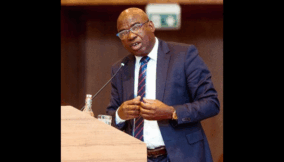
The implementation of the fourth edition of the Foreign Exchange Manual by the Central Bank of Nigeria (CBN) was recently launched in Abuja and will take off on June 1. The new manual is expected to deepen FX transparency, improve liquidity and strengthen market confidence and liquidity. The new policy also aligns with the CBN’s broader vision of ensuring that businesses and individuals have equal access to FX in a transparent and liquid market.
The recent launch of the fourth edition of the Foreign Exchange Manual by the Central Bank of Nigeria (CBN) signals a major step in ongoing efforts to deepen transparency, improve liquidity, and strengthen confidence in Nigeria’s foreign exchange market amid broader economic reforms.
The new manual, which officially takes effect on June 1, 2026, is expected to serve as a fresh regulatory guide for banks, importers, exporters, government agencies, and other participants in the foreign exchange market. For decades, Nigeria’s foreign exchange market has remained one of the most sensitive parts of the country’s economy.
Any movement in the value of the naira directly affects prices of food, transport, school fees, medicines, fuel, manufacturing costs, and the general cost of living.
Businesses depend heavily on foreign exchange to import raw materials and machinery, while investors closely study the stability of the market before bringing money into the country.
For ordinary Nigerians, the foreign exchange market may appear distant and technical, but its impact is felt daily through inflation, jobs, purchasing power, and overall economic confidence. It is against this critical background that the launch of this fourth edition has attracted widespread attention across the financial sector, banking industry, and business community.
In recent years, Nigeria has battled severe pressure on the naira, low foreign exchange liquidity, multiple exchange rates, speculative trading, and declining investor confidence. These structural problems created deep uncertainty for businesses and contributed significantly to inflationary pressure across the country. For years, many manufacturers complained that they could not access foreign exchange to import raw materials, while airlines struggled to repatriate their earnings.
Foreign investors frequently delayed investments because they feared they would be unable to take out profits when necessary, and the country witnessed a wide gap between official and parallel market exchange rates at different periods. The launch of the new manual therefore, represents much more than a routine regulatory update, reflecting the latest phase of a broader effort by the central bank to rebuild confidence in the Nigerian foreign exchange system after years of instability.
Policy vision and strategic direction
At the official launch, the Governor of the Central Bank of Nigeria, Olayemi Cardoso, described the new manual as part of efforts to strengthen Nigeria’s macroeconomic foundation, improve transparency, and restore confidence in the foreign exchange market.
His remarks went beyond the unveiling of a policy document, reflecting the broader direction of the current foreign exchange reforms being pursued by the apex bank under the present administration. Cardoso made it clear that the foreign exchange market is not simply a platform for buying and selling dollars.
According to his policy philosophy, it plays a major role in determining price stability, investment confidence, and the smooth movement of goods and capital within an economy that is connected to global markets. He noted that foreign exchange is a critical enabler in any open economy because it anchors price stability, facilitates the flow of goods and capital, and shapes investor sentiment.
Transparency, consultation, and enforcement
One of the major themes from the governor’s speech was transparency, as he repeatedly stressed the need for openness, accountability, and fairness in the operation of the market. According to him, the new manual is the result of extensive consultations with banks and other stakeholders rather than a document imposed solely by regulators. He emphasized that the document does not represent a regulator talking down at the regulated, but is instead a joint effort that has taken into consideration the concerns of all market participants as much as possible.
This collaborative approach appears designed to address one of the long-standing complaints from market participants who previously argued that policy changes in the foreign exchange market were sometimes sudden, inconsistent, and unclear.
Over the years, Nigeria’s foreign exchange market witnessed frequent policy reversals, multiple directives, and uncertainty over applicable rules, causing investors and businesses to struggle to understand the direction of policy, which led to speculation and reduced confidence. By involving banks and stakeholders directly in the review process, the central bank is seeking stronger market cooperation and greater compliance with the new rules.
Market liquidity and evolutionary shift
Another major aspect of Cardoso’s speech was his focus on liquidity and market depth. According to him, the ultimate goal of the reforms is to create a deeper and more liquid foreign exchange market. Liquidity refers to the ease with which buyers and sellers can trade foreign exchange without causing major disruptions to prices. A liquid market generally inspires confidence because participants know they can enter and exit transactions smoothly.
Cardoso explained that Nigeria’s foreign exchange market has evolved significantly from what he described as a one-way market where the central bank was almost the sole provider of dollars. He said that in the past, the market largely depended on periodic interventions from the central bank, after which participants simply waited for the next intervention.
That legacy system created a heavy dependence on the central bank and reduced private sector participation, while placing enormous pressure on the country’s foreign reserves because the apex bank had to supply large amounts of foreign exchange to support the market.
Cardoso argued that this situation is now changing as the market becomes more dynamic and transparent. According to official disclosures, daily market turnover has increased from about $100 million during the early days of the current administration to between $400 million and $600 million per day. He also disclosed that the market had achieved transactions of up to $1 billion per day on some occasions in recent months. These figures are significant because higher transaction volumes usually indicate stronger market activity and improved confidence among participants.
Cardoso’s comments on reserves drew significant attention during the launch, as he stated directly that reserves are reserves, and are not what you look to fund a market. This statement reflects a major shift “in policy thinking compared to previous years when the central bank frequently used foreign reserves to defend the naira and supply the market. Economists have long debated the sustainability of relying heavily on reserves to support exchange rates. While interventions can provide temporary relief, they become difficult to sustain if external inflows remain weak.
The current approach appears to favor a more market-driven system where supply and demand play a greater role while reserves are preserved primarily as buffers against external shocks. This strategy aligns with broader reforms aimed at attracting more autonomous foreign exchange inflows into the economy through exports, investments, and diaspora remittances.
Understanding policy manual
The Deputy Governor for Economic Policy, Mohammed Sani Abdullahi, whose presentation preceded Cardoso’s remarks, provided deeper technical details regarding the operational provisions of the manual.
His contribution showed clearly that the revised manual is not merely an administrative document, but is a major component of the ongoing transformation of Nigeria’s foreign exchange market and wider financial system.
Abdullahi traced the origins of the reform initiative to the assumption of office by Cardoso, noting it was initiated from the beginning of the administration to restore confidence, improve transparency, deepen liquidity, and strengthen the market.
This demonstrates that the review was not an isolated exercise, but forms part of a broader restructuring of Nigeria’s monetary and exchange rate framework. The deputy governor said the central bank recognised the urgent need for a framework that reflects current realities, aligns with international standards, reduces inefficiencies, and supports a more transparent, rules-based, and market-oriented system. This facilitates clearer price discovery, which is the process through which market forces determine exchange rates based on demand and supply conditions.
The deputy governor stressed that the revised manual is intended to strengthen the integrity, credibility, and effectiveness of the foreign exchange ecosystem, which is central to attracting formal participation. He described the manual as a critical single authoritative reference document that harmonises procedures, clarifies rules, and standardises market practices to improve uniformity across banks, corporates, exporters, regulators, and government agencies.
Crucially, the review process deliberately adopted an Ease of Doing Business approach aimed at removing bottlenecks, ambiguities, delays, and operational inefficiencies that have historically plagued importers, exporters, investors, and families paying foreign school fees.
By reducing transaction frictions and improving processing timelines, the central bank hopes to encourage greater participation within the regulated system rather than informal markets, which contribute to opacity and weaken monetary policy.
Views from stakeholders
The contributions of the Minister of Finance and Coordinating Minister of the Economy, the banking industry leadership, and major commercial bank executives further expanded the significance of the launch, showing a rare level of alignment between fiscal authorities, monetary regulators, and the banking sector.
Representing the Minister of Finance, the Permanent Secretary for Special Duties, Mohammed Sanusi Danjuma, described the manual as a major step in the country’s effort to strengthen its foreign exchange management system.
His remarks reflected the position of the federal government that foreign exchange reform is not solely a monetary policy matter but a key part of Nigeria’s wider economic transformation agenda.
Danjuma noted that the launch comes at a strategic period as the country continues implementing bold fiscal and non-fiscal reforms under the administration of Bola Ahmed Tinubu, including fuel subsidy removal, tax reforms, and exchange rate liberalisation. While these measures were introduced to correct long-standing economic distortions, they initially contributed to rising inflation and increased living costs, creating pressure on households and businesses. The finance ministry’s endorsement therefore signals strong, continued alignment on the reform agenda, with Danjuma noting that policy consistency and predictability are absolutely essential for investment and growth.
Offering a perspective from the commercial banking operators, Oliver Alawuba, chairman of the Body of Banks’ Chief Executives and Group Managing Director of United Bank for Africa, described the revised manual as part of a broader policy direction anchored on transparency, ethical conduct, stronger documentation, and improved oversight.
He linked it directly to earlier initiatives such as the Electronic Foreign Exchange Matching System and the Nigerian Foreign Exchange Code, which are designed to modernise market governance.
Alawuba made a striking comparison between the current foreign exchange market and the situation two or three years ago, noting that in the past, bank customers constantly asked whether banks had foreign exchange available, whereas today the table has been turned to the point where banks now ask customers whether they have foreign exchange to sell. This reflects what banking executives see as a substantial improvement in liquidity and stronger confidence in formal market participation, shifting away from an era of severe scarcity where the central bank was the primary supplier through forced periodic interventions.
Alawuba openly praised the reforms, stating there is now much greater confidence in the Nigerian economy, and assured the apex bank that commercial banks would work closely to maintain a transparent market and support Nigeria’s long-term aspiration of becoming a $1 trillion economy.
…Nwadike, a financial analyst, writes from Abuja

Join BusinessDay whatsapp Channel, to stay up to date
Open In Whatsapp