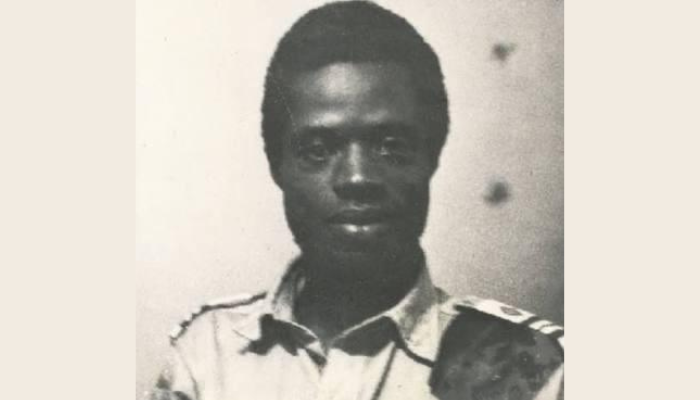
Captain August Okpe, last surviving most senior pioneer pilot, Nigerian Air Force; Chief Pilot of Biafra and Head of Flight Operations; Commander, Tactical Air Command Biafran Air Force and Deputy Chief Pilot, Nigeria Airways; is an exceptional genius. On 22nd June 2026, with Nigerians speculating about his forthcoming birthday, I asked him to profile his typical day as combat pilot during the Nigeria/Biafra War, 1967-1970. He said: “My typical day began with a military courier bringing me Mission Order. I must sign, collect and open it myself since it contained targets to be destroyed. As Commander of the Tactical Air Command of Biafran Air Force, I received my orders direct from Defence Operations located inside State House. This security measure was necessary because Biafran Head of State, General Chukwuemeka Odumegwu-Ojukwu, feared sabotage. I then plotted my flight plan using maps and charts. An eerie silence descended on the house as I drew lines. My family knew I would soon be air borne to face anti-aircraft guns.”
According to him, “As I plotted my flight plan my beautiful wife, Patsy, quietly played with our twin daughters with her head bowed. Years after the war, my mother in-law, Bessie, who lived with us, told me the arrival of the courier man threw her into panic and instant dysentery. She dreaded the prospect of her daughter becoming young widow under war condition. The death of every pilot left a big vacuum in the lives of those he left behind.
“When Captain Ernest Ike crashed and died in the DC. 3 airplane he was flying, we sent a delegation of pilots to break the sad news to his family. His distraught mother rolled on the floor screaming we had killed her husband. Her soulful dirge, or would I say Igbo Spiritual, to her departed son was so unnerving that the female officer in the delegation started crying right there on the floor beside the bereaved. The grieving mother’s apostrophe to her dead son, at the metaphysical level, was also directed at every combat pilot present. One fateful flight awaited every pilot.
“A military vehicle would pick me from my house direct to the airport where my plane was waiting. I took off immediately after pre-flight inspection not knowing what awaited me in the skies above. The cockpit could be your funeral pyre if hit by one of the shells angrily hauled at you from the dense jungle below.”
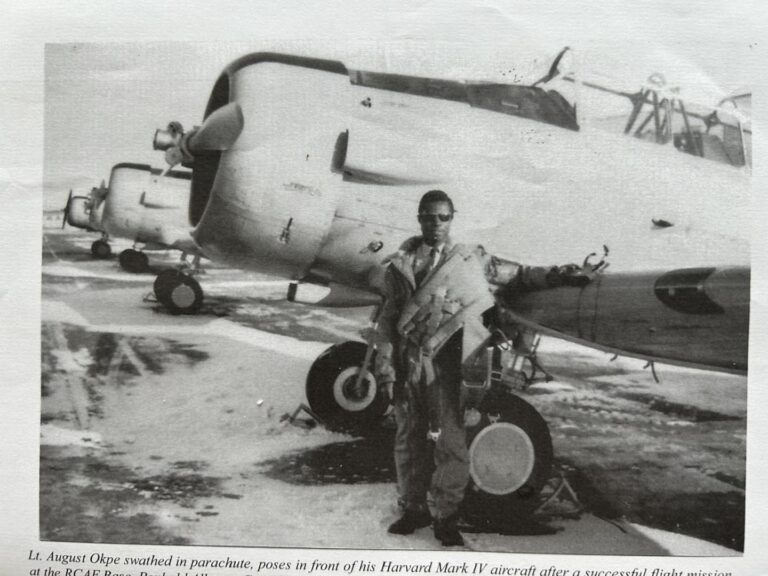
A product of Government College, Umuahia; Captain August Okpe excelled in Mathematics and Further Mathematics. He was among the first batch of pioneer trainee-pilot candidates (nucleus of the nascent Nigerian Air Force) sent for flight training late 1962. At the prestigious Central Officers School, Royal Canadian Air Force, Centralia, Ontario, he commenced his training before moving to the apex Royal Canadian Air Force Flight School, Penhold, Alberta, Canada.
To become Military Instructor Pilot, Captain August Okpe trained at the Royal Canadian Air Force Flight Instructors School, Moose-Jaw, Saskatchewan, Canada; School of Instructional Technique, Royal Canadian Air Force, Clinton, Ontario, Canada; and the foremost United States Air Force Flight Safety Centre, Valdosta, Georgia, USA. He was privileged to graduate from the flight academies of the two most advanced air forces in the world- the Royal Canadian and US Air Forces. He also attended the University of Southern California, (College of Aerospace Science), Los Angeles, Calif., USA.
It is noteworthy before the declaration of Biafra in May 1967, Captain August Okpe had already attained high offices and professional excellence as Instructor Pilot and Staff Officer Operations, Nigerian Air Force Headquarters, Marina, Lagos. He was also the First Air Accident Investigator and Chief of Flight Safety. Commendably and with precocity, he attained these lofty heights at a tender age. He was soon operating a variety of aircraft for Nigerian Air Force and Eastern Command. Captain August Okpe exclusively piloted Colonel Chukwuemeka Odumegwu-Ojukwu’s aircraft before the outbreak of hostilities in 1967.
When Biafran Air Force was established in 1967, General Ojukwu appointed him Biafran Chief Pilot and Head of Flight Operations and later Commander, Tactical Air Command when this unit was formed in April 1969 by the Swedish nobleman called Count Carl Gustav von Rosen. Following this appointment, the Head of State graciously approved the reduction of Captain August Okpe’s flight engagements as Presidential Pilot to His Excellency. This change was necessary for the young pilot to focus on the Tactical Air Command operations involved in purely combat flights.
The Port Harcourt-born Captain August Okpe who hails from Ihiagwa Owerri fought side by side with foreign Pilots like Count von Rosen, “Phantom of the Biafran skies;” and the late Swedish Brothers, Captains Gunnar Haglund and Martin Lang. Others were Captains Jan Zumbach, Gil Pinto de Sousa of Portugal, Leclerc (late), Cessou(late), Durang, formerly of the French Air Force; Captain Fred Herz (late), formerly of the Luftwaffe and many others who responded to the clarion call to defend morality by force of arms.
General Ojukwu also established Biafran Airports Board charged with the overhead function of building strategic airports in different locations. The lone Uli Airport, codenamed Annabel, was inadequate calling for other airports. The board had Mr. Clement Onyemelukwe as its Chairman; Dr Alex Ekwueme, (later Vice President of Nigeria) as Head of Planning; Captain August Okpe, Head of Operations and Mr. Chris Efobi, Head of Administration. Captain August Okpe was the youngest in the management board of this parastatal that successfully built Uga and Okija Airports. Another airport at Ntigha was in gestation before the war ended.
It was in Captain August Okpe’s capacity as Biafran Chief Pilot and Head of Flight Operations that he made the test flight into Annabel upon its completion to ascertain its operational functionality and viability. His assessment was important as the facility was built as Joint User Airport System catering for military and civil operations. Uli Airport (Annabel) passed his flight test with flying colours. Almost immediately, large scale operations started. Annabel had the sombre reputation as the second busiest airport in the world after O’Hare International Airport in Chicago, Illinois, USA.
When the war ended on 15th January 1970, the aviation maestro was promptly arrested and flown to Lagos where he was incarcerated at the Ikeja Army Barracks. A hostile Military Tribunal established by the victorious Nigerian Head of State, General Yakubu Gowon, tried and dismissed him from Nigerian Air Force; unlike his other colleagues who were reabsorbed. The outcry was that Captain August Okpe destroyed a lot of economic and military installations from the air. In short, the disgruntled officers who populated the tribunal maintained it was this young man that helped Ojukwu prolong the war.
Leaving the tribunal venue, the young pilot hurried to Enugu to be with Patsy and their three kids. But his efforts to travel overseas and convert to civil aviation was frustrated as the jittery Nigerian Intelligence deemed him a security risk not to be let out of sight. This angered him into joining matters with the authorities that finally let him travel. He went to Acme School of Aeronautics, Cranfield University, Bedfordshire, UK; and other civil aviation institutes where he sorted out his papers.
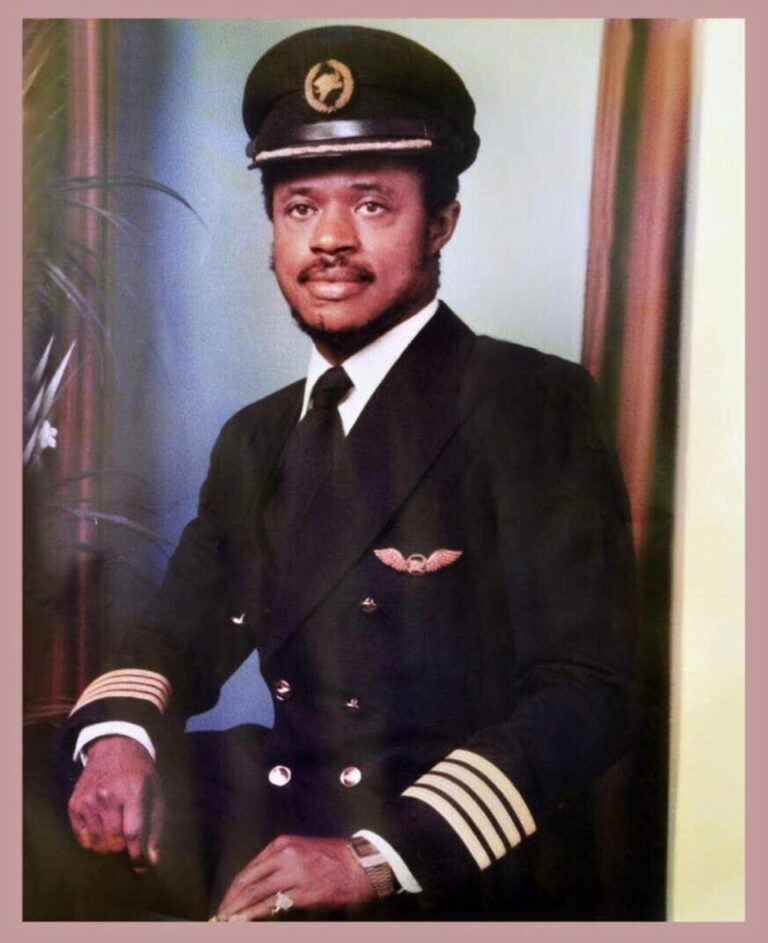
Returning to Nigeria he began flying for Nigeria Airways where he became Deputy Chief Pilot. His background as military pilot aided his rapid promotions. Nigeria Airways sent him for type conversion trainings in the following civil aviation schools: The Fokker Aviation Flight School, Amsterdam, Holland; Boeing Airplane Flight School, Seattle, Washington, USA; Airbus Flight School, Toulouse, France; and British Airways Flight School, Gatwick, UK.
By the time he retired from Nigeria Airways in 1999, Captain August Okpe had flown as Captain or Instructor Pilot a large number of aircraft types the Western World manufactured. These included, but not limited to, the Harvard Mk4, the T33, T37, Alloutte II & III Turbine Helicopters, the DC3, Fokker 27, Fokker 28, Boeing 737, the Airbus A310-200 wide-body jet and Douglas DC-10-30 Jumbo Jet. He also recorded over 15,000 hours of Military and Civil flight time to destinations domestic, regional and intercontinental as far afield as Europe, Asia, the Middle East, North and South America. After retirement, he was honoured with appointment as Specialist Air Accident Investigator for the Federal Government of Nigeria.
In 2009, Captain August Okpe published his 602-page masterpiece titled, ‘The Last Flight: A Pilot Remembers the Air Force and the Biafran Air Attacks.’ His Magnum Opus is the only air-war literature on that conflict written by a combat pilot, whether on the Biafran or Nigerian side. The work is read globally (Published by Aeromax International Ltd, 12A Oba Akinjobi Street, GRA Ikeja, Lagos State, Nigeria. Phone: + 234 81 3515 9313 and +234 90 6192 5233).
Captain August Okpe’s exploits in aerial warfare received commendations in international books written by Western journalists, writers and dogs of war alike. He is cited in the following books: (1) “The Mercenaries,” by Anthony Mockler, Macmillan Publishers, United Kingdom. (2) “Soldiers of Fortune,” by Sterling Seagrave of USA. (3) “Gerillapilot i Biafra,” by Gunnar Haglund, Sweden. (4) “Shadows: Airlift & Air War in Biafra,” by Michael Draper, UK. (5) “Biafra’s War (1967-1970),” by Al Venter, South Africa. (6) “The Secret Bombs of Iva Valley: The First True and Full Account of BIAFRA’s Research and Armament Production (RAP)…From the Horse’s Mouth,” by Dr. Edward U. Chukukere, Nigeria.
Of the most senior pioneer pilots of Nigerian Air Force, Captain August Okpe is the only officer alive today. That makes him the last surviving most senior pioneer pilot of Nigerian Air Force. He paid glowing tributes to his fourteen mates who are deceased, namely: (1) Capt. Jaspar Onyeji (2) Capt. D.A.F Onyirimba (3) Major George Jebak (4) Major Danjuma Ato (5) Grp Capt Usman Jibrin (6) AVM Winston Aleyideino (7) Capt Elendu Ukeje (8) AVM. John Yisa-Doko (9) Grp. Capt. Abdul Ganiyu Gbadamosi (10) Air Cde John K. Falope (11) Capt Jonathan Asen (12) Capt. Godwin Ezeilo (13) Air Cde Daniel Suleiman, and (14) Capt. Anthony Makpo. To the memory of these gallant officers, the Roman poet Horace wrote, “Dulce et decorum est pro patria mori” (It is sweet and fitting to die for your country).
Nigerians look forward to the auspicious birthday of the Great Eagle of Nigerian Skies. To God we give all the Glory as we wish Captain August Okpe, A Very Happy Birthday.
.Eke, Phone: 081 3515 9313; Email: [email protected]; writes from Port Harcourt, Rivers State.

Join BusinessDay whatsapp Channel, to stay up to date
Open In Whatsapp