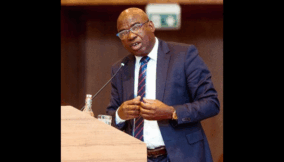
Every Saturday at 7 pm, a quiet ritual unfolds across Lagos and beyond. Listeners tune in to *Book on Review with Benji*, an award-winning radio show built on a single, unshakeable mantra: “A Nation That Doesn’t Read Cannot Develop.”
Over ten years, host Benjamin “Benji” Okoh has interviewed Nigeria’s finest authors, celebrated literature, and quietly fought a battle against what experts now call a “learning emergency.” In 2024, the show marked its tenth anniversary with a gala at Eko Hotel, attended by the Governor of Bayelsa State, Senator Duoye Diri, and a host of dignitaries. Yet behind the celebration lies a sobering reality: Nigeria’s reading culture has collapsed.
Forty-five million children aged 7–14 cannot read a simple sentence. In the Northeast, where insurgency has displaced millions, 72% of primary leavers leave school functionally illiterate. The average Nigerian picks up less than one book per year. And yet, amid this crisis, a humble medium—radio—is emerging as the most unlikely hero.
Radio has unique advantages. It reaches rural farmers, internally displaced persons, and low-income families who may not own a smartphone or have access to electricity. In Ogun State, learners in a Literacy-by-Radio project reported high engagement and improved skills. In Jigawa, ₦32 million was recently released to teach 2,700 learners using solar-powered radios. Even in conflict zones like the Northeast, the radio has been used to reach displaced children.
A publisher and broadcaster from Enugu shared the success of his efforts using radio with an impressive response rate (sales).
But radio alone cannot solve the problem. The presentation by Chidorum B. Nwakanma highlights a fragmented landscape of media tools, each with its own strengths and weaknesses. It also adopted a holistic view of media tools. Television, through shows like the Channels’ Book Club, offers visibility but limited reach. Print media, including The Guardian, BusinessDay and Premium Times, run literary sections, but readership is low. Social media, while a source of distraction, has been harnessed by initiatives like the #WhenWeRead campaign, which donated 5,000 books and promoted “a chapter a day.” Celebrity cook Hilda Baci and Enioluwa Adeoluwa led the effort.
Then there are the book clubs. The Network of Book Clubs & Reading Culture Promoters (NBRP), established in February 2023, has launched the “774 book club” initiative to cover all local government areas. Dr Udeme Nana has run the Uyo Book Club for 11 years. In the North, Book O’Clock promotes African literature. The National Library’s 2024 readership campaign created 99 literacy centres and 148 book clubs across 34 state branches. However, most centres rely on volunteers, and sustainability remains uncertain.
The AIFA Reading Society adopts a digital-first approach, arguing that “ignoring technology in literacy promotion is throwing away the baby with the bath water.” A 2025 study in Offa, Kwara State, found that residents who accessed educational content via radio, TV, and social media reported significant improvements in literacy. The recommendation: develop mobile apps, podcasts, and community media centres.
My Executive Bookshelf Column in BusinessDay reviews books across genres. We also publish contributions and essays.
So, what is to be done? The presentation offers eight actionable steps, including
1. Establishing a National Reading Promotion Council to coordinate all actors,
2. Institutionalising influencer partnerships with measurable outcomes,
3. Integrating reading promotion into media houses’ core mandates, and
4. Finally, addressing infrastructure deficits by completing the National Library and building community libraries in all 774 local government areas.
As one listener of *Book on Review with Benji* put it: “The show taught me that reading isn’t just for school. It’s for life.” In a nation where the average person reads fewer than one book per year, that message might be the most important broadcast of all.
This is a distillation of my presentation for yesterday’s session at the Nigerian International Book Fair, organised by the Network of Book Clubs and Reading Culture Promoters in Nigeria (NBRP) at the Wole Soyinka Centre (National Theatre), Iganmu.
I did not present because the organisers felt an open discussion was better. Co-panellists were Lady Ejiro Umukoro (Eumukoro LightRay, moderator), Mr Ofuma Agali, Mr Akin Adeoya and Mr Jahman Anikulapo.
It was enlightening.

Join BusinessDay whatsapp Channel, to stay up to date
Open In Whatsapp