In most societies across the world, people are pushed to live in slums due to lack of money to live in city centres and high-end neighbourhoods.
But beyond money, millions of people have also been forced into slums for reasons that include lack of access to formal property rights, legal identity or access to economic opportunities. These factors are also reasons families slip into child labour and extreme suffering.
According to Elena Panaritis, an institutional economist and global policy advocate, who summed up all these as ‘informality,’ noted that the situation has trapped nearly 70 percent of the world’s population, creating a cycle of poverty, homelessness, insecurity, and economic exclusion that now threatens both developing nations and the global middle class.
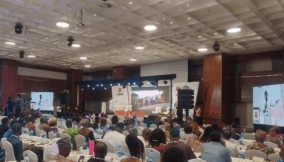
Panaritis spoke at a private, exclusive screening held in Lagos, where she unveiled the international ‘70 percent Informals’ documentary aimed at exposing the human and economic consequences of global informality.
Read also: Beyond revenue: How Nigeria’s new tax laws could put more money in citizens’ pockets
She pointed out that informality was never a choice for most people, but a condition they were born into because governments failed to provide functioning institutional systems.
“Informality is touching the world middle class; it is affecting everybody. It is a shame,” Panaritis said, pointing out that families live in homes without roofs, children are pushed into labour and policymakers lack the tools to tackle the problem because they fail to identify the root cause. “Informality was not a choice; people were born into it,” she noted.
She explained that governments often misunderstand the crisis by focusing only on housing shortages instead of addressing deeper institutional failures that prevent citizens from obtaining land titles and formal property rights. Nigeria, she noted, faces not only a housing deficit estimated at 28 million units, but also widening trust and dignity deficits.
“We don’t solve the problem of slums by evacuating citizens from slums,” she said. “Immediately you put land rights in place, people are pushed toward prosperity. China invested in rural roads and gave people land rights. That changed everything,” she stated.
Panaritis warned that many countries are drifting into systems where only a privileged minority controls legal ownership of land and assets, excluding millions from wealth creation. “We are moving to a state where only 20 percent have title to land rights. That is a reality that threatens prosperity for everyone,” she said.
The economist pointed to Peru as a successful example of how property rights reforms can reduce poverty and stimulate economic growth. According to her, reforms that restored formal rights of existence and simplified ownership systems helped cut poverty significantly over time while enabling poor citizens to transition into the middle class.
“There is a solution and it is called Reality Check Analysis,” Panaritis explained. “It identifies the bottlenecks in a country’s institutional infrastructure and removes bureaucratic complexity. Ending informality cannot be done through superficial policies; governments must dig into the foundations of the nation and understand what created the complexity in the first place.”
She argued that simplifying access to land titles and ownership documentation could unlock large-scale private investment and support public-private partnership housing projects for low-income earners. “If you provide titles and property rights in half a day, people can access loans, build homes and participate in the economy,” she added.
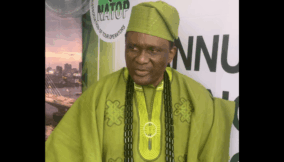
Also speaking, Lanre Coker said Nigeria’s rising urban poverty and expansion of informal settlements reflect years of weak institutional planning and exclusionary economic systems. He stressed that without reforms that integrate informal populations into the formal economy, poverty and insecurity would continue to rise.
Coker noted that land administration reforms, improved infrastructure and easier access to legal documentation remain critical to addressing Nigeria’s housing and economic challenges. He added that empowering citizens with formal ownership rights would strengthen economic participation and restore confidence in governance.

Join BusinessDay whatsapp Channel, to stay up to date
Open In Whatsapp