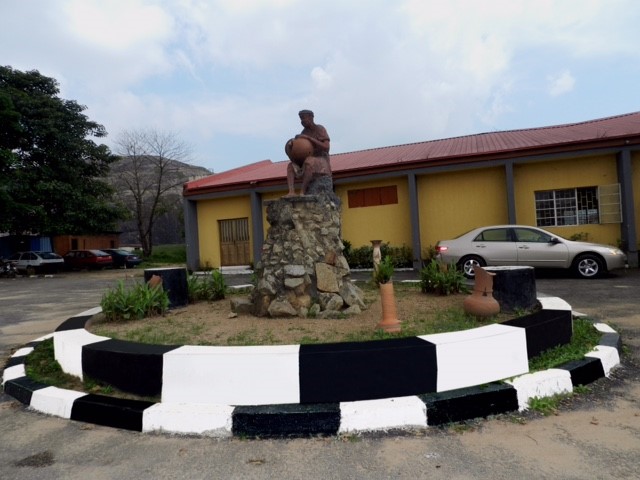
About 40 km from Abuja city centre lies a fascinating enclave worth visiting. Ushafa, a small settlement tucked in the midst of a beautiful array of interlocking hills surrounded by lush green vegetation is breathtaking.
Since 1991 when Maryam Babangida, the late wife of Ibrahim Babangida, former military president of Nigeria, established the Ushafa Pottery Centre under her Better Life for Rural Women Programme, the sleeping village has woken to the calls by visitors.
Of course, it is not the village that attracts the visitors; it is the pottery, which has now shifted global tourism attention to the village.
For decades now, the rural enclave has hosted the high and mighty in its environment including Bill Clinton, former president of the United States of America, and Chelsea, his daughter, who also bought some pottery wares as souvenirs during their visit to the centre in August 2000. Even more pottery wares were sold a year later when Hosni Mubarak, former Egyptian president, (now late) and a league of mayors from across the globe visited Ushafa.
The special skills the women at Ushafa display with their pottery also attracted Ruth Metzler, the Swiss vice president and minister of Justice, on a visit to the centre in January 2003.
Nigerians had, before now, visited the centre to learn skills or acquire pottery for household use. But it was not until the visit by the Clintons that tour operators started packaging Ushafa as one of the tourist offerings in Abuja. As well, the number of tourists to Elmina Slave Castle in Ghana has tripled since the visit of the Obamas to the slave relic in 2008.
Since the Americans’ visit and endorsement, the village and the centre, which is its major attraction, have been welcoming all manners of visitors who want to see people live and do their thing their own way.
Well, a visit to the village is truly a respite from the official protocols and formalities of Abuja life. One unique thing is that one can be privileged to witness the women break, mix and mold the clay substance into beautiful ceramic products designed in different shapes. A closer look at the pottery reveals that they bear tattoos and designs, which symbolise love, beauty, and sometimes sober reflections of the designers. On special request, a visitor can always get his/her name tattooed on the pottery.
Apart from assorted clay pots, common artistic items in Ushafa include traditional hand-woven dyed fabrics, wood carvings, mats and hats all of which are a portrayal of the creative potential of the natives. These crafts have become a major source of income for many, especially women in the community.
For Byibanabe Wushibwayi, who has been a potter all her life, apart from earning a living with their craft, pottery is their heritage, which must be preserved for generations unborn. Now in her early 80s, she still makes pots and is most grateful that visitors now come for their products, leaving the modern ones in the town.
“We are happy when visitors come here to see our work. We want more of them because they buy our pots at a high price. We need the money to send our children to school because our people do not have enough money to buy at such price,” says Wushibwayi, who has won several awards, such as Human Living Treasure Award, and recognitions by Norwegian government, UNESCO, and the Federal Ministry of Culture and Tourism.
But the many visits by world leaders, tourists and researchers across the globe to the centre are a welcome development. The visits come with patronage, and the patronage sustains the centre and the women in both business and in preserving the pottery craft. That lies the huge tourism potential of the centre.
On a typical tour of the centre, visitors are taken to the two wings of the centre – traditional and modern wings. At the traditional wing, you will be thrilled on how these women have organised themselves into cooperatives and practice their craft in the ways of their ancestors; while the modern wing employs the use of machines and other contemporary practices in the production of pots.
The intrigue is with the traditional wing because everything is done manually, from fetching clay (which requires walking some kilometres) to molding. However, it is until you sit with the women and observe them do their thing that you will appreciate the resilience and creative ingenuity of these women worth African Idols in their various rights.
But before you go, pick up a pot for souvenir, and do not forget to sign the visitors’ book to be in the club of high-profile visitors once hosted by Ushafa and thrilled by the creative ingenuity of its women.

Join BusinessDay whatsapp Channel, to stay up to date
Open In Whatsapp