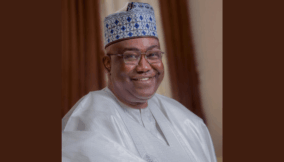
With just 30 weeks to go before Bayelsa State marks its 30th anniversary on October 1st, environmental lawyer and development consultant, Iniruo Wills, said there was need for urgent action to retool leadership and reboot governance by setting a clear developmental trajectory for the state.
In an agenda-setting paper made available to BusinessDay, Wills said the milestone comes at a time when global instability, climate change, supply chain disruptions, and national security challenges are placing unprecedented pressure on not only national governments but on sub-national entities as well.
He described the moment as a “fresh but fierce urgency about solid governance and development” that Bayelsa must harness to secure its future”.
Reflecting on Bayelsa’s creation on October 1, 1996, under the late Sani Abacha, he recalled the excitement and patriotism that welcomed the first military governor, Phillip Ayeni, a naval captain, noting that citizens, especially those living in Port Harcourt at the time, volunteered time, money, and materials to ensure the fledgling administration functioned effectively.
Wills, a former Commissioner for Information in the state, added that former President Goodluck Jonathan’s rise remains “perhaps the sharpest symbol of the most poignant dividends of the state’s creation: identity, political recognition, and a certain sense of endearment from fellow countrymen”.
He also described as epochal the upcoming unveiling of an epic book on the origin of Bayelsa State, authored by one of the state’s first two cabinet commissioners, Numoipre Wills, scheduled for March 21, with former president Goodluck Jonathan set to chair the event.
Milestones achieved
Wills noted with delight that several projects and initiatives have brought progress to the state. Among them, the long-promised three senatorial roads, including the Ekeremor Road, which are “finally taking form,” while the Senator Douye Diri administration is working hard to install a 60-megawatt gas turbine.
He said he was also impressed with the expansion of higher education, with five universities now operating, including a medical university converted from an abandoned hospital project and the University of Africa while the construction of a new civil service secretariat is also underway.
On security and regional stability, Wills credited Bayelsa leaders, including former Governor Timipre Sylva and former Niger Delta Development Commission (NDDC) Managing Director, Timi Alaibe, for brokering an armistice that led to the Amnesty Programme for the ex-militants in the Niger Delta region.
He added that the state continues to host institutions designed to build Nigerian content in the petroleum industry, a process that was catalyzed in part by Goodluck Jonathan during his tenure as Vice President and President.
Governance, strategy, and the blue economy
Commenting on the current governance landscape, Wills however, remarked: “Governor Diri and his deputy, Peter Akpe, face the urgent task of building resilience and prosperity amid global and national challenges.”
He recommended the development of a Bayelsa 2026–2056 Masterplan to guide socio-economic growth over the next 30 years, which emphasized clarity of vision, bold ambition, executive will, and fiscal discipline.
Wills also highlighted the Blue Economy as a key opportunity, calling for a comprehensive water resources management plan to address flood and erosion risks and unlock maritime economic potential, adding that restoration of the Epie Creek and optimized foreshore use should form part of a PPP-driven upgrade of the state capital.
Partners and possibilities
Wills identified development partners that could support the state’s vision, including planning institutions, Bayelsa professionals abroad, AfDB, AFC, Afreximbank, sector-specific funds such as the Nigerian Content Intervention Fund, NIMASA’s cabotage finance facility, and the new African Energy Bank.
He also noted that Bayelsans in capital market regulation and leading industrialists like Dangote and Elumelu could be key allies.
NDDC and environmental justice
Wills, who was also a former Commissioner for Environment, urged the NDDC led by a Bayelsan, Samuel Ogbuku, to prioritize the completion of a regional development master plan, but said Bayelsa should press on with its own state master plan regardless of NDDC’s state of readiness on the regional master plan.
On environmental matters, Wills highlighted the need for the implementation of the Bayelsa State Oil and Environmental Commission (BSOEC) Report and suggested the appointment of a Special Counsel on Environmental and Climate Justice to coordinate remediation and position the state as a hub for climate action.
Industrialisation and public service reform
Wills called for the repositioning and recapitalisation of the Bayelsa Development and Investment Corporation (BDIC) to drive industrialisation and create functional commercial layouts, calling for holistic reforms in public service, including professionalisation, retooling, and living wages, as well as urbanisation of all local government headquarters, vocational schools, and industrial clusters.
Education, culture, and heritage
He proposed that Bayelsa State promote the establishment of centres of educational and cultural excellence, such as an Ernest Ikoli Foundation, Goodluck Jonathan Presidential Library, Diete-Spiff Centre for Development Studies, and an Admiral Soroh Marine College, among others, to build human capacity and also celebrate the state’s heroes and heritage.
Call to leadership
Wills concluded by saying: “History now beckons. Bayelsa State is Governor Diri’s oyster. On October 1, 2026, the state can mark 30 years with visible structural transformation, and the drums should jolly well roll. The coming 30 weeks must be seized with bold vision to set the state as a reference point and pride for its people.”

Join BusinessDay whatsapp Channel, to stay up to date
Open In Whatsapp