On a humid evening in Oshodi, the air thick with anticipation, a group of young men gather around a makeshift joint. They are not discussing policy or party manifestos. They are waiting, for instructions, for mobilisation, for money. Election season is near, and for them, it is less a civic exercise than an economic opportunity.
Nigeria’s youth bulge is often described as a demographic advantage. With a median age of just over 18 and a vast majority under 30, the country should be powered by innovation, labour, and enterprise. Instead, it is weighed down by a labour market that cannot keep pace. Jobs are scarce, wages are weak, and the cost of simply showing up to work can exceed the income earned.
In that vacuum, politics becomes one of the few functioning industries, albeit an informal and deeply corrosive one.
Elections as an economic season
Every electoral cycle activates a parallel labour market. Political actors, intent on securing victory by any means necessary, recruit from the ranks of unemployed and underemployed youths. The requirements are minimal: loyalty, availability, and a willingness to act.
The roles vary. Some are tasked with crowd mobilisation at rallies, others with distributing cash or influencing voters at polling units. But at the sharpest edge of this machinery are the thugs, the enforcers who intimidate, disrupt, and, when required, inflict violence.
Payment is immediate but meagre. A few thousand naira, sometimes accompanied by alcohol or drugs. For many, it is enough to justify the risk, at least in the moment.
The pipeline is informal but efficient. Local strongmen, community influencers, and party agents act as intermediaries, identifying vulnerable youths and bringing them into the fold. Many of these young men are already embedded in street networks, making mobilisation quick and scalable.
There is also a psychological dimension. Participation offers a sense of belonging, of being seen and valued, however temporarily, in a society that often overlooks them. For a brief period, they are not invisible. But that visibility is transactional.
After the victory, silence
Once the votes are counted and winners sworn in, the structure that sustained this temporary employment collapses. Phone lines go dead. Promises evaporate. The young men return to the same streets, now with even fewer illusions.
There are no contracts, no guarantees, no pathways to legitimate engagement. The relationship between politician and thug is purely instrumental, one of use and discard.
Over successive election cycles, this pattern becomes entrenched. What begins as a one-off decision hardens into a livelihood strategy. Violence becomes normalised. The line between political engagement and criminality blurs.
It is easy to moralise about the choices these youths make. But doing so obscures the structural realities that shape those choices.
When the formal economy excludes you, and the informal economy offers only precarious returns, the calculus changes. Immediate cash, however small, can outweigh uncertain long-term prospects. Political thuggery, in this context, is less an aberration than an adaptation.
Yet, it is an adaptation with consequences.
By enabling electoral malpractice and violence, these youths help reproduce a system that prioritises power over governance. The leaders who emerge from such processes are often less accountable, less responsive, and less inclined to implement policies that could expand economic opportunity.
In effect, the system feeds on their vulnerability and, in turn, deepens it.
Democracy at risk
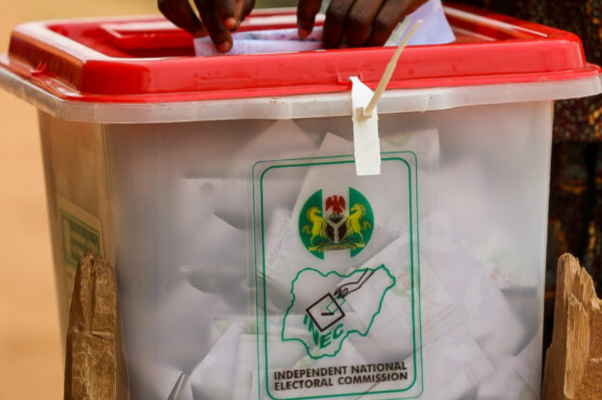
Elections marred by violence and coercion lose legitimacy. Citizens disengage, voter turnout declines, and public trust erodes. Democracy becomes procedural rather than substantive, a ritual devoid of real choice.
For communities, the cost is immediate: disrupted voting, damaged property, and, in the worst cases, loss of life. For the nation, the cost is cumulative: weakened institutions and stalled development.
Breaking this cycle requires more than rhetorical condemnation. It demands coordinated intervention across economic, political, and social fronts.
First, the economic imperative: job creation must be deliberate and large-scale. Sectors with high labour absorption potential, agriculture, manufacturing, and the digital economy, need targeted support. Small businesses must be shielded from the shocks that currently threaten their survival.
Second, enforcement: electoral laws against violence and vote-buying exist, but enforcement is inconsistent. Holding not just the foot soldiers but also their sponsors accountable is critical to deterrence.
Third, social investment: youth engagement programmes must go beyond short-term empowerment schemes. They should build skills, provide mentorship, and create pathways into sustainable livelihoods.
At scale, these individual decisions accumulate into a national pattern, one where the energy of a young population is diverted from production to disruption, from building to breaking.
Nigeria’s future is not just being delayed; in many cases, it is being traded away in small, cash-filled envelopes handed out at campaign grounds and polling units.
The tragedy is not only that the system exploits its youth, but that, in participating, many are unwittingly helping to sustain the very conditions that deny them a future.

Join BusinessDay whatsapp Channel, to stay up to date
Open In Whatsapp