In Nigeria’s public service architecture, a long-standing but troubling pattern continues to undermine institutional efficiency and morale: the appointment of politically displaced or “failed” politicians as Director-Generals (DGs) of federal agencies.
While political appointments are not inherently problematic, the routine sidelining of seasoned career professionals in favour of individuals with limited sectoral experience has become a significant demotivation factor—particularly for senior directors who have invested decades in public service.
At the heart of the civil service ethos lies a clear career progression pathway. For officers in ministries, the pinnacle is the position of Permanent Secretary. Within agencies, the aspiration is to rise through the ranks to become Director-General or Chief Executive. This structured progression is designed not only to reward experience and competence but also to ensure continuity, institutional memory, and policy coherence. However, when these apex roles are consistently filled by external political appointees, it sends a discouraging message to career officers: merit and dedication may not be enough.
One of the most immediate consequences of such appointments is the steep learning curve imposed on incoming DGs. Many political appointees require months—sometimes up to a year—to fully grasp the operational, technical, and administrative complexities of the agencies they lead. During this period, decision-making may be delayed, policies may stagnate, and the agency’s overall performance may suffer. In contrast, a career director who has risen through the system would typically possess the institutional knowledge and technical expertise to provide immediate, effective leadership.
A historical example that underscores the risks of this approach can be found in the Federal Road Safety Corps during the administration of Olusegun Obasanjo. The appointment of a non-corps member as Corps Marshal sparked significant unrest within the organization. Staff members protested the decision, emphasizing the importance of internal experience and professional grounding. The outcome of that episode led to a policy shift: subsequent Corps Marshals have been drawn from within the Corps—a practice that has contributed to stability and professionalism in the agency ever since.
Unfortunately, this lesson has not been universally applied. In the tourism and culture sector, agencies such as the National Institute for Hospitality and Tourism (NIHOTOUR) have, since inception, been led predominantly by political appointees. This trend has had a demoralizing effect on senior directors who, despite years of service and expertise, find themselves perpetually excluded from leadership consideration.
Similar patterns are evident in other agencies, including the National Council for Arts and Culture (NCAC), the National Institute for Cultural Orientation (NICO), the National Gallery of Art (NGA), and the Nigerian Tourism Development Authority (NTDA). Even in more technical and research-focused institutions like the National Institute for Pharmaceutical Research and Development (NIPRD), leadership appointments have at times leaned toward external or politically influenced selections, raising concerns about the prioritization of expertise.
Beyond these, the trend extends across several other federal agencies where political patronage often overshadows merit. Institutions such as the National Orientation Agency (NOA), Directorate of Technical Cooperation in Africa (DTCA), the National Agency for the Prohibition of Trafficking in Persons (NAPTIP), the National Emergency Management Agency (NEMA), and the Small and Medium Enterprises Development Agency of Nigeria (SMEDAN) have all, at various times, witnessed leadership appointments that sparked debate over the balance between political considerations and professional competence.
The implications of this practice are far-reaching. First, it erodes morale among career officers, many of whom may feel undervalued and disengaged. Second, it weakens institutional capacity, as agencies lose the benefit of leadership grounded in experience and continuity. Third, it fosters a culture where political loyalty is perceived as more important than professional excellence—an outlook that can have cascading effects on governance and service delivery.
To address this challenge, a more balanced approach is required. While political appointments may remain a feature of Nigeria’s governance system, there should be clear criteria that prioritize relevant experience, sectoral knowledge, and demonstrated competence. Where possible, leadership positions in technical and specialized agencies should be filled from within, or at the very least, through a transparent and competitive process that gives career professionals a fair opportunity.
Additionally, institutional reforms could formalize succession planning within agencies, ensuring that senior directors are groomed and prepared for leadership roles. This would not only enhance performance but also restore confidence in the system.
In conclusion, the practice of appointing failed or displaced politicians as Director-Generals of federal agencies poses a significant challenge to the integrity and effectiveness of Nigeria’s public service. If the country is to achieve sustainable development and efficient governance, it must prioritize merit, experience, and professionalism over political expediency. Only then can the civil service truly serve as a vehicle for national progress rather than a repository for political patronage.
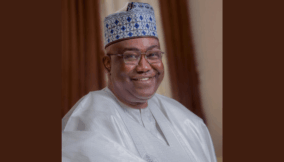
Famogbiyele Phd was the Director Special Duties in NIHOTOUR until his retirement in 2024

Join BusinessDay whatsapp Channel, to stay up to date
Open In Whatsapp