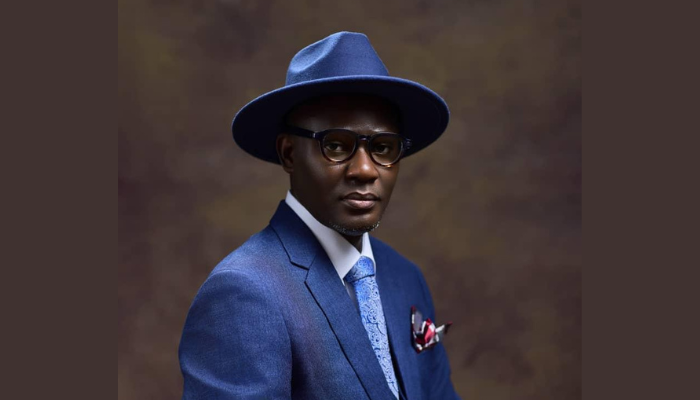
Adelaja Adeoye, entrepreneur and real estate developer, is flying the flag of the People’s Democratic Party (PDP)-Allied Peoples Movement (APM) coalition ahead of the 2027 Lagos governorship election. In this exclusive interview with INIOBONG IWOK, the Lagos opposition figure and close ally of Oyo State Governor, Seyi Makinde spoke on Makinde’s presidential ambition, the strategic alliance between PDP and APM, and the opposition’s plan to challenge the ruling APC in Lagos after more than two decades in power. Excerpts:
You are a close ally of Governor Seyi Makinde of Oyo, who declared for president, what is your take on his ambition?
I fully support Governor Seyi Makinde’s presidential ambition under the PDP-APM alliance. His impressive track record of infrastructure development, good governance, and people-focused leadership in Oyo makes him a credible alternative for Nigeria.
This move strengthens our national coalition and shows we are building a serious opposition front to rescue the country from current hardship. Our Lagos campaign is 100% aligned — together we will present Nigerians with a better choice in 2027.
You have been known to be a PDP man for long and the party even endorsed you as governorship candidate for 2027, why the move to APM?
I remain a proud PDP man at heart and in spirit. The Lagos PDP structures endorsed me as the consensus governorship candidate and have fully backed this strategic alliance with APM. This is not a defection or rejection of the PDP, it is a pragmatic, forward-looking decision to stay focused on rescuing Lagos in 2027.
Internal leadership crises and legal battles within the PDP were becoming distractions that could jeopardise INEC timelines and our preparations.
As I stated clearly, we have adopted the APM platform to stay focused. There is too much work ahead for Lagos in 2027. We cannot allow internal party tussles to stop us from providing the quality leadership Lagosians truly deserve.
The PDP Chairman in Lagos confirmed the collaboration, and all candidates (governorship, senatorial, House, and Assembly) will contest on the APM platform. This is about putting Lagos first, uniting opposition forces to end APC misrule.
What guarantees do supporters have that the alliance between PDP and APM will remain stable till 2027?
Supporters have iron-clad guarantees: a shared vision to rescue Lagos and Nigeria from APC hardship, formal Memorandum of Understanding (MoU) frameworks as seen in the successful Oyo model with Governor Seyi Makinde, and the full backing of committed PDP structures in Lagos.
We have transparent agreements on candidate selection, power-sharing based on merit and contribution, and joint decision-making bodies. Our common goal, delivering inclusive prosperity under Àtúntọ Èkó 1.0, is bigger than any individual or logo. This alliance is purpose-driven, not personality-driven, and history shows such coalitions succeed when anchored on people-first governance.
Critics say this move weakens the PDP brand in Lagos. What is your response?
That criticism is misplaced and coming from those who benefit from a divided opposition. This alliance actually strengthens the opposition in Lagos. The PDP brand is alive and well, its structures, loyalists, and mandate are fully behind this effort. A divided house cannot defeat the APC after 20+ years of misgovernance.
By uniting under APM as the vehicle, we create a formidable, functional platform that delivers victory. Lagosians care about results, not party colours. A united front amplifies our voice and chances far more than staying fragmented.
Why should Lagosians trust a coalition arrangement instead of a single united party structure?
Because Lagosians have seen what single-party dominance and internal wrangling produce — stagnation and hardship. A coalition brings the best of both worlds: the grassroots strength and experience of the PDP with the clean, focused platform of APM. It is more inclusive, brings diverse talents, and avoids the internal crises that have plagued single parties.
This is pragmatic politics that puts Lagos first. The coalition is already galvanising youths, professionals, entrepreneurs, and even disillusioned APC supporters under one banner for real change.
Is the APM merely a vehicle for the election, or do you see it becoming a long-term opposition platform nationally?
APM is the vehicle for the 2027 battle to win Lagos and deliver Àtúntọ Èkó 1.0. However, if we succeed in showing what good governance looks like, it has the potential to evolve into a credible, long-term national opposition platform, especially as we align with broader movements like Governor Seyi Makinde’s in Oyo.
The goal is to build a strong alternative that checks APC excesses and offers Nigerians a better choice beyond 2027.
How will positions and responsibilities be shared between PDP leaders and APM leaders?
Sharing will be transparent, merit-based, and guided by competence, experience, and stakeholder representation. We will set up joint committees for planning and execution. No quotas, only what delivers the best outcomes for Lagosians.
The focus is unity and efficiency so that every leader, whether from PDP or APM roots, contributes fully to re-engineering Lagos.
Beyond defeating APC, what ideological or governance principles unite PDP and APM?
We are united by core principles: accountable and transparent leadership, inclusive economic prosperity, massive infrastructure renewal, security, quality education and healthcare, youth and women empowerment, true federalism with empowered local governments, and zero tolerance for corruption.
Both reject APC’s selective projects and hardship-inducing policies. Àtúntọ Èkó 1.0 embodies this pragmatic, people-centred vision, re-engineering Lagos for every resident, not just a few.
Lagos debt continues to rise. What exactly would your administration do differently within its first two years?
In the first two years we will conduct a comprehensive forensic audit of state finances and debt for transparency. We will aggressively optimise Internally Generated Revenue (IGR) through efficiency, digital systems, and economic growth, not new taxes on citizens.
We will prioritise Public-Private Partnerships (PPPs) and innovative financing for infrastructure so government borrowing is minimised. High-ROI projects (power, transport, housing) will come first. Waste and corruption will be cut drastically through civil service reform and better reward systems. The result: debt sustainability while delivering quick, visible wins in power, emergency services, and housing.
Your manifesto talks about affordable housing. How many housing units are you realistically targeting?
Àtúntọ Èkó 1.0 commits to a full Affordable Housing Revolution using PPPs, innovative financing, and sustainable urban planning to end the deficit and reduce slums. Realistically, we target delivery of over 100,000 affordable and mixed-income units in the first term (with aggressive rollout in the first two years across all five divisions).
My private-sector experience proves we can deliver quality at scale. We will also re-integrate economically disadvantaged indigenous Lagosians back into the metropolis with housing and job placement.
How will you fund infrastructure renewal without worsening Lagos debt levels?
Through a smart mix: massive IGR growth from job creation and diversified economy; aggressive PPPs that bring private capital; efficient project management to eliminate cost overruns; savings from anti-corruption measures; and targeted, revenue-generating financing (e.g., green bonds tied to power and transport projects that pay for themselves).
We will only borrow when absolutely necessary and on favourable terms. Infrastructure must generate economic returns, not become a debt trap.
What is your practical solution to Lagos traffic congestion and flooding?
Integrated and practical. For traffic: expand rail networks and water transport, modernise and expand BRT, build and rehabilitate roads across IBILE divisions, deploy smart/intelligent traffic systems, complete critical projects like the 4th Mainland Bridge, and enforce traffic laws with urban planning that decongests.
For flooding: a comprehensive drainage masterplan, build underground drainages and expand/deepen surface ones, desilt regularly, enforce building codes, create more green spaces, and integrate early-warning systems with our 20 new Emergency Response Centres. These are not campaign promises — they are actionable steps in Àtúntọ Èkó 1.0.
How would your government improve electricity and public transportation for ordinary Lagosians?
Electricity: Launch a comprehensive Independent Power Project (IPP) initiative with renewable energy farms and dedicated Independent Power Plants in all five divisions, backed by a state-owned power grid for reliable supply.
Public transport: Modernise and expand affordable mass transit (rail, BRT, water transport) with integrated multimodal systems, subsidies for vulnerable groups, and smart ticketing. Ordinary Lagosians will move faster, cheaper, and more reliably.
What role would local governments play under your “Atunto Eko 1.0” agenda? How do you plan to attract young voters and first-time voters frustrated with politics?
Local governments will enjoy full constitutional autonomy with devolved funds, powers, and capacity building to deliver grassroots services — roads, waste management, primary healthcare, markets, etc. while aligning with the state’s Àtúntọ Èkó 1.0 vision. This is true federalism at the local level.
For young and first-time voters: We speak their language, jobs (targeting massive employment through skills, tech/creative hubs, entrepreneurship, affordable housing for young families, quality education reform, digital governance for participation, and real empowerment programs (not tokenism).
We will engage via social media, townhalls, and results, not rhetoric. Àtúntọ Èkó 1.0 is built for them, a Lagos that works for the next generation.

Join BusinessDay whatsapp Channel, to stay up to date
Open In Whatsapp