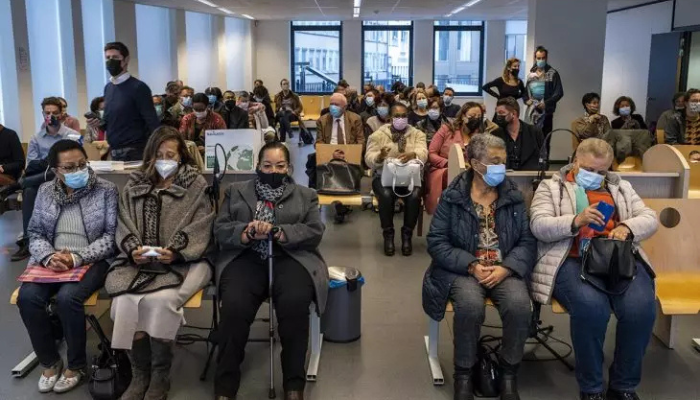
The Court of Cassation of Belgium has on 22 May 2026, brought to a close one of the most consequential legal chapters in the country’s modern relationship with its colonial past. By rejecting the Belgian State’s appeal in the Métis case, the Court affirmed an earlier ruling that held Belgium civilly liable for the forced separation of mixed-race children from their African mothers during the colonial era. The conduct, the courts characterised as constituting crimes against humanity.
The judgment is historic. Yet history teaches us that court rulings, no matter how significant, rarely settle the deeper questions that societies must confront. Courts can determine liability. They can award compensation. They can establish legal truth. But they cannot by themselves create reconciliation, restore dignity, or build a shared future.
The Work That Belongs to Statesmanship
As someone who has followed this case closely and publicly argued in January 2025 that Belgium should not appeal the original judgment, I view the Court’s decision not as a victory for one side and a defeat for another. Such a framing would be both simplistic and counterproductive. Rather, it is an opportunity for Belgium to demonstrate what a mature democracy does when confronted with difficult truths about its past.
The real question today is no longer whether Belgium was legally wrong. The courts have answered that question. The question now is whether Belgium is prepared to lead.
Beyond Legal Liability
There is an understandable temptation to view this judgment primarily through a legal lens. Lawyers will debate precedent. Historians will revisit archives. Politicians will assess public reactions.
Yet at its heart, this case has always been profoundly human.
It concerns children who were separated from their mothers not because of anything they had done, but because of who they were. It concerns individuals whose identities were disrupted by policies rooted in racial hierarchy and colonial thinking. It concerns lives shaped by decisions made without their consent and often without regard for their humanity.
The passage of time does not erase such experiences. Acknowledging them does not diminish Belgium either.
Indeed, one of the most persistent misunderstandings in contemporary debates about colonial history is the belief that admitting historical wrongdoing somehow weakens a nation. The opposite is often true. Nations demonstrate their strength not by denying uncomfortable facts but by confronting them honestly.
Germany’s post-war experience offers one example. South Africa’s Truth and Reconciliation process offers another. Neither was perfect. Both nevertheless demonstrated that democratic legitimacy is strengthened when institutions are willing to examine their own histories. Belgium now faces a similar moment.
A Chance to Lead Europe
The significance of this judgment extends beyond Belgium. Across Europe, societies continue to wrestle with questions of colonial memory, historical accountability, migration, identity, and belonging. Public debates have often become polarised between those demanding accountability and those fearing perpetual condemnation. Neither extreme offers a sustainable path forward.
The challenge is to develop a model that combines truth with cohesion, accountability with unity, and remembrance with hope. Belgium is uniquely positioned to help shape such a model. Unlike some former colonial powers, Belgium has already taken important steps. Parliamentary inquiries have examined colonial abuses. Official apologies have been issued to Métis communities. Museums have begun rethinking how colonial history is presented. Public debate, while imperfect, has become more open and informed.
The Court’s ruling now provides an opportunity to move from acknowledgment to institutional leadership. The goal should not be to keep relitigating the past. The goal should be to ensure that the lessons of the past strengthen the future.
What Should Belgium Do Next?
The first priority should be straightforward. The State should accept the judgment fully and implement it promptly. Compensation should be delivered without delay, bureaucratic resistance, or further procedural obstacles. After years of litigation, the affected individuals deserve closure, not additional administrative hurdles.
Second, Belgium should establish a dedicated Colonial Legacy Support Programme. Many affected families continue to face challenges accessing records, tracing family histories, establishing identities, and reconnecting fragmented family narratives. A specialised office could provide archival assistance, genealogical support, legal guidance, and historical documentation services. Such an initiative would be relatively modest in cost but significant in impact.
Third, Belgium should create a permanent Colonial Memory and Dialogue Council. Rather than reopening old political battles, this body should focus on education, research, intergenerational dialogue, and public understanding. It should include historians, educators, representatives of affected communities, members of the African diaspora, and public institutions. Its mission would not be to assign collective guilt but to foster collective understanding.
Fourth, Belgium’s educational curriculum should be strengthened further regarding colonial history. This is not about teaching young Belgians to feel ashamed of their country. It is about ensuring that they understand it fully. Patriotism built upon selective memory is fragile. Patriotism grounded in truth is resilient. Young Belgians should learn not only about the achievements of their nation but also about the mistakes from which it has learned. That is how democratic citizenship is strengthened.
Fifth, Belgium should invest in a new generation of partnerships with African countries rooted in mutual respect rather than historical symbolism. The future relationship between Belgium and countries such as the Democratic Republic of the Congo, Rwanda, and Burundi should increasingly focus on education, entrepreneurship, innovation, healthcare, climate cooperation, and cultural exchange. Historical reckoning is important. But ultimately, the strongest response to the injustices of the past is the construction of fairer relationships in the present and future.
The Role of the Diaspora
The African diaspora in Belgium also has an important responsibility. There will be understandable emotions surrounding this judgment. For many families, the decision represents long-awaited recognition. Yet recognition should not become a platform for resentment.
The objective should not be to deepen divisions between communities but to strengthen understanding between them. Diaspora communities are uniquely positioned to serve as bridges between histories, cultures, and futures. We understand both the pain associated with historical injustice and the opportunities created by democratic inclusion. The challenge before us is to transform memory into constructive engagement.
The Measure of a Nation
Every nation inherits chapters of history it would not have written for itself. The measure of a nation is not whether such chapters exist. The measure is how it responds when they are revealed. Belgium now stands at such a moment.
The Court of Cassation has spoken. The legal debate has reached its conclusion. The temptation will be to view this as the end of a difficult chapter and move on. That would be a mistake. This judgment should instead mark a transition from legal accountability to moral leadership. Not because Belgium owes perpetual penance. Not because today’s citizens bear personal responsibility for yesterday’s policies. But because mature democracies understand that truth acknowledged, justice respected, and dignity restored are not signs of weakness.
They are signs of confidence.
And confidence, ultimately, is what allows nations to face their past without fear and build their future without illusion. The Court has closed the case. Belgium must now open the path toward healing.

Join BusinessDay whatsapp Channel, to stay up to date
Open In Whatsapp