The African Export-Import Bank (Afreximbank) has called for stronger trade finance capabilities and deeper collaboration among African financial institutions to accelerate inclusive and sustainable growth across the continent.
Gwen Mwaba, managing director for Trade Finance and Correspondent Banking at Afreximbank, made the call at the 25th Afreximbank Trade Finance Seminar (ATFS) in Abidjan.
“Africa is richly endowed with natural resources such as minerals, hydrocarbons, agricultural commodities, and a growing array of value-added opportunities across energy, metals, and logistics. These resources present immense potential for development when they are financed responsibly, efficiently, and with rigorous risk management. To translate this potential into tangible outcomes, we need banks and financial institutions that are not only risk-aware but structurally proficient,” said Mwaba.
She emphasised the pivotal role of skilled financial professionals in shaping Africa’s trade future and the importance of capacity building in translating Africa’s abundant natural and human resources into tangible economic development.
“Well-trained bankers with sophisticated deal-structuring capabilities can tailor financing to capital-intensive value chains and align project finance with local development needs and environmental safeguards,” said Mwaba.
“Trade finance built on trust, risk assessment, and liquidity remains the lifeblood of commerce, investment, and job creation. Our collective task is to ensure that this lifeblood flows reliably to the firms that need it and that its benefits are broadly shared.”
Read also: RMDB President lauds Oramah for ‘transformative’ decade at Afreximbank
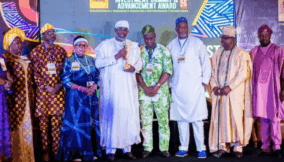
The opening ceremony was attended by representatives from the Government of Côte d’Ivoire, including Patrick Daipo, deputy director of Cabinet: Ministry of Commerce, Industry and SME Promotion, Coulibaly, National director of the Central Bank of West African States (BCEAO), the Bankers Association, represented by Jerome Ahua, deputy managing director of BNI Bank.
Now in its 25th year, this annual Afreximbank Trade Finance Seminar is Afreximbank’s flagship capacity-building programme providing training for thousands of African bankers, lenders, financiers and policymakers since its inception. This year’s edition marks a major milestone: a quarter-century of empowering African financial professionals and deepening the continent’s expertise in structuring and delivering trade finance solutions.
Highlighting Afreximbank’s leadership in Africa’s trade finance ecosystem, Mwaba said that the Bank has, over more than three decades, built a portfolio of programmes and facilities supporting regional integration, value addition, and job creation. These include: Large-scale financing for export-oriented sectors and trade-enabling infrastructure;
Innovative risk-sharing and credit enhancement tools to mobilize private capital;
Specialized facilities for commodity and project finance aligned with environmental and social safeguards; and
Targeted capacity-building programmes to strengthen the skills of African bankers and policymakers.
The Afreximbank Trade Finance Seminar will explore key themes shaping the future of trade finance in Africa, including the role of digitalisation, data, technology and transparency; robust risk management in an increasingly volatile global environment; and the importance of collaboration among banks, multilateral development institutions, fintechs, exporters, and policymakers to create scalable and sustainable solutions.
Concluding her address, Mwaba expressed confidence that the discussions in Abidjan would lead to tangible outcomes and further strengthen Africa’s trade finance ecosystem.

Join BusinessDay whatsapp Channel, to stay up to date
Open In Whatsapp