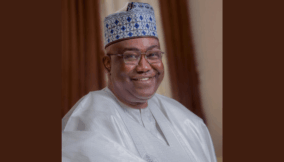
In Nigeria, there are no better ways to identify people from the different ethnic regions than through their dress sense. Some of these dresses have since been elevated to the status of national dresses and are worn by members of other ethnic groups at ceremonies and public functions.
For instance, the ‘Babanriga dress’ also known as ‘Shagari dress’ or ‘One Thousand Five Hundred’ which was made popular by politicians during the second republic has crept its way up the fashion ladder as one of the most widely accepted Nigerian national dress. In Nigerian fashion circle, the dress is complete when worn with matching Shagari cap. The Babanriga dress is traditionally associated with the Hausa- Fulani peoples in Northern Nigeria. However, it has managed to achieve the cross-over winning wide appeal from across the country especially for the political inclined who see the dress as status symbol.
Also, Ndigbo from the Eastern part of the country, are very cultural and traditional people. They also have very unique ways of dressing. Aspects of Igbo culture including traditional attire are usually on display for all to see during certain ceremonies in Igbo land such as ‘Igba Nkwu’ (traditional marriage ceremony),’ Ichi echi chi’ (chieftaincy title taking) and others.
At these ceremonies, Ndigbo try as much as possible to showcase their music, traditional attires, dance and food. There is also a bit of fashion on display at such events but any casual observer will easily notice the variation of traditional attires, which individually project the culture of the locality and the Igbo people at the long run.
This informs the many types of attire that overtime become the Igbo dress. While the men regale ‘Isi Agu’ dress, a matching cap (often red in colour), and a walking stick, the women adorn themselves elegantly in beautifully patterned attires which could be made of lace, jacquard, brocade and Akwete fabrics. In the past, women usually adorned their bodies in ‘Nzu’ (local white chalk) while covering their upper body and waist areas with pieces of Akwete cloth. Though civilisation no longer allows such mode of dressing, modern designers are bringing back some of the ancient designs in today’s Igbo dressing sense. But they seem not fashionable with present generation.
While the traditional Isi Agu dress worn mainly by people from Abia, Imo, Ebonyi and even Cross River and Akwa Ibom states will readily come to mind as the common Igbo dress, however, the Isi Agu is not popular in some Igbo speaking states as well.
However, some designers are perfecting some dresses in a way that they appeal to the Igbo culture. Most senators, top business executives and politicians from the Eastern part of the country now have a somewhat dress pattern that seems to have become the Igbo dress sense.
IJEOMA OMENI

Join BusinessDay whatsapp Channel, to stay up to date
Open In Whatsapp