At the intersection of intellectualism and the practical development of a people lies a productive tension, a dialectic between thought and action, between the ideal and the implementable. Intellectualism, in its pure form, seeks coherence, clarity, and conceptual depth, in its lived reality, demands urgency, compromise, and institutional navigation. Within Nigeria’s federal governance system, this tension is amplified. Ideas about equity, restructuring, and balanced development often emerge from scholarly reflection, yet their translation into policy is mediated by politics, power asymmetries, and competing regional interests. Thus, intellectualism without praxis risks sterility, while development without intellectual grounding degenerates into improvisation. For a people such as those of the Nsukka Cultural Zone (Igbo Nska), the challenge is not merely to produce ideas but to institutionalise them, to move from discourse to design, from critique to construction. Federalism, ideally, should provide a framework for such translation by accommodating diversity and enabling localised development strategies. However, where the federal structure itself is contested or uneven, intellectual intervention becomes indispensable. It must interrogate existing arrangements while proposing viable alternatives. In this sense, the relationship between intellectualism and development is not oppositional but complementary, a continuous negotiation through which ideas are tested, refined, and ultimately embedded in the structures that shape the destiny of a people.
It is within this dialectical space, where ideas must prove their worth in the crucible of governance, that the 6th Edition of the Adada Lecture Series 2026 assumes its urgency and relevance. Scheduled for Tuesday, 28 April 2026, the gathering convened by the Association of Nsukka Professors (ANP) at the Princess Alexandra Auditorium is not merely an academic ritual, but a deliberate intervention in the ongoing conversation about how a people can think themselves into structured development within Nigeria’s federal arrangement. ANP is a coalition of over two hundred professors of Nsukka cultural zone (Igbo Nsukka) drawn from universities across Nigeria and the diaspora. By bringing together scholars, policymakers, and cultural custodians, the lecture seeks to collapse the distance between reflection and action, transforming intellectual inquiry into a practical framework for engaging the realities of governance, equity, and regional advancement.
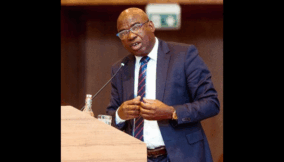
The 6th Edition of Adada Lecture Series (ALS 2026) will be delivered by the Executive Governor of Anambra State, His Excellency, Prof Chukwuma Charles Soludo, CFR. His Excellency, the Executive Governor of Enugu State, Dr. Peter Ndubuisi Mbah, will be the Special Guest of Honour. Also on the roll-call of who’s who expected at the august event include Vice Admiral Emmanuel I. Ogalla (chairman), His Excellency, Senator Orji-Uzor Kalu (Special Guest), Senator Chukwuka Utazi (Keynote Speaker), Prof Simon U. Ortuanya (Vice Chancellor, UNN, and Chief Host), HRM Samuel Asadu, Igwe Ogadagidi of Edem-Ani Ancient Kingdom (Royal Father of the Day), Prof Paulinus Ugwuoke (President, ANP, Host).
However, beyond the dignitaries and ceremonial grandeur lies a deeper purpose. The Adada Lecture Series is fundamentally an intellectual intervention, an effort by the scholarly community of the Nsukka cultural zone to interrogate the role of ideas in shaping the destiny of a people. The theme of the 2026 lecture captures this ambition: “Intellectualism and the Development of a People: Mainstreaming the Igbo Extraction within the Context of Nigeria’s Federal Governance System.” This theme raises an enduring question: What role should intellectual leadership play in the development of society? Across history, societies that have achieved lasting progress have done so by harnessing their intellectual capital. Universities, scholars, and communities of thinkers have served as incubators of ideas that later evolved into policies, institutions, and movements that reshaped nations. Nigeria itself offers a compelling example. The nationalist movement that culminated in independence in 1960 did not emerge from the vacuum of political agitation alone. It was nurtured by intellectuals, teachers, journalists, and thinkers who articulated visions of nationhood, justice, and economic transformation. When scholars engage the pressing challenges of society, intellectualism becomes a transformative force capable of shaping governance and development. This is precisely the spirit that animates the Adada Lecture Series.
The Nsukka cultural zone occupies a distinctive place within the Igbo cultural landscape and Nigeria’s political geography. Historically known during the colonial era as Nsukka Province, the region was one of the major administrative units of southeastern Nigeria. Over the decades, Nigeria’s political map has undergone profound transformation. Provinces gave way to regions; regions were subdivided into states; and the number of states expanded in successive waves of political restructuring aimed at balancing representation within the federation. However, amid these changes lies a curious anomaly. Nsukka remains the only province of the colonial administrative era that has not evolved into a state within Nigeria’s contemporary federal structure. This historical reality has fueled long-standing conversations about the creation of Adada State, an aspiration rooted in considerations of demographic size, geographical expanse, and historical parity with other provinces that have since become states.
Nonetheless, one hardly ignores the fact that the question of state creation in Nigeria is neither simple nor purely sentimental. It is embedded in constitutional procedures, political negotiations, and the delicate balancing of competing regional aspirations. For this reason, the Adada Lecture Series offers a valuable opportunity to elevate the discussion beyond emotional agitation to thoughtful reflection. What does federal equity truly mean in a multiethnic federation like Nigeria? How should historical administrative units be reconciled with contemporary governance structures? And how can the legitimate aspirations of communities be harmonised with the imperative of national cohesion? These questions demand intellectual rigor rather than rhetorical flourish. In this respect, the presence of Prof Chukwuma Charles Soludo, CFR as the 2026 Guest Lecturer is particularly symbolic. A distinguished economist, former Central Bank Governor, and now a serving State Governor, His Excellency, Prof Soludo embodies the rare coalescence of scholarship and governance. His career reflects the conviction that ideas must inform policy and that intellectual rigor should guide public leadership.
It is equally important to observe here that the 6th Edition of Adada Lecture Series builds upon a remarkable legacy established by previous speakers who have shaped the intellectual trajectory of the Adada Lecture Series. The maiden edition in 2011 was delivered by the erudite Catholic cleric and philosopher, Most Reverend (Prof) Godfrey Igwebuike Onah (and now Father Bishop, Catholic Diocese Nsukka), whose reflections underscored the moral foundations of leadership and the ethical responsibilities of communities in shaping their destiny. His lecture set the tone for the series by emphasising that development is not merely a technical process but also a moral enterprise grounded in values. Subsequent editions delivered by Prof Athanasius Attah, Distinguished Senator Ike Ekweremadu (former Deputy Senate President), His Excellency, Mr. Peter Obi (former Governor of Anambra State, and His Excellency, Hon. Dr. Ifeanyi Lawrence Ugwuanyi (then Governor of Enugu State) respectively continued this tradition of intellectually grounded public engagement.
Together, these voices have helped establish the Adada Lecture Series (ALS) as a credible forum where scholarship shakes hands with governance and where intellectual inquiry informs public discourse. It is within this distinguished lineage that the ALS 6th Edition by His Excellency, Prof Soludo assumes its significance. His presence symbolizes continuity within evolution, an intellectual tradition that began with moral reflection, expanded into governance and constitutional analysis, and now returns to the central question of how ideas themselves can drive development. Beyond the speakers and the themes lies another important dimension of the Adada Lecture Series, i.e., the convergence of intellectual leadership with traditional authority. Traditional rulers remain custodians of cultural heritage and communal values. Their presence at the lecture reflects the recognition that development must harmonize modern governance structures with indigenous institutions. For societies that ignore their cultural foundations often struggle to sustain development.
Indeed, the Igbo experience demonstrates the dynamic interplay between intellectual achievement and entrepreneurial ingenuity. Across Nigeria and the world, Igbo communities have distinguished themselves in commerce, industry, academia, and public service. The challenge, therefore, is not a lack of talent or energy but the need for institutional frameworks capable of channeling these capacities toward collective advancement. The Adada Lecture Series represents one such framework. By bringing together scholars, policymakers, legislators, business leaders, youth advocates, and community representatives, the ALS creates a rare space for cross-sector dialogue. In a political environment often dominated by partisan hysteria, such spaces for reflective engagement are invaluable. However, the true measure of the lecture’s success will lie not in the eloquence of speeches but in the actions that follow.
Will the ideas articulated at the lecture inspire concrete initiatives for regional development? Will the conversation about federal equity encourage constructive legislative engagement? Will the intellectual community sustain its commitment to shaping public policy beyond the annual lecture? These questions remain open. But the significance of the Adada Lecture Series lies precisely in its willingness to ask them. In a nation where public discourse is frequently reduced to the theatrics of political rivalry and mercantilism, the voice of intellectualism is needed now more than ever. Ideas matter. Institutions matter. The destiny of societies ultimately depends on the quality of the ideas that guide their governance. Thus, the Association of Nsukka Professors stands as the brain box of the Nsukka cultural zone, the crucible where vision is refined, where thought becomes compass, and where the future is first imagined before it is built.
As scholars, leaders, icons, and citizens gather at the University of Nigeria Nsukka on Tuesday, 28 April 2026, the Adada Lecture Series offers more than an academic exercise. It represents a reaffirmation of the belief that the development of a people begins with the courage to think deeply about their future. For the people of the Nsukka cultural zone, that future remains open, shaped not merely by agitation but by thoughtful engagement with ideas, institutions, and collective vision. And perhaps that is the enduring message of the Adada Lecture Series, i.e., when intellectualism engages the real challenges of society, it ceases to be an abstract pursuit and becomes a powerful instrument for shaping destiny.
.Agbedo, a professor of Linguistics, University of Nigeria Nsukka, Fellow of Netherlands Institute for Advanced Study, is a public affairs analyst.

Join BusinessDay whatsapp Channel, to stay up to date
Open In Whatsapp