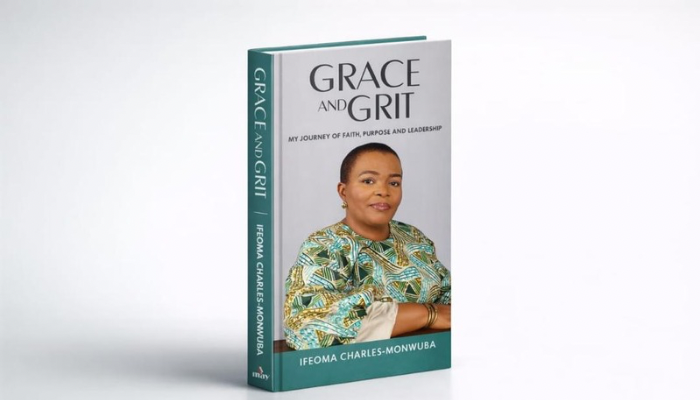
Ifeoma Charles-Monwuba (2026), Grace and Grit: My Journey of Faith, Purpose and Leadership. Lagos: May Publishing Limited.
Grace and Grit: My Journey of Faith, Purpose and Leadership is a powerful and deeply moving memoir that stands as both a personal testament and a beacon of inspiration for women navigating ambition, faith, and leadership in challenging contexts.
In the book’s closing affirmations, Ifeoma Charles-Monwuba captures the essence of her journey: finding the delicate rhythm between *grace* and *grit*—where strength is not the absence of fear but the resolve to press forward, faith is a deliberate choice rather than a fleeting emotion, and leadership is revealed not as a crown but as a humble calling rooted in service to people and purpose. These profound reflections in the Epilogue, titled “A Letter to the Young Woman I Once Was: Embracing Your Becoming,” are so resonant that readers may benefit from encountering them early and revisiting them at the close.
The book Grace and Grit arrives at a critical moment, when African women’s voices in international development, diplomacy, and leadership remain underrepresented. Far from a polished hagiography, this memoir offers raw candour and emotional honesty. Charles-Monwuba openly shares her vulnerabilities—academic struggles (particularly in Mathematics and Igbo), family financial hardship, the devastating loss of a child, health crises, workplace harassment, and the constant tension of balancing career ambition with cultural and familial expectations—rendering her story profoundly relatable and human.
Synopsis
Structured around a Preface, a Prologue (“The Becoming”), and eleven chapters—including “The Roots That Grounded Me,” “My Father’s Lessons,” “Choosing My Path,” “Finding My Voice,” “Purpose in Profession,” “Leading Beyond Borders,” “From Internal Reforms to Regional Influence,” “On the Frontlines of Leadership,” “Love and Life,” “Reflections and Legacy,” and the Epilogue—the narrative traces Charles-Monwuba’s extraordinary arc from her birth in Nnewi during the Nigerian-Biafran Civil War to her rise as a prominent figure in international development and diplomacy.
Raised as the eldest of ten children by parents of modest means but remarkable character, she finds her father—a mechanic and Biafran Corps of Engineers veteran—emerging as the emotional and moral anchor of the story. His steadfast belief in girls’ education, refusal to compromise her future for business gain, and disciplined yet loving parenting provide the foundation for her resilience.
The memoir follows her educational challenges, unexpected entry into Mass Communication (with aspirations toward Law), and a versatile career spanning advertising at Sunrise, public health communication at the Society for Family Health (SFH), advanced training at the University of Washington, leadership roles at WaterAid and ActionAid (including transformative work in Haiti and Senegal), and eventually as Sub-Regional Director for an international organization covering West Africa.
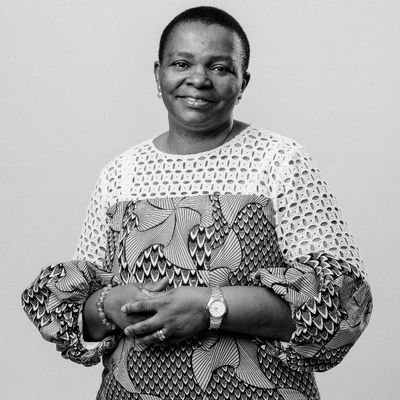
Ifeoma Charles-Monwuba holds a PhD in Development Communication from Caleb University, Lagos. She obtained a BSc in Mass Communication from the Anambra State University of Science and Technology, an MSc in Communication and Language Arts from the University of Ibadan, and a master’s in International Law and Diplomacy from the University of Lagos. She then received a certificate in International Health from the University of Washington.
She pays tribute to those who had a positive influence on her career. She mentions this reviewer because the reviewer supervised her first journalism internship while serving as the General Editor of Business magazine in Surulere, Lagos. On one of the assignments, she met and interviewed brilliant copywriter Seyi Lawale. Seyi Sanjo-Bankole invited her to Sunrise Advertising, a pivotal experience in her career. Then ther is Ifeanyi Ndupu.
Intimate family portraits are interwoven: the pain of losing her twin daughter, near-death experiences during childbirth, the joys and strains of motherhood alongside a demanding international career, and the unwavering support of her husband and siblings.
Throughout, Ifeoma Charles-Monwuba underscores the moral imperative of girl-child education and protection, framing it as a lived reality rather than as abstract advocacy.

Strengths
Compelling Father-Daughter Dynamic: Sir J.O.S. Ufondu is one of the memoir’s most memorable figures. His famous declaration that “education is the only inheritance no one can take from you,” coupled with tender-yet-firm moments (such as shaving her head for relaxed hair, only to reconcile with suya), beautifully illustrates compassionate, principled leadership.
– Thematic Depth and Framework: The dual motif of *Grace* (divine sustenance) and *Grit* (human resolve) provides elegant conceptual unity. Faith is portrayed as an active decision, while reflections on integrity, culturally rooted leadership, and the psychological dimensions of Africa’s challenges add intellectual weight.
– Candid Critique and Practical Wisdom: Charles-Monwuba offers experiential insights into the contradictions of international aid, maintaining integrity in flawed systems, and the personal costs of leadership (family separation, health struggles, emotional toll). Lessons in diplomacy, mentorship, team-building, and safe workplaces emerge organically through stories rather than didactic lists.
– Lived Feminism: Her advocacy for women’s economic independence, land rights, and against practices like domestic violence and the “superwoman” myth is practical, contextually grounded in Nigerian and West African realities, and refreshingly non-strident.
-Narrative Style: The chronological flow, interspersed with reflective pauses and family photos, balances vivid childhood warmth with insider perspectives on Nigeria’s development sector and global NGOs. It is inspirational without clichés, acknowledging doubts and failures with grace.
Areas for Improvement
The book’s length and occasional repetition of core themes (discipline, faith, paternal influence) could benefit from tighter editing for sharper pacing. Some later professional sections feel understandably abstracted due to confidentiality constraints, contrasting with the intimacy of earlier chapters. Prose is consistently clear and conversational, though varied sentence rhythm in denser reflective passages would further elevate readability.
Final Assessment
**Grace and Giory is a significant and timely contribution to African women’s memoirs, faith-informed leadership literature, and the discourse on international development. Ifeoma Charles-Monwuba demonstrates that professional success need not require compromising values, family, or faith. Her story challenges readers—particularly young women—to embrace their “becoming,” trusting that grace sustains the grit required for purposeful lives.
Highly recommended for anyone interested in resilient life stories, women’s leadership in Africa, public health and development ethics, or contemporary Nigerian social history. This is not mere triumph but authentic testimony—an offering of hope and practical wisdom to those still forging their paths.

Join BusinessDay whatsapp Channel, to stay up to date
Open In Whatsapp