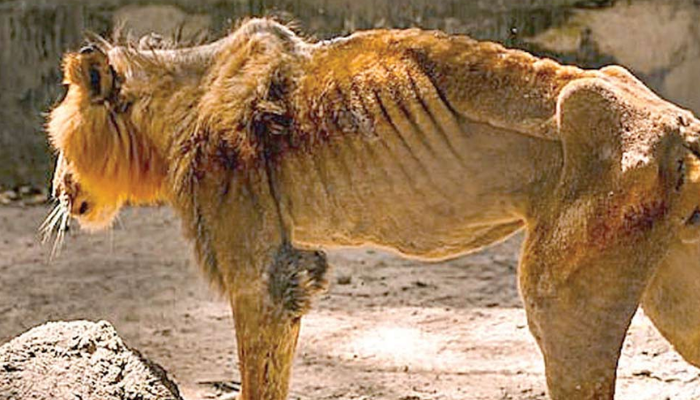
Words matter. Images matter too. In troubled Forests, satire becomes sociology. Memes become miniature manifestoes. Cartoons become civic mirrors. Forests under pressure often develop coded vocabulary through which they narrate their anxieties. That is how a WhatsApp meme suffused public discourses, not merely as folklore recycled for entertainment, but as a condensed metaphor cast upon the restless canvas of the Forest. Thus, what appeared like an ordinary animal tale quietly unfolded into an epigram about the turbulent trajectory of Forest’s cave journeys and the gathering shadows of 2027.
In the meme, a hungry lion summoned a fox and gave it a frightening ultimatum: “Bring me something to eat, or I will eat you instead.” Terrified for its own survival, the fox hurried away and soon encountered a donkey. But rather than warn the donkey of danger, the fox dangled before it the irresistible bait of power. “The lion wants to make you king,” the fox whispered. Flattered and excited, the donkey followed. The moment the lion saw the donkey, it lunged savagely, tearing off the donkey’s ears. Bleeding and shocked, the donkey escaped and angrily confronted the fox for deceiving it. But the fox, skilled in the art of manipulation, calmly explained away the violence: “Do not misunderstand the lion. Your ears were removed so the crown can sit properly on your head.” The explanation sounded strangely convincing. The donkey returned. Again, the lion attacked, this time severing the donkey’s tail. Again, the wounded donkey fled in outrage.
Yet again, the fox offered another soothing interpretation: “The lion only removed your tail so you can sit comfortably on the throne.” The donkey believed once more and returned for the third time. This time, the lion killed it. After the donkey’s death, the lion instructed the fox to bring the donkey’s brain alongside other organs. But the fox had already eaten the brain. When the lion demanded to know where it was, the fox replied with devastating irony: “The donkey had no brain, my king. If it had one, it would not have returned after you cut off its ears and tail.” The lion nodded in agreement.
Since then, the Forest has not stopped discussing the matter. It is neither the lion’s hunger nor the fox’s cunning but the strange elasticity of the donkey’s memory. For there are seasons in the life of every Forest when wounds cease to instruct. When creatures begin mistaking survival for wisdom and repeated injury for destiny. When mutilation becomes normalised simply because it arrives wrapped in ceremonial vocabulary. That was the fox’s true genius. Not deception alone. The fox understood that kingdoms are not ruled merely by claws and teeth but by meanings. Rename pain and many creatures will kneel before it willingly. Wrap suffering in rhetorical flourishes and victims themselves may begin defending the instruments of their injury.
Thus, torn ears became preparation. Severed tail became adjustment. Bruises became sacrifice. And hunger became patriotism to the throne. That is why the tale continues disturbing the Forest long after the donkey’s bones disappeared into the dust. Every creature recognises that the most dangerous predators are not always those with sharp teeth. Some possess only sharp tongues. The fox belonged to that tribe. It survived by laundering violence through language. Even now, the older tortoises sitting beneath ancient iroko trees insist that no kingdom collapses suddenly. First, words collapse. Meanings weaken. Language loses honesty. Soon afterward, the entire Forest begins walking cheerfully toward danger while singing songs composed by foxes.
That may explain why certain seasons in the Forest feel strangely repetitive. The drums change rhythm, yet the dance remains familiar. Banners change colour; yet, the hunger beneath the throne remains stubbornly ancient. Every few years, the pathways become crowded again with processions, promises and ceremonial declarations about a glorious dawn awaiting just beyond the next hill. And every few years, the foxes multiply. Some wear feathers. Some wear robes. Some emerge from shrines carrying polished proverbs. Others sit upon high branches translating the lion’s claw marks on the carcasses of donkeys into symbols of national progress.
Every hungry lion requires interpreters. Without foxes, wounds remain visible. With foxes, wounds become philosophy. Thus, the Forest gradually learns to romanticise its own suffering. Creatures begin lowering expectations. Light becomes miracle. Water becomes privilege. Silence becomes peace. Survival itself becomes evidence of prosperity. And slowly, almost imperceptibly, the Forest adjusts psychologically to the abnormal. This is how memory dies. Not dramatically. But conversationally. One explanation at a time. The elders often say that the first danger facing any kingdom is not the lion’s appetite but the creature’s willingness to forget where the claws touched previously. Once memory weakens, the pathways back to the cave become smoother. Old traps acquire fresh decorations. Ancient dangers return dressed as new opportunities. The fox understands this deeply. That is why it spends little energy sharpening the lion’s claws. Instead, it sharpens interpretation. It knows that if creatures can be persuaded to distrust their own wounds, the throne need not fear rebellion.
And so the Forest enters another season. One can already hear movement beneath the trees. The foxes are rehearsing again. Soon, they will begin polishing old phrases until they glitter like new coins beneath the sun. They will speak of destiny, stability, sacrifice and the glorious comfort awaiting creatures loyal enough to endure temporary discomfort. The lion, meanwhile, remains what it has always been: Hungry. Perhaps, that is why the tale refuses to disappear. It survives because every creature secretly suspects that somewhere within the Forest, another donkey is already being escorted toward another promise. Another procession is forming quietly between the cave and the marketplace. Another wound is preparing to arrive disguised as preparation for royalty.
And perhaps the cruelest lesson of all is this: Forests rarely perish because lions are hungry. Hunger is ancient. Forests perish when creatures begin applauding the elegance of the lion’s bite. That is when foxes flourish most dangerously. That is when memory becomes negotiable. That is when mutilation acquires ceremonial language. That is when kingdoms begin mistaking endurance for wisdom. Still, somewhere beyond the noise of rehearsing foxes and rumbling caves, one stubborn question continues drifting through the Forest like evening smoke: How many journeys should a creature make toward the same mouth before wisdom finally awakens?
The lion is still hungry. The foxes are already rehearsing their polished vocabulary beneath brightly coloured banners as another season of drums gathers across the vast Forest by the Atlantic. Around glowing lanterns and restless market fires, weary creatures argue endlessly over ancestry, accents and ancient pathways while the price of grain climbs beyond reach and darkness settles earlier upon the land. Yet, the foxes remain confident. They understand the weakness of kingdoms where memory leaks faster than suffering and where every wound can still be renamed sacrifice for a brighter dawn. Thus, old promises are returning in freshly ironed garments – renewal, rebirth, rescue and hope waiting just beyond the next procession to the hilltop throne. And somewhere beneath an ageing iroko tree, an old tortoise whispers quietly that Forests rarely perish because lions are hungry.
They perish when too many donkeys repeatedly mistake the pathway to the cave for the road to redemption. For there comes a season in the life of every Forest when danger no longer arrives roaring with exposed fangs, but singing with polished vocabulary and marching beneath colourful banners. The cave acquires decorations. The claws acquire interpreters. Even the growl begins to sound like an anthem of renewal. And so, the processions continue. Each cycle, the foxes repaint the same crumbling walls with newer slogans while insisting the Forest has entered a glorious new era. They rename famine adjustment. They rename fear vigilance. They rename prolonged darkness temporary sacrifice for a brighter dawn waiting perpetually beyond the next hill. Meanwhile, the creatures, exhausted by survival and seduced by ceremony, begin applauding the very echoes that once frightened their ancestors. That is how Forests drift quietly toward ruin, not through one catastrophic bite, but through the slow normalisation of the predator’s appetite. The extraordinary gradually becomes ordinary. Empty barns become familiar scenery. Broken pathways become accepted geography. Even despair learns to dress respectably and sit silently in the marketplace.
To reinvent the Forest and make it a Forest for all, the donkeys must first recover the one thing the foxes work tirelessly to destroy – memory. Forests begin to heal when creatures stop treating wounds as seasonal inconveniences and start reading them as warnings carved painfully into the bark of history. A Forest cannot change merely because the banners change colour or because newer foxes arrive speaking more polished grammar. Renewal begins the moment the donkeys learn to remember beyond the season of drums. They must also abandon the dangerous habit of mistaking noise for leadership. In troubled Forests, the loudest creatures are not always the wisest. Some merely know how to convert fear into applause and hunger into political music. The donkeys must therefore learn to examine not the sweetness of speeches but the footprints left behind by those making them. A wise Forest judges creatures not by the brightness of their feathers but by the condition of the pathways they once supervised.
More importantly, the donkeys must stop walking separately toward the cave while arguing over whose grassland is greener. Foxes flourish where the Forest remains fragmented into suspicious tribes of hooves, horns and tails. But predators grow uneasy when creatures begin recognising a shared danger larger than their smaller differences. A Forest divided endlessly by ancestry soon becomes easy meat for organised hunger.
The donkeys must also rediscover the discipline of questions. Questions are dangerous to foxes because they interrupt enchantment. Every promise must be pursued with another question. Every slogan must face memory. Every procession toward the hilltop throne must answer for previous journeys that ended in broken bones and empty barns. And perhaps above all, the donkeys must stop kneeling before creatures merely because they roar confidently from elevated rocks. The Forest was never created for lions alone. Rivers do not drink their own water. Trees do not consume their own fruits. A just Forest is one where strength protects rather than devours, where leadership means stewardship rather than organised feeding rights. Only then will the pathways cease leading endlessly toward the cave. Only then will the drums announce not another procession of deception, but the difficult rebirth of a Forest finally learning to belong to all its creatures.
2027: The lion is still hungry. The drums are already rolling across the Forest. The foxes have begun rehearsing fresh songs beside old ruins, polishing ancient promises until they glitter like new coins beneath the sun. But the Forest has heard such songs before. It has watched donkey’s ears disappear and called it adjustment. It has watched the tails vanish and called it sacrifice. Yet beneath all the changing vocabulary, the ancient appetite has remained stubbornly unchanged. The lion is still hungry. The question now drifting anxiously through the Forest canopy is whether the donkey will finally borrow some sense and brain this time around, or whether it will once again surrender memory to the music and walk trustingly toward the cave under the hypnotic guidance of foxes fluent in sedative lullaby, verbal carpentry, and grammar of grand deception.
.Agbedo, a professor of Linguistics, University of Nigeria Nsukka, Fellow of Netherlands Institute for Advanced Study, is a public affairs analyst.

Join BusinessDay whatsapp Channel, to stay up to date
Open In Whatsapp