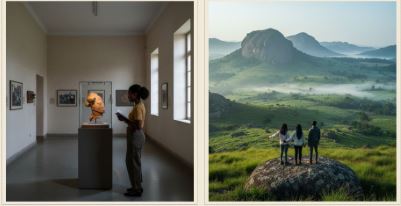
Nigeria’s tourism landscape reflects a growing economic gap, Lagos and Abuja attracting a larger share of tourists, tourism investment, while Osun and Plateau continue to struggle despite their significant tourism potential.
Lagos generated N396.54 billion in economic activity during the 2025 Detty December season, reinforcing its position as Nigeria’s leading tourism and entertainment destination. In contrast, Plateau and Osun continue to face challenges that have slowed tourism growth despite being home to some of the country’s major natural and cultural attractions.
The Federal Ministry of Arts, Culture, Tourism and the Creative Economy identifies Plateau State for outdoor recreation and cool-climate tourism and Osun for cultural and heritage tourism. The ministries mapping project highlights the tourism strengths of both states and their potential to attract more visitors and investment. The Osun State Government also says it is pursuing plans to grow the state’s economy by establishing an investment promotion agency to attract businesses, providing tax incentives for companies that create jobs, investing in roads, bridges and other transport infrastructure, and promoting tourism alongside other sectors.
Plateau’s tourist attractions include Shere Hills, Assop Falls, Kurra Falls, Jos Wildlife Park and the National Museum, Jos. Osun’s tourist attractions include the Osun-Osogbo Sacred Grove, the National Museum in Ile-Ife, the Ooni’s Palace and the Olojo Festival. While these attractions continue to draw visitors, both states have struggled to translate their tourism assets into stronger economic returns.
Read also: Africa’s 10 best-performing countries in the fight against corruption
Soba Oyeleke, a tourism analyst and writer, highlighted the historical lack of access to finance, technology, and poor collaboration between government and local communities in managing tourist attractions. Rafiu Isamotu, former Osun State Commissioner for Health, warned tourists and devotees against drinking directly from the Osun River during festivals due to contamination risks. Despite this warning, many attendees continue to drink from and bathe in the river during the festival due to its perceived divine healing properties. These health risks further prevent potential tourists from exploring one of the nation’s most popular tourism locations.
Meanwhile, Abiodun Ojo, Osun State Commissioner for Culture and Tourism, emphasised the need for tourists to pay for services to generate revenue for site maintenance and cautioned visitors against desecrating cultural sites.
Solomon Dalung, former Minister of Youth and Sports, has previously raised concerns over the safety of highways leading to Jos, a claim that was countered by Bulus Ayuba of Plateau Advocates for Peaceful Co-existence who argued such narratives unfairly demarket the state.
Chuwang Pwajok is the General Manager of the Plateau State Tourism Corporation in Nigeria, noted that past neglect, rapid urbanisation, and illegal mining have significantly eroded Plateau’s tourism potential. Caleb Mutfwang, Plateau State governor and the Ministry of Tourism have echoed these concerns, pointing out that iconic sites like the Wildlife Park and Hill Station Hotel suffered from neglect, encroachment, and illegal mining.
Read also: Sustainable consumption: The rise of conscious consumers
The state government has since partnered with the Federal Government to revamp these assets and restore the state’s tourism appeal to further boost its appeal to both local and foreign tourists looking to escape the hustle and bustle of urban life for a more serene and quiet feel.

Join BusinessDay whatsapp Channel, to stay up to date
Open In Whatsapp