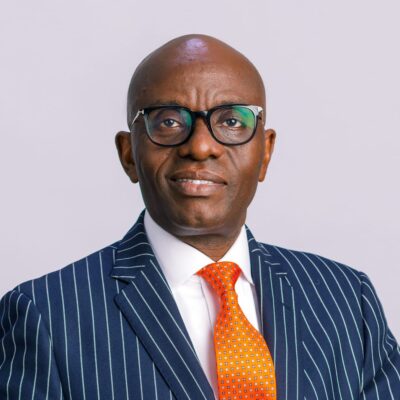
In Nigeria’s crowded financial services industry, where reputation is earned slowly and tested constantly, Ade Buraimo has emerged as one of the quieter but increasingly consequential builders of modern banking ambition. As Managing Director/CEO of Alpha Morgan Bank and Group Managing Director of the Alpha Morgan financial services platform, Buraimo represents a particular kind of Nigerian business leader: disciplined, technically grounded, commercially alert and focused on building institutions that can survive beyond personality.
His story is not merely that of a banker who became a chief executive. It is the story of a professional who has moved across commercial banking, investment banking, asset management, mortgage finance and capital markets, and then used that accumulated experience to shape Alpha Morgan’s evolution from a capital market-facing institution into a broader financial services brand.
That journey matters because Nigeria’s banking industry is entering a more demanding phase. The sector is no longer being judged only by branch visibility, balance-sheet size or headline profitability. It is being judged by capital strength, governance quality, digital capability, risk discipline, customer experience and the ability to serve a changing economy. Buraimo’s leadership at Alpha Morgan sits directly within that transition.
From Investment Banking Roots to a Broader Financial Platform
Before Alpha Morgan Bank became part of Nigeria’s emerging commercial banking conversation, Alpha Morgan had already built its identity in investment banking, asset management and capital market services. Public profiles describe Buraimo as Group Managing Director of Alpha Morgan Capital Group, with more than 30 years of senior management experience across commercial and investment banking, treasury management, oil and gas, telecommunications, manufacturing and real estate.
That breadth is important. It gives him a view of finance that goes beyond deposit-taking. He understands banking as an engine of capital allocation: how savings become investment, how liquidity supports enterprise, how corporate balance sheets are strengthened, and how financial institutions must manage risk while still enabling growth.
Alpha Morgan Capital’s recognition in the Financial Times/Statista Africa’s Fastest Growing Companies ranking helped position the group as one of Nigeria’s ambitious financial services players. The FT ranking listed Alpha Morgan Capital Managers Ltd among Africa’s fast-growing companies in 2023, with the company classified under fintech, financial services and insurance. BusinessDay also reported Alpha Morgan Capital’s earlier recognition among Africa’s fastest-growing companies in 2022.
For Buraimo, that recognition was more than a badge. It signalled that Alpha Morgan was no longer simply operating in the background of Nigeria’s capital markets. It was becoming part of the country’s wider financial-growth story.
A Career Formed by Banking Discipline
Buraimo’s professional credentials explain much of his leadership temperament. He holds a Banking and Finance degree from Ogun State University and a master’s degree in Banking and Finance from the University of Lagos. He is also listed as a Fellow of the Chartered Institute of Bankers, an Associate of the Chartered Institute for Securities & Investment in the UK, and an Associate of the Chartered Institute of Stockbrokers.
His executive development has also included senior programmes at institutions such as Lagos Business School, IMD in Lausanne, Cranfield University School of Management and Harvard Business School’s Owner/President Management programme.
But what stands out most is not the list of qualifications. It is the kind of career they have supported. Buraimo previously served as Managing Director of Guaranty Trust Bank, Sierra Leone, where he was associated with the bank’s “Bank of the Year” recognition in 2010. He also served as Managing Director of GTHomes, GTBank’s mortgage banking subsidiary, and held industry roles including Chairman, Ethics, Rules and Regulation of the Funds Managers Association of Nigeria and President of the Nigerian National Advisory Council of the Chartered Institute for Securities & Investment, UK.
This background gives his leadership a strong institutional flavour. He is not merely a promoter of a financial brand. He is a banker shaped by regulation, governance, market confidence and operating discipline.
The Commercial Banking Leap
The most defining recent phase of Buraimo’s career is Alpha Morgan’s movement into commercial banking. Alpha Morgan Bank commenced operations in 2025 after regulatory approval, positioning itself to serve individuals, SMEs, corporate organisations and public sector institutions. Public records and reports place Buraimo at the centre of this transition as Managing Director/CEO of the bank.
Read also: Petralon pumps second well on Dawes Island, adds 2,800 bpd
This move came at a sensitive moment in Nigerian banking. The Central Bank of Nigeria’s recapitalisation programme has forced banks to think more seriously about capital buffers, governance architecture and long-term competitiveness. In that context, Alpha Morgan Bank’s reported capitalisation affirmation by the CBN in March 2026 became a significant milestone for the institution. The Guardian reported that the CBN affirmed Alpha Morgan Bank’s capitalisation, reinforcing the lender’s regulatory compliance and expansion plans.
For a relatively new commercial bank, such affirmation is not merely procedural. It speaks to readiness, credibility and institutional seriousness. It also gives the bank a stronger platform from which to pursue growth in a market where trust is the real currency.
A Leadership Philosophy Built Around Trust
The clearest thread running through Buraimo’s public leadership is the language of trust. In financial services, trust is not an abstract virtue. It is the foundation of deposits, mandates, investment flows, credit relationships and customer loyalty.
Alpha Morgan’s growth under his leadership suggests a deliberate attempt to combine ambition with caution. The institution wants to scale, but not as a reckless challenger brand. It wants to expand, but within the language of regulatory compliance, customer satisfaction and governance discipline.
That balance is crucial in Nigeria’s financial system. Customers are increasingly sophisticated. Corporate clients demand execution. Retail customers want convenience. Regulators want stability. Investors want governance. Technology is changing expectations. Against that backdrop, a bank must do more than promise innovation. It must prove reliability.
Buraimo appears to understand that the future of banking will belong not only to the biggest institutions, but to those that can combine capital strength with agility. Alpha Morgan’s strategy points in that direction: build credibility, deepen access, expand carefully, support customers and use technology as an enabler rather than a slogan.
Digital Access and Customer-Centred Expansion
Alpha Morgan Bank’s rollout of digital services and physical expansion reflects this dual strategy. In 2025, the bank launched its USSD code, *734#, allowing customers to open accounts and carry out basic banking transactions through mobile phones. Reports also show the bank expanding its branch footprint, including new branches in key locations as part of a wider push to deepen customer access.
This is strategically important. Nigeria’s banking future is not purely digital and not purely physical. It is hybrid. A serious bank must be present on mobile phones, in business districts, in commercial communities and across the trust networks where individuals and enterprises make financial decisions.
For Buraimo, expansion is not simply about visibility. It is about connection. The bank’s public messaging around branch growth has emphasised community, access and customer-focused banking experiences. That language suggests an institution trying to build from the ground up, not merely announce itself from the top.
Why Ade Buraimo’s Story Matters Now
Ade Buraimo’s significance lies in the timing of his institutional project. Nigeria needs banks that can support businesses through volatility, help households navigate financial pressure, provide capital to productive sectors and deepen confidence in the formal financial system.
Read also: What real scale actually demands
The country’s reform environment has created both stress and opportunity. Inflation, currency repricing, monetary tightening and recapitalisation have raised the bar for financial institutions. Weak banks will struggle. Stronger, better-governed and more adaptive institutions will have room to grow.
Alpha Morgan’s challenge is to convert promise into durable market share. That will require more than capital. It will require execution, risk management, technology, talent, brand trust and consistent service delivery. But under Buraimo, the institution has an experienced hand at the centre of that journey.
He brings the memory of old banking discipline into a new banking moment. He understands capital markets, but also commercial banking. He understands institutional growth, but also regulatory pressure. He has worked across sectors, but remains anchored in finance. That combination gives Alpha Morgan a leadership profile that is both technical and entrepreneurial.
The Patient Work of Institutional Growth
What makes Buraimo’s leadership compelling is that it does not appear driven by noise. In an environment where corporate ambition is often loudly marketed before it is structurally proven, his approach has been steadier: build the platform, secure recognition, deepen governance, obtain regulatory validation, expand access and then compete.
That is the more difficult road. But in banking, it is often the only road that lasts.
Ade Buraimo’s work at Alpha Morgan is therefore not just about one man or one institution. It is about a wider Nigerian financial story: the movement from fragmented ambition to institutional maturity; from boutique competence to broader banking relevance; from market participation to market confidence.
Read also: Alli scales APC gov’ship screening in Oyo, receives ex-NASS members’ endorsement
If Alpha Morgan continues to grow with discipline, its emergence will say something important about the future of Nigerian banking. It will show that new-generation financial institutions can be built not only on technology and capital, but on experience, governance, patience and trust.
And at the centre of that story stands Ade Buraimo — a banker-builder whose legacy may ultimately be measured not by how loudly Alpha Morgan arrived, but by how firmly it endures.

Join BusinessDay whatsapp Channel, to stay up to date
Open In Whatsapp