Bethlehem Tilahun Alemu built a global footwear brand from local materials – her story offers a blueprint for Africa’s industrial future
There was nothing remarkable about the sandals. They were made from discarded truck tyres, hand-spun cotton and leather sourced from Ethiopian tanneries. For generations, they had been worn by farmers, labourers and ordinary people across Ethiopia. They were practical, durable and inexpensive. Nobody imagined they belonged on the shelves of international retailers.
Everyone, that is, except Bethlehem Tilahun Alemu. Fresh out of university in 2005, Alemu looked at those humble sandals – known locally as barabasso or selate – and saw something the rest of the world had overlooked. Ethiopia did not need to export more hides to Europe and Asia only to import expensive finished shoes. It could manufacture its own globally competitive footwear, using its own leather, cotton, artisans and centuries-old craftsmanship.
It was an audacious proposition.
At the time, Ethiopia was Africa’s largest livestock producer and possessed one of the continent’s richest leather resources. Yet, like many African economies, much of its wealth left the country in raw or semi-processed form. The country’s hides and skins were exported to manufacturers abroad, where the real value was added through design, branding and manufacturing before finished products were sold back to consumers around the world.
Alemu believed the missing ingredient was not leather. It was imagination.
Building from the Ground Up
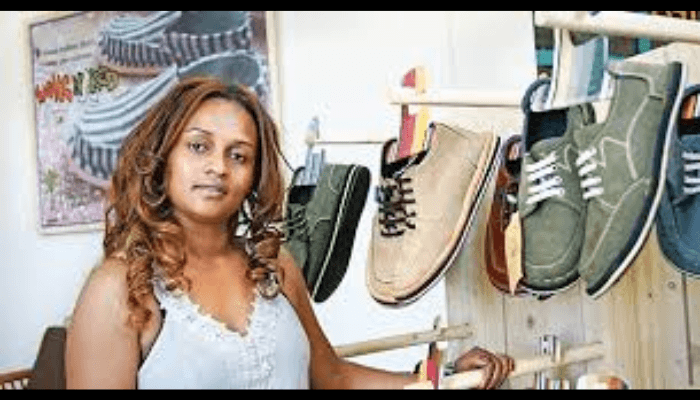
She launched SoleRebels in 2005 with approximately $5,000 raised from family and friends and a workshop built on land inherited from her grandmother in the Zenebework district of Addis Ababa. Her first employees were local artisans whose traditional skills had long been undervalued despite Ethiopia’s deep shoemaking heritage.
The early days were anything but glamorous. The first prototypes failed spectacularly. Shoes made from recycled tyres weighed nearly six kilograms each. Friends questioned her sanity. Investors showed little interest. Conventional wisdom suggested Ethiopia should continue exporting leather rather than trying to compete with established global footwear companies.
Alemu refused to abandon the idea. Instead, she returned to Ethiopia’s traditional craftsmen, studying centuries-old techniques until her team developed lighter, more commercially viable designs. Innovation, she concluded, did not require abandoning tradition. It required modernising it.
That philosophy would become the company’s competitive advantage.
Turning Local Resources into Global Brands
SoleRebels deliberately built its products around Ethiopian inputs. The soles came from recycled tyres. The uppers incorporated hand-spun organic cotton, Abyssinian hemp, hand-loomed textiles and locally sourced leather. Every pair embodied a supply chain rooted almost entirely within Ethiopia.
This was not merely an environmental strategy. It was an industrial policy executed by an entrepreneur.
Each locally sourced input created demand for another Ethiopian supplier. Leather processors supplied hides. Cotton growers supplied fibre. Weavers produced fabrics. Artisans assembled the final products. Logistics companies moved goods. Retailers created market access.
Instead of exporting raw leather, Ethiopia exported value. The strategy worked.
Within a decade, SoleRebels had expanded into more than 30 countries, selling through retailers including Whole Foods, Urban Outfitters and Amazon while opening branded stores in markets such as Taiwan, Singapore, Switzerland and Austria. By 2016, the company had sold more than 125,000 pairs of shoes and helped create around 1,200 jobs across its value chain.
The numbers tell only part of the story. The greater achievement was symbolic.
For perhaps the first time, millions of consumers encountered an African footwear brand not as a novelty or charity product, but as a premium lifestyle brand competing on quality, design and authenticity.
From Shoes to Systems
Many entrepreneurs stop after building one successful company. Alemu kept asking a larger question.
If Ethiopia could build a global footwear brand from local leather, why couldn’t it do the same with coffee?
Coffee originated in Ethiopia, yet for decades, much of the country’s exports consisted of green beans processed and branded elsewhere.
The pattern looked familiar. Raw material exported. Value added abroad.
So she launched Garden of Coffee, an enterprise designed to showcase Ethiopian coffee culture through locally branded retail experiences rather than commodity exports alone. She later expanded into Republic of Leather, a luxury leather goods company built around the same philosophy of domestic value addition.
Across each venture, the underlying strategy remained remarkably consistent. Do not merely export what the country produces. Transform it. Brand it. Own more of the value chain.
Why Her Story Matters for Africa
Alemu’s success comes at a moment when Africa is rethinking its place in global commerce.
According to the United Nations Conference on Trade and Development, the continent continues to depend heavily on exports of primary commodities, leaving many economies vulnerable to price volatility while limiting industrial development.
Yet examples like SoleRebels suggest another path.
Rather than competing solely on the abundance of raw materials, African firms can compete on design, craftsmanship, sustainability and manufacturing excellence.
This shift is already visible across sectors. Ghanaian entrepreneurs are processing cocoa rather than exporting only beans. Kenyan companies are adding value to avocados before export.
Nigerian firms are producing finished leather goods, cosmetics and processed foods from local agricultural resources.
The common thread is value addition. It is the same lesson that propelled countries such as Italy in fashion, Japan in automobiles and South Korea in electronics.
Prosperity is rarely created by exporting raw materials alone. It is created by building industries around them.
The Go Local Lesson
For Nigeria, Bethlehem Tilahun Alemu’s journey carries an unmistakable message.
Nigeria possesses one of Africa’s largest livestock populations, substantial leather-processing capacity, abundant cotton, growing fashion talent and one of the world’s most vibrant creative industries.
Yet much of that potential remains fragmented. Leather leaves in raw form. Textiles are imported.
Fashion brands struggle to source local industrial inputs consistently. The opportunity is not simply to manufacture more shoes.
It is to build integrated ecosystems where farmers, tanneries, textile producers, designers, manufacturers and retailers reinforce one another.
That is precisely what SoleRebels achieved. Bethlehem Tilahun Alemu did not invent leather.
She did not invent sandals. She simply refused to accept that Ethiopia’s role in the global economy should end at the export dock.
In doing so, she built something more valuable than a successful company. She built proof that Africa’s greatest exports need not be its raw materials. They can be its brands.

Join BusinessDay whatsapp Channel, to stay up to date
Open In Whatsapp