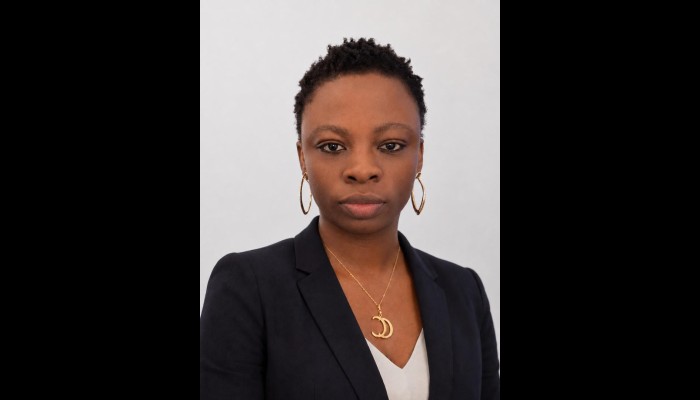
In early 2020, as COVID-19 shut down economies around the world and governments imposed sweeping restrictions, a select group of public servants continued reporting to work to ensure essential services remained operational. In Ghana, several state-owned enterprises (SOEs), particularly in the transportation and aviation sectors, faced severe liquidity challenges as lockdown measures disrupted operations and revenue streams. The people responsible for determining which institutions received support, how much they received, and under what conditions included Mmabila Azika.
Selected as part of the Ministry of Finance’s Treasury and Debt Management Division’s critical staff during the pandemic, Azika helped evaluate and facilitate approximately $42 million in financial support for SOEs facing significant liquidity constraints. The decisions were not straightforward. With public resources finite and institutional needs competing, her assessments had to weigh the immediate survival of essential services against longer-term fiscal sustainability and determine which organizations had viable paths forward and which required structural intervention alongside financial relief. The assignment placed her at the center of some of the government’s most urgent financial decisions during an unprecedented crisis, requiring rigorous analysis and sound judgment when the stakes could not have been higher.
Before the pandemic, before Ernst & Young, and before the University of Virginia’s Darden School of Business, Azika was already developing expertise in financial risk assessment and public-sector finance. At Ghana’s Ministry of Finance, she evaluated the financial health and creditworthiness of SOEs, helping inform decisions on when government support should be extended and when additional borrowing should be approved.
Her analyses informed recommendations to the Minister of Finance on requests ranging from $300,000 to $126 million. These assessments covered organizations operating across different sectors, including utilities, transportation, aviation, and education, whose performance and services have direct implications for economic activity and public welfare. Beyond reviewing financial statements, the work required understanding operational realities, industry dynamics, long-term sustainability, and the broader context of support decisions that extend beyond a single balance sheet and affect the welfare of many Ghanaians.
Recognizing the need for greater consistency in evaluating organizations across diverse sectors, Azika developed sector-specific analytical frameworks that strengthened the quality of assessments and improved recommendations provided to policymakers. Her work contributed to more informed decision-making on the deployment of public resources and the management of fiscal risk.
At EY, she worked with both local and multinational organizations across industries including energy, manufacturing, fast-moving consumer goods, and shipping. She evaluated financial reporting systems, assessed internal controls, identified financial risks, and ensured compliance with International Financial Reporting Standards.
Among her notable engagements, Azika identified revenue recognition irregularities at a manufacturing company that, if left unaddressed, could have exposed the organization to significant financial reporting risks. Her recommendations not only resolved the immediate compliance gaps but also restructured how the company approached revenue reporting going forward, reducing the risk of recurrence and improving reporting quality and compliance.
Azika’s professional accomplishments are matched by an equally distinguished academic record. She graduated with First Class Honors in Accounting from the University of Cape Coast before earning national recognition as the Overall Best Graduating Candidate of the Institute of Chartered Accountants Ghana in 2021. She also received multiple awards for excellence in accounting and taxation.
That record of achievement continued at the University of Virginia’s Darden School of Business, where she pursued an MBA with concentrations in Strategy Consulting, Corporate Finance and Investment Banking, and ESG. There, she earned several of the school’s most prestigious honors, including the William Michael Shermet Award, the Class of 1986 Peter J. Niehaus Award, and the Darden Faculty Award, recognizing her consistent academic excellence and meaningful contributions to the Darden community.
Azika is preparing to join Bain & Company’s Chicago office, one of the world’s leading management consulting firms. The move represents a natural extension of the work that has defined her career. Whether evaluating the financial sustainability of state-owned enterprises, supporting government decision-making during a national crisis, strengthening financial accountability within multinational corporations, or developing strategies for long-term value creation, she has consistently operated at the intersection of analysis and execution.
What distinguishes Azika is not any single achievement, but the consistency of the thread connecting them. As organizations navigate increasingly complex economic and operational challenges, that ability has become one of the most valuable forms of expertise. It is also the expertise that has defined Mmabila Azika’s career thus far and one she intends to continue bringing to organizations and clients as she begins the next chapter of her professional journey.

Join BusinessDay whatsapp Channel, to stay up to date
Open In Whatsapp