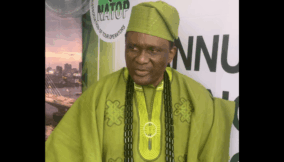
Afioluwa Mogaji popularly known as Africanfarmer, chief executive of X-Ray Farms Consulting is one of the leading agribusiness consultants in the country. His passion for agriculture and early self-discovery has helped him become an authoritative voice in agribusiness within and beyond the shores of Nigeria. Many farmers and aspiring ones often have a headache contending with high costs of capital such as lands and machineries Mogaji, but Mogaji who started farming about two decades ago while still an undergraduate has lots of insights to share on making good income from farming and other relates businesses.
Mogaji says, “I changed my first name formally to Africanfarmer in 2004 because God told me there would soon be an agricultural revolution and that I would be stirring farms to success across Africa .” Mogaji is a practising farmer, farming consultant and farm produce marketer. He says, “My business X-ray Farms Consulting is into consulting, training, market and advisory services for farmers. I also do marketing of agricultural produce because many farmers have a challenge on how to market their farm produce. When farmers come to me, I do an x-ray of the farming business and can detect what needs to be done for the business to be productive or more profitable. This x-ray can even be done before the person commits any funds to the business. My business does the feasibility report, assesses the marketing channels and conducts training. On my farms, we produce maize all year round using irrigation; we also produce watermelon, leafy vegetables, tomatoes, cucumbers and cassava. I started commercial farming in 1996. But currently I am doing more of consulting and marketing of farm produce. To produce crops, I partner with farmers and do outsourcing of the operations on the farm now.”
Mogaji has never committed money to buying farmlands or machineries. He says, “There are government owned lands available in very remote areas in virtually every state of the country that farmers can use and pay for just within the period they use it –Pay As You Go. Irrigation facilities are also already there. One just pays to use these facilities. If you decide not to use the land in the next planting season, you will not have to pay. Those areas are not so conducive for living, they are a bit far from towns and cities. I used 250 acres of such land in Iseyin, Oyo State . Government farmland is also available for use on the outskirts of Lagos . In Sepeteri, there is about 4,000 hectares waiting for people to farm. I have used farmlands in different parts of the country including Jigawa state. When I no longer want to use farmland in an area, I just pack my bags and leave for another place. My family is in Lagos ; I used to go on Mondays to my farm sites and came back on Fridays or Saturdays. After I mastered the art, I would go to farm once in two weeks.
Manpower
To reduce overheads I did not have permanent staff on the farm. Every year I would get people to work on the farm. There are people in such farming communities called ‘Egede.’ They are from Benue or the Middle belt of the country. They work based on agreement. They do not really need monitoring because there is an agreement on what they would be paid at the end of the year if they perform. They get N70,000- N100,000 or a motorbike at the end of the year depending on what they want. They do not steal because if they are caught it is breach of contract on their part and the farmer would not be obliged to fulfill his own part. Moreover, food is very cheap in those villages.
Supervision
When I was actively engaged in farming, I would partner with a resident farmer to supervise my farmhands. If I am cultivating 10 hectares, the farmer gets 20 percent of the proceeds. It does not cost him anything, all he does is to come to the site in the morning and tell the farmhands what to do and he goes to his own farm. When returning, he checks on them.
Challenge
Every business has it challenges but we learn and become better as a result. In 2009 we planted watermelon. A retired military officer also planted watermelon commercially beyond what the market could absorb and at harvest time, the market was flooded with his water melon. So we began selling in churches and in urban areas. After that experience, if we want to plant about 50 hectares of any crop, we plant the crops in five hectares of land each every week, so they would mature and be harvested at different times. We may start planting during the rainy season and irrigate during the dry season or start during the dry season with irrigation
Background
I have OND from the federal college of agriculture, Akure and HND from federal college of Animal health, Moor Plantation, Ibadan . I have attended courses at Fate Foundation, a Business School . As a child, growing up in Oyo State , we had a big garden at home. One of my aunts from the village helped us plant some things in the garden. While my brothers watched cartoons on TV I worked in the garden. At a time, my mum was transferred to Lagos and my dad took a consultant job in Ondo State to turnaround some companies . They gave me pocket money and I went to buy day old chicks. I would buy day old chicks and sell after every three weeks while in Form One. By the time I was in Form Three I was raising cockerels from January to December. I started selling to my Dad’s friends and he got to know and started giving me money upfront to rear chickens for his friends.
I insisted on going to polytechnic to study agriculture even though I had the admission to a university to study Wild Life and Fisheries. My Dad was displeased. It took the intervention of relatives. While at the college of agriculture, I started doing the business of buying cassava, processing and selling. During my Industrial Attachment before proceeding for HND, I got into commercial farming. I now use my experience in farming to stir upcoming farmers and other agribusiness investors to success.
Since my business also assists farmers to get inputs and provide other support systems to farmers, In 2011, I was trained by United States Agency For International Development (USAID) as a” Champion For Change” in the agricultural sector in President Obama’s “Feed the Future Project” . Last year, I became an Ashoka Fellow, which is a global network of social entrepreneurs. In August this year, I was privileged to be selected by the United States government to represent Nigeria in the prestigious International Visitors Leadership Programme (IVLP) focusing on US Foreign Policy and Food Security in the United States.”
Africanfarmer is also championing a project called “Green Collar Jobs” where he plans to raise 1000 youths who will make One Million Naira profit in different agricultural value chains by 24th December, 2015.
OLUYINKA ALAWODE

Join BusinessDay whatsapp Channel, to stay up to date
Open In Whatsapp