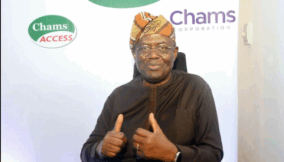
The managing director of the Niger Delta Development Commission (NDDC), Nsima Ekere speaks to BusinessDay on the challenges he met on ground he resumed office only eight months ago. He says the new management met a high number of abandoned projects, a fraud tainted scholarship scheme, politically induced projects, and over N1.7 trillion owed the Commission by the FG alone. Despite the challenges, he said that he is developing an economic model to drive development in the Niger Delta. He speaks with IGNATIUS CHUKWU, Regional Editor, BusinessDay on what to expect from the NDDC.
Can you give us an overview of your activities and challenges so far since you took over as managing director and chief executive officer of the Niger Delta development Commission (NDDC) in the past eight months?
First, let me formally welcome you to this talk today; I had wanted this interaction much earlier than now, but for time. I am happy that it is happening now.
Most of you have been reporting the NDDC since inception, and know these things more. When we came in (November 7, 2016) and found what the situation was like, and without disparaging the past boards that laid the foundation for the NDDC, we saw that a whole lot needed to be done. One of the things that stunned us was the reports of the Orosanya panel and the Bureau of Public Reforms that had looked at the NDDC with a view to restructuring and getting it set to do business and deliver efficiently. The conclusion was that basically everything that could be wrong with an organization was wrong with NDDC. Based on this, we came up with a well-articulated document termed the 4-R Strategy aimed at restoring the NDDC back to its core mandate for the benefit of the Niger Delta people. We must first reform the governance system to run the Commission for efficiency. We must restructure our balance sheet, which is presently over-bloated. We have contingent liabilities in excess of N1.3 trillion. So, there is need to look at the resources of the Commission and whatever receivables that come in on monthly and yearly bases. We intend to reform that balance sheet to make it more meaningful and achievable.
Cancelling contracts worth N200 billion
The last management meeting approved the cancellation of over 600 projects. Reasons were either because they were improperly procured or that contractors are not on site. Some are as far back as 2002. Surprisingly, some of them had collected advance payments with zero work on site. So, we cancelled work worth N200 billion. That is the first stage. The second stage is to look at work less than five per cent. Some contractors went to site but did very negligible work in relation to bill of engineering measurements. Some contractors have not been on site for up to seven years. We will review some of those contracts.
Restoring the commission’s original mandate
We must restore the Commission to its original mandate. The NDDC was set up for rapid socio-economic and infrastructural development of the Niger Delta region. We would ensure that projects henceforth would meet this objective. In the past, you would see that some of our projects were politically motivated, done to satisfy one person or the other. We say, if we have to follow the master plan, every project and every amount spent must be an incremental effort to the master plan’s milestone. The master plan is about 10 years old already. It was supposed to be accomplished in 15 years but after 10 years, not much has been achieved. So we want to go back to it.
The Niger Delta plan
One point that I like to emphasize is; the Niger Delta Regional Development master plan is not just an NDDC master plan but a plan that clearly spells out the policies and programmes that must be collectively executed by all the development centres: The FG (Ministry of Niger Delta, NDDC), the IOCs, state governments, local councils, development partners, among others. These are all independent centres of development, but the Master Plan is supposed to integrate all these development partners so that at the end of the day, you achieve an integrated development of the entire region. So, we want to get more stakeholder buy-in engagements with all the state governors, IOCs, international development agencies (World Bank, EU, USAID, etc) working to develop the region. So, if we know that by say, year five, this is what we want to achieve, all the people working in that area would work together to achieve a certain milestone. So, we want to go back to the core mandate of the Commission. The day of struggling with local councils on who will buy chalk for a school is over. We want to do less of smaller projects and more of bigger and region-wide projects that would impact on the socio-economic development of the region.
Reforming NDDC
We must reform the way we run NDDC, the steps to take for anything we want to do. We want to rely more on IT. If you deploy IT as the world is advancing, there are programmes that can do most of the things you want to do to help us design and reform our governance system.
Generally, we are also working on the staff so that everybody will jointly be on the same page. We want our staff to believe in what we are doing. If we can deliver this reform agenda, we would have helped in the socio-economic development of the region. That is what we met and what we want to do going forward.
We have contractors who from the onset had the mindset of defrauding the Commission; what steps are you taking against these people?
I must start by acknowledging the decision by the last board of the NDDC who saw this and stopped upfront payments. Even before that time, banks backed all advanced payments. Stopping it is good and bad, but we are determined to go after all contractors who got money and abandoned the jobs. We are also going after their banks. We have so far recovered N60m. We want to ensure that all NDDC funds in the hands of contractors with jobs not done are recovered. We are going to prosecute them. We are working with the Presidency on prosecution.
Is there a way of creating an economic direction of these projects and link them up so they do not stand-alone but be integrated to deliver economic outcomes?
The master plan like we said will deal with this. We are working on the plan and we want to have a development plan for the region so that every project would be in the master plan. That would drastically reduce incidence of stand-alone projects or repeat of same. There have been cases of several agencies doing same project. There was one case where a state government had awarded and paid a contractor, NDDC awarded and paid another contractor for same project, and Ministry of Niger Delta awarded and paid same. The development agencies must partner. The idea of government agencies competing must be totally avoided. We must know what each is doing so that this kind of scenario would not come back. Stakeholder engagements would help to eliminate this.
What happens to those who got NDDC scholarships and seem abandoned abroad?
Let me say that NDDC does not have the intention or would never abandon any of its scholars. When we came in, we discovered a lot of discrepancies in the way the scholarship scheme was handled. If you award scholarship, it is for those studying abroad but we saw money paid to those in Nigeria. We have cases where some got admission in certain countries for certain amounts but would go to another university with a different programme probably the other university is cheaper. So, you have a scholar in one country and but you get invoice from strange universities. Also, the NDDC has areas of scholarship focus for manpower development but some had gone to courses different from what was approved for them. So, we set up an in-house committee to resolve these things. Within weeks of that committee, the first disbursement was made for those without issues. Just recently, another set of releases was made and over 80 per cent has been treated. What is remaining is very negligible and we are still working on it. We sympathise with their suffering but we are treating genuine cases. That is why at any moment we see a genuine case, we deal immediately, not minding the work of the committee. A lot of people have defrauded the government using the NDDC scholarship. Because it involves foreign currency, a lot of people used the scholarship to defraud the NDDC. The assurance we give is that all genuine NDDC scholars would receive their due payments, even if it takes some time. Let them bear with us for the inconveniences.
The Rivers State Government has accused the NDDC of pulling out of a partnership with them on the Mother-and-Child Hospital, can you comment on this?
NDDC did not pull out of the partnership. Rather, the Rivers State Government, as part of the programmes they were trying to do for the 50 years anniversary of the creation of the state, did us a letter (which we are still looking into) informing us that they wanted to pull out of the project. We are still looking into the details to see a way to resolving it. Rivers State Government is our host and we have had a robust relationship and we want to maintain this relationship and indeed with all the state governors and see ways of resolving any conflicts.
You said you have a robust relationship with governors of the Niger Delta, but the Rivers State Governor made it clear that his administration has no cordial relationship with NDDC. What is responsible for this strained relationship?
Our target is to have a robust relationship with all state governments in our region. The major problem in the past was the disconnect between both bodies because of projects. We have had meetings with the Rivers State Governor and he expressed areas of concern. The projects we want to do are in their territories and they must know about what we are doing to avoid duplication. We are going to keep engaging more with them. One thing that we have done differently is to set up state budget committees. In drawing up projects the committees will sit down with the state governments to harmonise projects to avoid duplication so we can deploy the little resources we have for greatest benefit to the region. We will keep doing more engagement.
The NDDC and the governors in the region are not speaking the same way on the sensitive matter of amending the NLNG Act even when the matter affects the remittances to the Commission, why is this so if there was a relationship?
What the NDDC can do is to continue to improve the engagement with the states to agree on issues and projects. The needs of the region are there to see.
What are you doing to engage these idle youths outside the gate of the NDDC that cause nuisance and beg visitors?
It is unfortunate! When we resumed, we found out that there were people who usually hang around the gates and we understand that some of them have benefited from our projects and some collected starter-packs, sold them and came back to the gates. I had to find out if it is more profitable to remain at the gate than to be self-employed.
I think this is one of the larger problems of the region. We need to address the mindset of our people especially the youth and restructure their thinking to focus more on economic activities rather than harassing people for money. That is a very unfortunate way of thinking. This is why most of the businesses that were here have moved outside the region.
So, we will continue to develop a sustainable economic model that would get the youths engaged in sustainable livelihoods. Most of the trainings we have done and would continue to do are for meaningful economic livelihoods. We have several programmes in agriculture, aquaculture, welding, that would get our youths properly skilled in oil and gas industry needs so they can be useful for themselves in oil and gas companies. We have also had other ones in catering, food processing, and other areas. We are looking at an entire package that would develop the youths with the right skills. Another thing that we are thinking of doing is to direct support to SMEs and work with the right development partners to achieve over the long term.
There is something that we want do deliberately do.
Industrial activities in the Niger Delta
Ordinarily the Niger Delta region does not attract industrial activities. The investors here are mainly to exploit hydrocarbons given to us by God. This is a region that has over nine months of rainfall in a year. Over 70 per cent of core Niger Delta states is below sea level. The terrain is not very friendly because cost of development is very expensive. It is a rain forest with the infestation of mosquitoes and natural challenges; it is less attractive for investors and industrialists. So, we must come up with a package of incentives to make the area attractive. That is where we are working with our consultants. This would be unveiled in a couple of months. We want the region to attract industries and other business activities to boost the GDP of the region as well as prosperity of our people.
What is on ground in Agriculture by the NDDC and what is the way for job creation?
Agriculture is a veritable sector for job creation, apart from food security. We have had several projects in the past. One of these is rice mills. We had two in Elele and in Akwa Ibom built and delivered over 10 years ago, but they do not have some of the facilities such as boilers and de-stoners. You know Nigerians eat parboiled rice, not coloured rice. We have decided to rehabilitate them and get them operational through partnership with private sector operators (PPP system). We have already identified two groups and just met with one. It would be at no further cost to us because we would use what we already have on ground as our counterpart equity. The partners would then make it functional.
Rice out growers scheme
More sensitive is the rice out-growers scheme. We want the investors to provide the necessary seedlings and technical support for the people in the vicinity to farm rice instead of relying on the north to supply paddy. We will start an out-growers scheme that would help create jobs in the region. By two weeks, we would have had tangible agreement with the investors. I want to assure that before end of 2017, rice would be eaten from NDDC mills.
There solar power facilities in some communities but they are not functioning, are there plans to rehabilitate them?
Lack of maintenance is the major problem of government in providing infrastructure. That is why it is important to keep engaging with the beneficiary communities so they can come up with a maintenance mechanism. We have provision in the NDDC budget to rehabilitate these solar projects and we are talking with some contractors on this.
How much does the FG owe the NDDC?
It is true that there have been differences between the NDDC and the FG on what the FG should pay to the Commission. We did a letter on this and the President ordered for a reconciliation of what was paid and what ought to be paid. After that, we would agree on the payment plan based on ability of the FG to pay. We believe this will be resolve and the FG will begin to remit it to the NDDC.
We have N1.7 trillion by our books but we are reconciling and we hope the NDDC and the FG would agree on one figure.
Some contractors are being owed and they are wondering if ever they would be paid because every new board would award new projects and abandon old ones. What is your approach?
We now have a 60/40 formula where 60 per cent is for old projects. We cannot take on all the on going ones so we set up a committee to review them. For new ones we consider impact they would on the region. We will not go into many new projects except regional projects.

Join BusinessDay whatsapp Channel, to stay up to date
Open In Whatsapp