- Saturday, July 18, 2026


BusinessDay
June 28, 2026
As Nigerian artists continue to rack up billions of streams globally, a critical question lingers: why does so little of that success translate into tangible economic value for the country? While superstars like Davido generate millions of dollars from international platforms, the bulk of the revenue exists outside Nigeria, leaving the nation to benefit mainly through indirect channels such as luxury imports and local spending by a few individuals.
In this exclusive interview with BusinessDay, Michael Odiong, CEO of Premier Records and Co-founder of the African Music Business Roundtable (AMBR) and Music Tech Nigeria, breaks down the structural gaps holding back the industry. He explores practical solutions for music catalogue valuation, blending financial data with cultural and vintage heritage, and reveals how the second edition of AMBR aims to change the narrative.
What are your thoughts on entering the second year of the African Music Business Roundtable (AMBR)?
The income generated from these initiatives will trickle down through various channels. Streaming platforms will pay taxes whether through withholding taxes or other mechanisms, and the government will receive its share, benefiting the broader ecosystem.
However, in Nigeria, the reality is more complex. Take an artist like Davido, achieving one billion streams: how exactly does that generate revenue for the country? First and foremost, the major streaming platforms are not owned by Nigerians, nor are they primarily based in Nigeria. They may maintain a local office, but the core operations lie elsewhere.
Essentially, Nigerian music is being exported. Those one billion streams translate into millions of dollars earned primarily in markets like America. Nigeria does not directly share in the platform-level taxes or the bulk of the revenue. The government only benefits indirectly, perhaps when Davido purchases a Ferrari, Lamborghini, or Rolls-Royce, and customs duties, clearing agents, forwarding companies, and local logistics providers earn their share. Beyond these consumption-driven taxes, direct government revenue from the streams themselves remains limited.
Taxing the artist directly also presents challenges. Since the income is generated outside the country, the taxable base may not fully reflect the economic activity in a way that benefits national development. At the end of the day, the primary beneficiaries are those in the artist’s immediate circle, managers, road managers, business managers, lawyers, and other direct team members.
This highlights the urgent need for better structures, data, and systems that allow Nigeria to retain more value domestically rather than exporting music while seeing the financial benefits flow outward. We must find ways to capture and recirculate value within the country.
Given that we now have some data in this market, how can we properly value our music? What are the intricacies involved, and how might upcoming events like AMBR influence these decisions?
Valuation in music is multifaceted. One approach focuses on financial turnover figures. For instance, if a label like Premier Records is valued at one billion naira, that figure encompasses more than just current earnings. Premier is not merely a label; it is a cultural institution. Its catalogue includes songs that have endured for over 50 years, akin to vintage whisky. This cultural and heritage value must be factored in alongside streaming income.
Current streaming earnings, for example, $10,000 monthly, may under-represent true worth due to insufficient promotion, limited new artist signings, or inadequate tracking, particularly with ineffective Collective Management Organisations (CMOs). The vintage aspect significantly elevates the valuation.
For newer labels like Mavin Records, valuation relies more heavily on current performance metrics. With artists such as Rema generating 500 million streams, Ayra Starr 200 million, and others like Ladipoe and Johnny Drille contributing substantially, the focus is on monthly revenue generation, say one to two million dollars. Projecting this growth over five years, and eventually ten to twenty, allows the catalogue to transition into cultural vintage status, increasing its long-term value.
Thus, valuation combines cultural significance with tangible financial data. Banks, however, often view these assets differently. Three years ago, Premier’s valuation approached one billion naira, far exceeding immediate earnings. Presenting the catalogue as collateral for a N100 million loan, representing strong security at roughly ten times the loan value, remains challenging. Most financial institutions still prefer physical assets over intellectual property (IP).
This knowledge gap hinders investment in the music business. The upcoming AMBR edition aims to break down these valuation methodologies, educating stakeholders on how they function in practice.
Will banks be involved in this event?
Yes, we are actively engaging banks. Some are opening their minds to investing in music. While they may not yet be fully comfortable accepting IP as collateral, their interest in the music business is a positive development. Banks like FCMB, Sterling Bank, and Fidelity have shown themselves to be music-friendly. They want to learn more, which signals progress. As they deepen their understanding, they can develop appropriate frameworks for supporting the industry.
You mentioned international participants. Which countries are involved, and in what capacity will they contribute to AMBR and Music Tech?
We have participants coming from Norway, Sweden, the UK, France, South Africa, and Kenya. Key organisations include SISAC, the global regulatory body for CMOs, and SACEM from France. We are also engaging the Music Publishing Association of South Africa (PASA).
From Norway, Daniel Melgar, a professor of music business management and chairman of the Norwegian Music Business Industry, will return. He chairs MISHMASH and is involved with Create.me, an app and funding organization backed by the Norwegian government with nearly $100 million for music businesses in Scandinavia. We are excited about potential partnerships between Create.me/MISHMASH and Nigerian universities.
Additional attendees include a French producer known for work with Fela and other legends. We also anticipate students and academics from the University of Agra and Norwegian institutions. Within Nigeria, we will host Obi Asika (DG of NCAC), Baba Agba (SA on Creativity to the President), and the DG of the Nigerian Copyright Commission. More names will be announced as itineraries are confirmed.
Turning to Music Tech, which occurs on the third day, how important is bringing Music Tech to Nigeria at this moment? When conceptualising it, what gaps in the industry did you identify, and how will the event address them?
During the 2024 Christensen Music Business Roundtable in Norway, I met Yvan, founder of Music Tech France and director of Music Tech Europe. Our discussions highlighted structural deficiencies, particularly in live performances. Nigeria lacks world-class venues with 10,000+ capacity that seamlessly integrate ticketing, security, refreshments, and other services comparable to the O2 Arena.
Even established venues like Eko Hotel face challenges with efficient systems. Technology is key to building these ecosystems. While Europe still faces its own issues, it remains far ahead. Music Tech Nigeria provides a platform to learn from their experiences and adapt solutions locally.
Beyond infrastructure, we need better tools for global monitoring of music usage. At Music Tech France, a Nigerian innovation placed fifth worldwide, though we missed presenting at MIDEM in Paris.
Many young innovators develop technological solutions but lack platforms to showcase them, secure funding, or refine their ideas. Music Tech Nigeria bridges this gap by connecting creators, innovators, industry players, and funders. It identifies viable startups, offers mentorship, and helps secure investment to solve local problems.
What would success look like for you one or two years after this event? What outcomes do you hope to see?
Financially, we do not expect immediate gains, nor is that the primary goal. We are investing our own resources because this is about long-term ecosystem building. Practical results are already visible. Last year, our focus was data; today, we have better data.
This year, we see increased collaboration: Create.me and MISHMASH visiting, banks participating, MTM involved, and more. The platform is fostering genuine partnerships. Success lies in these developments, government engagement, and the gradual handover of the vision to others.
A major highlight from last year was unprecedented government participation. Officials from the National Film and Video Censorship Board, NCC, MCSN, and NCAC not only attended but actively engaged in dialogue. This was historic. Music Tech also contributed to resolving issues around MCSN and the 1.2 billion naira matter through follow-up meetings.
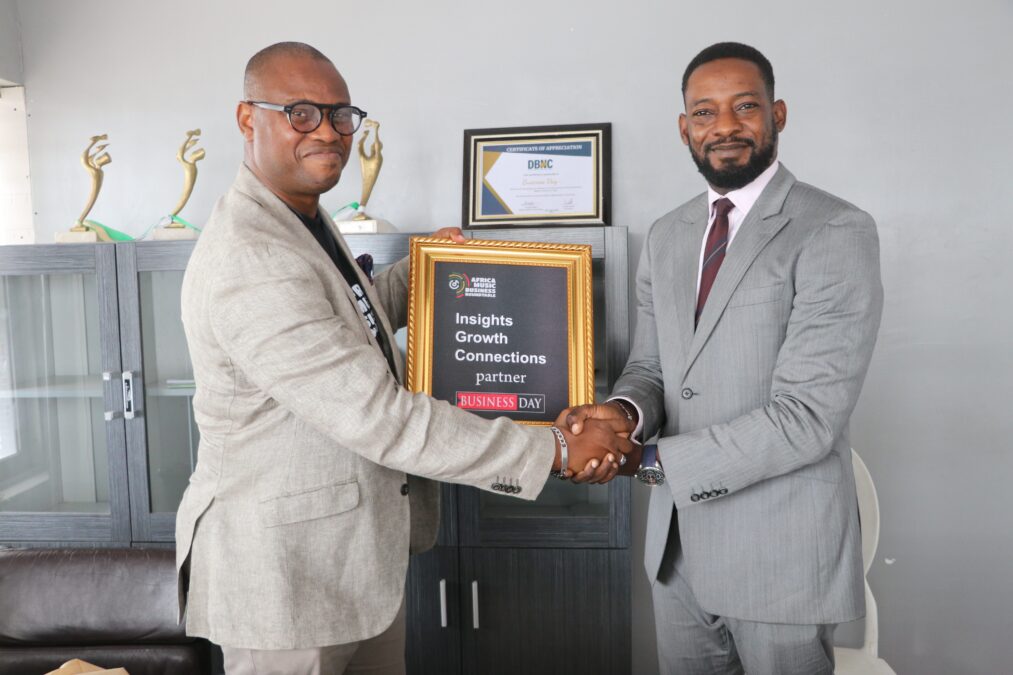
We are grateful for partners like Business Day joining this relay race. Our aim is to build sustainable structures that benefit the entire Nigerian music industry and set positive precedents for the wider African ecosystem. It is a process, but we are seeing meaningful progress.

Join BusinessDay whatsapp Channel, to stay up to date
Open In Whatsapp