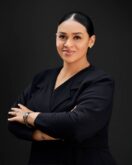
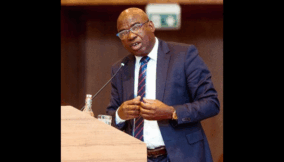
Special Adviser to Lagos State Governor on Climate Change and Circular Economy, Titilayo Oshodi, was speaking at the Media Chat and Project Implementation Kick-off of the 80 Million Clean Cookstoves Project in Nigeria held at the Lagos Sheraton Hotel, Ikeja, recently. In this chat with LYDIA ENYIDIYA EKE, she spoke on the significance of clean cooking access in Africa and the success of the Makoko pilot intervention. Excerpts:
Why is Lagos State deeply interested in the clean cookstoves initiative?
The issue of access to clean cooking in Africa is no longer just an energy conversation. It is a defining issue around public health, climate justice, women empowerment and economic transformation.
Across Africa, millions of households still depend on firewood and charcoal for daily cooking. In Nigeria alone, over 180 million people are affected by this reality, and women bear the greatest burden. This dependence contributes to indoor air pollution, deforestation, greenhouse gas emissions and loss of productive time for families.
For us in Lagos State, this is why clean cooking is important. It directly affects the quality of life of our people.
Lagos State carried out a pilot project in Makoko. What were the findings?
Under the Office of Climate Change and Circular Economy, we implemented a pilot intervention in Makoko to test the real-life performance and acceptance of improved cookstoves within households. The results were remarkable. During the baseline study, households consumed an average of 10 kilograms of firewood daily. But after the improved cookstoves were introduced, fuel use dropped significantly to about 1.37 kilograms of briquettes daily. That represents an efficiency improvement of more than 85 percent.
We also observed cleaner combustion, reduced smoke, improved indoor air quality and a sharp reduction in stove stacking, where households combine different cooking fuels.
Beyond the technical results, what social impact did the intervention have?
The social impact was even more powerful than the technical data. Women who received the improved cookstoves experienced faster cooking, reduced exposure to smoke, lower fuel demand and improved safety. These changes translated into dignity, relief and better living conditions.
What was interesting was that other women within the community who had not yet received the cookstoves began to express interest after seeing the benefits firsthand. That tells us something very important: once people see visible improvements in health, convenience and cost savings, adoption becomes natural.
Can the Makoko model work in other parts of Africa?
Absolutely. What Makoko demonstrates is proof that clean cooking solutions are practical, accepted and scalable. If this kind of transformation can happen in a densely populated and economically challenged community like Makoko, then similar models can work across urban slums, peri-urban settlements and rural communities throughout Africa.
The challenge now is scaling.
What role does climate finance play in this transition?
Scaling clean cooking solutions across Africa requires finance, not just technology.
One of the key opportunities here is carbon finance and green investment. The reduction in fuel consumption and emissions creates measurable climate benefits that can generate carbon credits under international frameworks.
What makes these credits unique and outstanding?
These credits can attract investment, reduce the cost of cookstoves and support wider distribution.
This means clean cooking is no longer just an environmental intervention. It is becoming a bankable climate solution capable of attracting sustainable financing.
What message would you like Nigerians and Africans to take away from this initiative?
The message is simple: clean cooking is possible, scalable and necessary.
The transition from unsafe cooking systems to clean cooking solutions is not only about protecting the environment. It is about improving health, empowering women, reducing poverty and creating a sustainable future for Africa.
From your lens, what is the way forward?
The way forward is clear, from pilot projects to continental transformation. This has to be our new narrative.

Join BusinessDay whatsapp Channel, to stay up to date
Open In Whatsapp