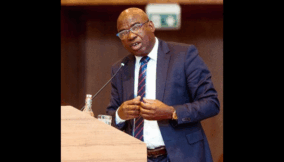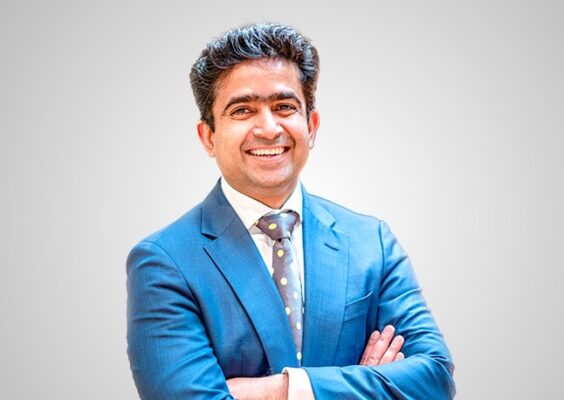
On the sidelines of the IMF/World Bank Spring Meetings in Washington, D.C., Manoj Sinha, chief executive officer of Husk Power Systems, speaks with BusinessDay’s Hope Moses-Ashike on how the company scaled from zero to 66 mini-grids within a relatively short period, alongside broader insights on energy access, decentralised power, and the evolving economics of off-grid solutions. Excerpts.
“Farmers and traders can process and store their products locally instead of transporting them elsewhere, which increases income and reduces waste.”
You currently have a presence in Lafia, Nasarawa State. Are there plans to expand to Lagos, Port Harcourt, or other states in the future?
Yes, absolutely. And, not just Lafia in Nasarawa State, we have presence in 11 of the 13 LGAs across the state. And, beyond Nasarawa State, we are equally in Plateau and Adamawa State. As a company, we are looking at expanding into several states, including Bauchi, Gombe, Taraba and Jigawa. There are quite a number of states in our pipeline.
Would Lagos be part of those expansion plans?
Lagos would certainly be an interesting market.
Our immediate focus, however, is to deepen our presence in states where we already see strong opportunities. In fact, our initial goal was to continue our expansion effort from the beginning of this year. While we are slightly behind schedule, we are now set to kick off expansion by increasing our operational sites in Plateau State.
Our expansion strategy is deliberate. We don’t expand into multiple states at the same time.
Instead, we go into one state and scale aggressively within that market. For example, we are currently the largest mini-grid developer in Nasarawa State, and we expect to replicate that position in Plateau.
For us, expansion is not just about installing infrastructure, it is about creating impact at scale. We focus on identifying communities that need electricity and where we can also stimulate economic activity.
What do you mean by stimulating economic activity?
We go beyond just providing electricity. Alongside power, we introduce productive-use interventions. For instance, we have deployed rice milling facilities powered by electricity, and we have installed cold storage systems so fishermen can preserve their catch for longer periods. This means communities are not just electrified, they are economically empowered.
Farmers and traders can process and store their products locally instead of transporting them elsewhere, which increases income and reduces waste.
Can you explain what a mini-grid is for context?
A mini-grid is essentially a small, decentralised power plant. It typically combines a solar power system with battery storage to provide reliable, 24/7 electricity. These systems usually serve between 400 and 1,000 households within a radius of about five to 10 kilometres. It is a very effective way to electrify underserved and rural communities.
How extensive are your operations currently?
At the moment, we operate about 66 mini-grids across Nasarawa and Plateau states. But electricity is just one part of what we do.
Once we deploy power, we actively support businesses in those communities by introducing equipment that improves productivity. For example, cold storage reduces post-harvest losses for fishermen, while local rice milling eliminates the need to transport raw produce to cities like Abuja for processing.
What about job creation, how does your model support employment?
Each mini-grid site creates local employment.
Typically, we hire two to three people from the community, train them, and equip them to operate and maintain the systems. These are what we refer to as green jobs.
Overall, we have a workforce of about 300 people. Only around 30 to 35 are based in Abuja, the majority are employed in rural areas where we operate. So, our presence directly supports local economies.
Beyond mini-grids, do you have other business segments?
Yes, we operate across three key segments. The first is community electrification through mini-grids. The second is commercial and industrial rooftop solar solutions. Here, we partner with businesses to replace diesel-powered energy with solar photovoltaic systems. For example, we work with rice mills in Nasarawa that previously relied heavily on diesel.
The third is residential, where we provide energy-efficient appliances to households across the states we serve.
What’s next for the business in terms of growth and scale?
While our existing 66 mini-grids are largely isolated systems, we are now moving into a new phase of growth. We recently secured a major win under the Minimum Subsidy Tender (MST) for interconnected mini-grids. Nigeria has one of the most forward-looking regulatory frameworks in Africa, allowing mini-grids to be integrated with distribution companies.
We have been awarded 30 megawatts of interconnected mini-grid capacity, which we plan to roll out this year. These will be significantly larger systems, ranging from one to 10 megawatts, and will serve between 2,000 and 5,000 customers. This marks a significant step forward in scaling our impact and deepening electricity access across Nigeria.
How long have you been operating in Nigeria?
We entered Nigeria in January 2020, which, in hindsight, was not the best timing because by March, the COVID-19 pandemic hit. As a result, we were unable to do much in that first year.
Our operations really began to take shape in 2021, so effectively, we have been active for over five years. We started with a one-person team in 2020, and today, as of 2026, we have grown to about 300 employees.
Our ambition has also grown significantly beyond what we initially envisioned in 2021. Today, we are building what we describe as an artificial intelligence-powered distributed energy resources platform.
Across our three core offerings, isolated mini-grids, interconnected mini-grids, and rooftop solar for commercial and industrial clients, as well as residential solutions, our goal is to deploy roughly one gigawatt of distributed energy assets across Nigeria.
Nigeria continues to struggle with power supply.
Why hasn’t mini-grid adoption scaled faster?
That’s a very important question, and context matters when we talk about scale. When we entered Nigeria in 2020 and began operations in 2021, there were virtually no mini-grids at the scale we see today.
Since then, the country has made significant progress. One of the things Nigeria has done particularly well is policy development. The mini-grid regulation, introduced around 2017 to 2018, created a strong foundation for the sector.
This was further supported by the World Bank-backed National Electrification Programme, which provided capital expenditure subsidies to attract private sector investment. That combination of policy support and financial incentives is what encouraged us to bring our technology and experience from India into Nigeria. As a result, we have been able to scale from zero to 66 mini-grids within a relatively short period.
So what is holding back faster expansion?
The short answer is capital. We have the technology. We have the people. The policy environment is also supportive. What is currently limiting scale is the amount of capital required to accelerate deployment.
For example, our plan to deploy one gigawatt of distributed energy capacity over the next five years would involve building approximately 1,000 isolated mini-grids, several hundred interconnected mini-grids, and deploying rooftop solar solutions for hundreds of commercial and industrial clients. To execute that level of expansion, we estimate that about $1 billion in investment is required.
Does that mean the main bottleneck is funding rather than execution capacity?
Exactly. The primary constraint is not execution capability, it is capital inflow into the sector and the country more broadly. That said, there have been significant economic reforms in Nigeria recently.
In my view, these reforms are helping to create a more conducive environment for investment, and we expect that capital inflows will improve over time. If that happens, there is no reason why mini-grid deployment cannot scale much faster, given that the underlying technology, talent, and regulatory framework are already in place.
What is the single biggest barrier to attracting private capital into Africa’s energy access space, beyond capital itself?
The energy access space is still relatively new. We are among the pioneers working to solve this problem, having started in India and then expanded into Nigeria. For the sector to scale successfully, three key elements need to come together. Initiatives like the World Bank’s Mission 300 programme are helping to accelerate this process, but there are still gaps.
What are those key elements?
The first is policy. Energy policy needs to be clear, consistent, and long-term to give confidence to investors and entrepreneurs looking to enter the market. On this front, Nigeria is actually ahead of the curve. Many other African countries have signed energy compacts, but they are still at a very early stage and need to move faster in implementing clear frameworks.
What is the second barrier?
The second is around financial support structures. While World Bank programmes such as the Distributed Access through Renewable Energy Scale-up (DARES) initiative have been very helpful, more needs to be done.
Specifically, there is a need for risk mitigation and insurance products that can give comfort to investors. Private capital providers want assurance that they can deploy funds and also repatriate returns with a reasonable level of certainty.
And the third challenge?
The third is the lack of local manufacturing across Africa. At the moment, most of the equipment used in this sector has to be imported, whether into Nigeria or other African countries. This creates several challenges, it increases costs, leads to long lead times, and exposes projects to global supply chain disruptions.
In the current geopolitical environment, these risks are even more pronounced, with rising costs and delays.
So how can these challenges be addressed?
Policies need to be implemented more quickly and consistently across the continent.
Development finance institutions like the World Bank need to expand their offerings beyond grants to include more instruments that attract private capital.
Finally, there is a strong need to develop local manufacturing capacity within African countries. This will reduce dependence on imports from countries like China and help make energy access projects more cost-effective and scalable.
With the support of programmes like the World Bank-backed Distributed Access through Renewable Energy Scale-up, which provides capital subsidies, the business model can deliver a commercial rate of return for investors and entrepreneurs.
However, for the model to be sustainable in the long term, there also needs to be broader economic development within the country.
Grant funding programmes like DARES have a limited lifespan, they are not designed to last indefinitely.
We see these subsidies as bridge financing, helping the sector reach a point where it can generate commercial returns independently. In my view, this kind of support will still be needed for the next five to 10 years. Beyond that, given Nigeria’s ongoing economic reforms, I am optimistic that economic activity and gross domestic product (GDP) growth will strengthen to a point where infrastructure projects like mini-grids can stand on their own without external support.
You are part of the Mission 300 Council. What measurable targets should stakeholders hold you accountable to?
Mission 300 is a compelling and ambitious goal, bringing electricity to 300 million people.However, the way that target is achieved matters just as much as the number itself. It is technically possible to reach that figure quickly by deploying very basic solutions, such as distributing small solar panels that power a single light bulb. That approach is relatively low-cost and could be executed rapidly.But the critical question is whether that delivers long-term impact. The answer is no.
Why is that approach insufficient?
Electrification should be a catalyst for industrialisation. Simply providing a light bulb does not drive meaningful economic transformation. What is needed is infrastructure that can support productive use, systems that last for 30 years or more and enable businesses, agriculture, and local industries to grow.
There is strong economic evidence that long-term infrastructure investment increases GDP per capita in a sustained way. In contrast, basic, short-term solutions do little to stimulate economic activity.
So what does success look like under Mission 300?
We need a balanced approach. On one hand, there is value in deploying quick solutions to expand access rapidly. On the other hand, the ultimate measure of success is whether we are building durable, infrastructure-led electrification systems that support industrialisation and long-term economic growth.
In other words, it is not just about reaching 300 million people, it is about how we reach them and whether that access translates into real, lasting development within those communities.
How profitable is the mini-grid business model in markets like Nigeria today?
Nigeria is, in my opinion, one of the more advanced markets in Africa for both isolated and interconnected mini-grids, especially if we exclude South Africa. With the support of programmes like the World Bank-backed DARES initiative, which provides capital subsidies, the mini-grid business model can deliver a commercial rate of return for investors and developers.
What role will battery storage and AI play in making rural electrification commercially viable?
We’ve evolved into what we now describe as an artificial intelligence-powered distributed energy platform. What that means in practical terms is scale and efficiency. In Nigeria alone, deploying about one gigawatt of capacity would involve roughly 2,000 projects across multiple states, potentially serving millions of customers.
Managing that level of infrastructure manually is simply not feasible.
Artificial intelligence becomes critical in this context. It allows us to monitor, optimise, and manage thousands of distributed power assets in real time, with minimal human intervention.
That is ultimately the most cost-efficient way to run such a large and decentralised system.
On the storage side, battery costs have declined significantly over the years. Lithium battery prices, for instance, have fallen from about $300 per kilowatt hour to roughly $100 per kilowatt hour, and they are expected to drop even further.
This cost reduction is key to making projects more viable. But when you’re deploying assets at scale, potentially across thousands of sites, the real challenge is operational efficiency.
Managing performance every minute of every day requires advanced systems, and AI-driven algorithms are essential to achieving profitability and sustainability.
What is your next big bet in Africa, and how much capital are you committing?
We are looking to raise about $400 million for investments across India and Nigeria. Of that, roughly two-thirds, around $260 million will be allocated to Nigeria and neighbouring West African markets. That reflects our strong commitment to the region.
When should we expect your presence in Lagos?
We are planning to establish a stronger presence soon. We already have an office in Abuja, but we intend to open a satellite office in Lagos. That will allow us to better explore opportunities in the market.
Lagos is a highly competitive and crowded market, which is why we initially focused on Abuja and less saturated areas. However, we do have clear ambitions to serve Lagos. While we don’t have a fixed timeline yet, expanding into the city remains part of our broader strategy.
What does your five-year outlook for Nigeria look like?
Over the next five years, our goal is to deploy one gigawatt of capacity across isolated mini-grids, interconnected mini-grids, and commercial and industrial (C&I) solutions.
Beyond infrastructure, we are also keen on supporting policy development particularly around residential rooftop solar. This is an area we believe holds significant potential. Rooftop solar can provide households with more reliable electricity at a lower and more predictable cost over a 20 to 25-year period.
We have already begun engaging with stakeholders around the government to explore how such a policy could be implemented. The objective is simple: improve reliability, reduce costs, and give consumers long-term visibility over their energy expenses. We are willing to collaborate with the government to help make this a reality

Join BusinessDay whatsapp Channel, to stay up to date
Open In Whatsapp