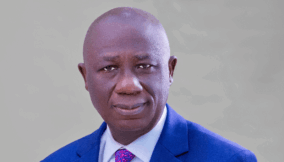
Emeka retired in January 2024 at exactly 60 years old. He had worked for 27 years in a mid-sized logistics company in Lagos, rising from a dispatch clerk to operations manager. He was not careless with money. He contributed to the Contributory Pension Scheme (CPS) for most of his working life. He assumed, like most Nigerians do, that the system would take care of him. When he walked into his Pension Fund Administrator’s office to begin his retirement process, the balance in his Retirement Savings Account (RSA) was N4.1 million.
He stood at the counter for a long moment. Then he asked the customer service officer to check again. They checked again. N4, 127,450. At current annuity rates, that balance would yield him a monthly pension of roughly N28, 000 to N35,000, less than the new national minimum wage of N70,000, and a fraction of the salary he earned in his final years of work.
Emeka is a fictional character. But his story is not fiction. It is playing out across Nigeria every single day, and the reasons behind it are structural, policy-driven, and deeply preventable. This article is about those reasons, and what every Nigerian contributor, employer, and policymaker must understand before it is too late.
The System Was Built On A Good Idea:
Nigeria’s Contributory Pension Scheme, established under the Pension Reform Act of 2004 and strengthened in 2014, was a genuine improvement over the Defined Benefit system it largely replaced. Under the old system, government pensions were paid from annual budgets, a model that collapsed under fiscal pressure, leaving millions of retirees unpaid for months or years. The CPS introduced individual RSAs, mandatory contributions, and professional fund management. By February 2026, the industry had grown to over N29 trillion in assets under management, with more than 11 million registered contributors.
Those are impressive numbers. But they mask a more uncomfortable reality: the majority of Nigerians are either outside the system entirely, contributing too little to matter, or losing money to administrative failures they are not even aware of.
Problem One: Most Nigerians Are Not Contributing at All
Nigeria’s informal sector accounts for an estimated 80 to 85 percent of total employment. Market traders, artisans, commercial drivers, freelancers, domestic workers, farmers, none of them have employers to remit pension contributions on their behalf, and most have never opened an RSA. The CPS, as currently structured, was designed for formal employment. That means the vast majority of Nigeria’s working population is building no pension at all. Furthermore, of the roughly 11 million registered contributors, only about 7.3 million are active contributors, meaning contributions are being made into their RSAs regularly. The gap between registered and active contributors is itself a warning sign. Many people open an RSA when they start a job and never see another contribution if they move to a different employer, become self-employed, or if their employer simply stops remitting.
Problem Two: Even Formal Sector Workers Are Not Safe
Here is something many contributors do not know: your employer deducting pension from your salary does not guarantee the money is in your RSA. Pension remittance requires two steps: deduction and actual payment to your Pension Fund Administrator (PFA). Some employers deduct correctly but delay remittance for months, sometimes indefinitely. Others schedule remittances incorrectly, so the money is sent but does not match the contributor’s RSA details and sits in a suspense account. In some cases, particularly with smaller private sector employers, contributions are simply not remitted at all.
The National Pension Commission (PenCom) has prosecuted employers for pension theft, but the scale of non-remittance across the country remains significant. The lesson is simple: you must take ownership of your RSA account; never assume your pension is being contributed. Check your RSA balance regularly. Your PFA allows you to do this online or via a mobile app. If your balance is not moving, escalate immediately to your PFA and to PenCom.
Problem Three: The Data Recapture Gap No One Talks About
Many Nigerians, who are now in the CPS, began their working lives before 2004, under the old Defined Benefit Scheme (DBS). When the transition happened, their accrued pension rights from the years of pre-CPS service were supposed to be captured and reflected in a Government Approved Bond or equivalent, which PenCom calls Accrued Rights. The challenge is that for many of these workers, particularly at the state level, this data capture was never completed properly. Records are missing, incomplete, or inconsistent. When they retire, they discover that years of service simply do not appear in their pension calculation.
Data recapture: The process of going back to verify, update, and correctly document a contributor’s full pension history is not optional. It is essential. If you started working before 2004, or if you moved between employers and suspect your early contribution records may be incomplete, you must proactively work with your PFA and your employer’s HR department to reconcile your full record. Every year of missing data is money you may never recover.
Problem Four: Your Pension Is Only as Strong as Your Salary
This is the mathematics most people never sit with. Under the CPS, the mandatory contribution is 18 percent of basic salary, housing and transport, 8% from the employee and 10% from the employer. On paper, that sounds substantial. In practice, it depends entirely on what “this salary” is. Consider this: if you earn a salary of ₦150,000 per month, which is modest but above the minimum wage, your total monthly pension contribution is ₦27,000. Over 35 years of contributions, assuming average annual returns of 10 percent (roughly in line with long-term FGN bond yields), that accumulates to approximately ₦65–70 million in nominal terms. That sounds reasonable until you factor in inflation. In real purchasing power terms, especially given Nigeria’s inflationary environment, the value is significantly eroded.
Now consider someone earning the new national minimum wage of ₦70,000. Their monthly pension contribution is ₦12,600. Over the same 35-year period, their RSA balance even with good fund performance will likely not support a dignified retirement by today’s standards of living, let alone the cost of living 35 years from now.
Your pension is a function of your income. If your income is low, your pension will be low. The contributory model is structurally sound, but it cannot solve income inequality on its own.
Problem Five: State Government Pensions Remain a Crisis in Waiting
While the federal government and private sector employers have largely transitioned to the CPS, many state governments remain on the old DBS model or a hybrid that functions poorly. Civil servants in several states contribute throughout their careers only to face delayed, incomplete, or unpaid pensions upon retirement. When state civil servants retire without adequate pension, they become dependents on family, on government social intervention programmes, and on the same state budgets that already failed to fund their pensions properly. It is a fiscal trap that compounds over time. PenCom data shows that only 7 states had adopted the CPS as of recent reporting, with varying degrees of compliance even among those. This is a policy emergency that receives insufficient public attention.
What Emeka Wishes He Had Done Differently
Back to Emeka. When we ask what he wishes he had done differently, three things come up clearly, and they are things every contributor can still act on today.
First: He wishes he had made Personal Pension Plan (PPP) contributions consistently.
The CPS allows contributors to make Voluntary Contributions (VCs), now called Personal Pension Plan (PPP), above the mandatory 8 percent employee contribution. These contributions attract tax relief up to a certain threshold; they are deducted from your taxable income, meaning the government is effectively subsidising your additional savings. PPPs are invested alongside your mandatory contributions and grow over time. Had Emeka contributed an extra N20, 000 per month from age 35, his RSA balance at retirement would have been materially higher. He knew about PPP. He just never got around to starting. That delay cost him significantly.
Second: He wishes he had understood how his withdrawal choice would affect his monthly income.
When contributors retire, they typically have two main options for accessing their pension: purchasing an annuity from a life insurance company (which pays a fixed monthly income for life) or a Programmed Withdrawal through their PFA (which pays monthly based on their balance and life expectancy).
What many contributors do not realise is that they also have the option to withdraw up to 25 percent of their RSA balance as a lump sum before setting up their monthly pension, if they are below 50 and have been unemployed for four months, or at retirement under certain conditions. Taking a large lump sum upfront permanently reduces the balance available to generate monthly income. If you collect this lumpsum upfront, without a plan for how the money withdrawn will generate returns, you have simply shrunk your monthly pension for the rest of your life. Every naira withdrawn upfront is a naira that is no longer compounding for your future. Emeka took a lump sum to renovate his house. He does not regret the renovation. But he wishes someone had shown him the numbers before he signed.
Third: He wishes he had built other retirement assets alongside his RSA.
Pension is one leg of retirement security. It was never designed to be the only leg. Emeka had no significant investment portfolio, no rental income, no life insurance with investment value, and no savings in dollar-denominated instruments to protect him from currency depreciation. His RSA was his only financial plan for retirement. That made him completely dependent on a single source that, by design, has limits
What Must Change — The Policy Agenda
Individual behaviour matters. In addition, policy must be positioned to propel adoption, and the Pension Fund Operators Association of Nigeria (PenOp) believes the following changes are needed:
Expand coverage to the informal sector. The PPP launched by PenCom is a step in the right direction, but uptake remains low. We are committed to enhancing awareness and sensitisation around the benefits of PPP and the incentives, especially for low-income informal workers, which would transform coverage, PenOp said.
Enforce employer remittance without exception. PenCom must be adequately resourced to audit and prosecute non-remitting employers. The deterrent effect of consistent enforcement is the only thing that changes behaviour at scale.
Complete the data recapture exercise at the federal and state levels. Every Nigerian whose accrued rights from pre-CPS service have not been fully documented is carrying an invisible deficit into retirement. A time-bound, funded data reconciliation programme is not optional; it is a debt the system owes its contributors.
Reform state pension compliance. The federal government should tie certain fiscal transfers and grants to demonstrated pension compliance by state governments. States that keep civil servants outside the CPS are creating future liabilities that will eventually fall on the federal shoulders anyway.
Expand the PPP contribution culture. Tax incentives for VCs should be better publicised. Employers should be encouraged or required to offer VC matching as part of their benefits package.
The Bottom Line
The good news is that for every Nigerian still in the workforce, the story is not yet written. Start your PPP contributions today. Check your RSA balance this week. Understand your withdrawal options before you reach retirement. Build other assets alongside your pension. And demand from your employer, from your state government, and from policymakers that the system be made to work for everyone. Your retirement is too important to leave entirely to chance, to your employer’s goodwill, or to a system that was never designed to carry the full weight of your future alone.

Join BusinessDay whatsapp Channel, to stay up to date
Open In Whatsapp