


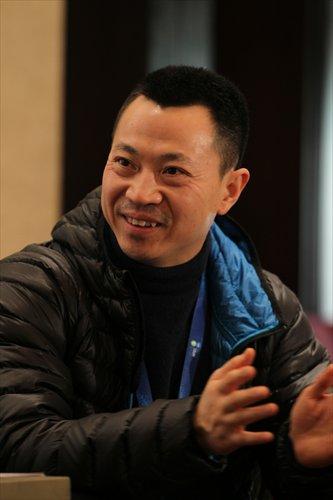
When Wu Hai entered Zhongnanhai, the Beijing compound where China’s top leaders live and work, he was struck by how unimpressive many of its facilities were. They were certainly not a patch on the slick designs that characterise the properties belonging to his Crystal Orange hotel group, which Mr Wu founded nine years ago.
“Zhongnanhai was much shabbier than I thought it would be,” he says. “It’s not very luxurious and the rooms aren’t very big. Some of them are even smaller than a county chief’s office. At the time I thought, how can this be the heart of the People’s Republic of China?”
Mr Wu’s invitation to visit the headquarters of the ruling Chinese Communist party in May marked the culmination of two whirlwind months in which an angry online post caught the zeitgeist and turned the 45-year-old entrepreneur into an overnight sensation among his peers and government reformers.
He had complained about heavy handed government regulation and corruption, saying private sector companies were often treated like the illegitimate offspring of prostitutes. His comments coincided with a renewed push by Premier Li Keqiang to slash red tape and unleash a new wave of entrepreneurialism — an effort that appeared to be bogged down by bureaucratic resistance.
Continuing his analogy, Mr Wu likened government officials who demand bribes and other favours to the spoiled children of the emperor’s “legal wife”, while long-coddled state sector companies were the sons and daughters of the concubines.
“Although we are all children of the state, the wife’s children manage all of us,” he wrote. “The concubine’s children are also scared of them, but they can still run to [the emperor] for help. But children like us [private entrepreneurs], we can only submit ourselves to insults.”
Mr Wu first realised that his rant had become more than a viral sensation when a senior official from China’s State Council, or cabinet, asked him to redraft it as a formal letter and send it through the post.
“We think what you wrote is right,” the official told him. “There are indeed many problems and our leaders are paying great attention to this.”
So Mr Wu did just that, addressing it to the official who had contacted him. “The next day they called me and said that they had received the letter, but asked me to address it directly to Premier Li,” he says.
That exchange led to the entrepreneur’s invitation to Zhongnanhai, where he discussed his complaints with a group of senior officials, representatives of various ministries, scholars and experts. Mr Li did not attend but that did not bother Mr Wu, who seems to be coming down with a case of celebrity fatigue.
“I have met all the high-ranking officials one can meet in a lifetime,” he says. “I don’t find it strange any more.”
Mr Wu works out of one of his group’s 65 hotels in Wangjing, a district about halfway between Beijing’s city centre and airport. He has carved out a distinctive niche between his industry’s two extremes.
At one end, global hotel brands manage properties built and owned by large state or private conglomerates. At the other, a series of downmarket chains offer cheaper lodging for more budget-conscious Chinese travellers. Mr Wu reckoned there was a market for a more stylish but still affordable hotel chain.
“I always wanted to be a businessman because I liked competition and I like to be creative,” says Mr Wu, a native of Jiangxi province who attended university in Beijing in the late 1980s.
“Small changes can make a big difference in a traditional industry.” His investors include Carlyle Group, which bought a 49 per cent stake in the hotel chain three years ago, making it the largest shareholder.
The lobby of Mr Wu’s headquarters hotel in Wangjing features a high ceiling, lots of natural light and bamboo fronds. Visitors to his office compound walk past art installations including the metal shell of an old truck cab and reproductions of Andy Warhol’s vampish paintings of Mao Zedong.
The Mao portraits, which briefly adorned the lobby of a Crystal Orange hotel in Hangzhou, were ultimately deemed too risqué for public display and replaced with reproductions of Warhol’s Marilyn Monroe prints. Many of the chain’s hotel rooms evoke themes from historical periods, such as a “room of red memories” inspired by the Cultural Revolution, or famous films.
“People want to pick something that matches their own personality, to make a statement of their own,” Mr Wu says, switching from Chinese to competent English, which he honed during a six-month stint in Tampa, Florida, in the early 1990s and, more recently, an Insead MBA course.
“Our hotels are [about] freedom and rebellion, people want to be unique,” he adds, boasting that his establishments are typically sold out six days a week compared with the industry standard of four. The group’s hotels often attract “staycation” business from local residents “because they want to have another type of experience — that’s the thing we’re creating”.
Mr Wu’s personal style is best described as hipster — ripped jeans, T-shirts, lumberjack flannels and trail-running shoes — and he receives visitors in a room that features graffiti art and is stencilled with instructions to “keep it real”. He did decide to wear a suit for his May appointment in Zhongnanhai but regretted it as soon as he realised that the meeting room there was only cooled to 26C.
Mr Wu’s rebelliousness has its limits, however. His government critique is basically a variation on the ancient concept of “the just emperor”, which places blame for the country’s woes on venal local officials while believing in their superiors’ determination to root out injustices.
As an example of local capriciousness, Mr Wu cites regulations that give district officials power to impose wide-ranging fines.
“Central government officials often don’t know what’s going on at local levels,” he says. “For example, local officials can fine you anywhere between Rmb2,000 ($320) and Rmb50,000 [for various infractions]. There isn’t a standard and that makes law enforcement flexible . . . I don’t want to name names but in certain cities and in certain departments, it’s rampant.”
Mr Wu’s letter worried his father, who has more direct experience of the vicissitudes of Chinese politics than his son. During the Cultural Revolution, Mr Wu’s grandfather was for a period confined to an animal shed “with cow monsters and snake demons”. He was later exonerated. “My father was very anxious about me posting the letter online,” he recalls. “He said what if bad things happen to you? I said what things? Nothing will happen to me.”
Mr Wu believes that he has succeeded in getting the just emperor’s attention. He says that the problem of highly variable administrative fines has been resolved, and is encouraged by President Xi Jinping’s anti-corruption campaign. “Before I thought to myself, how can they fight corruption, it involves everyone,” he says. “But they are getting it done.”
Culled from FT

Join BusinessDay whatsapp Channel, to stay up to date
Open In Whatsapp


