

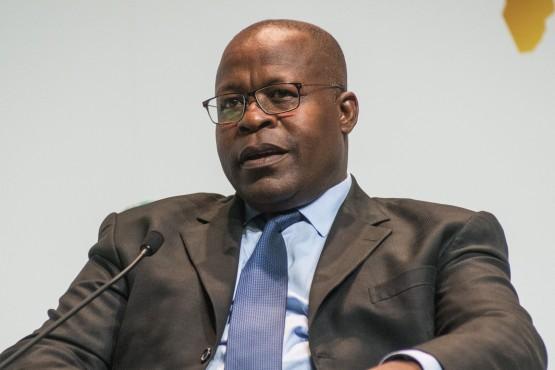
Long before he led Lonmin, Ben Magara’s first encounters with the company were in the days when it was Lonrho, a sprawling African conglomerate. Its trucks would rattle through Bikita, the district where he grew up, on the way to and from its gold mines in what was then known as Rhodesia.
As a boy Mr Magara did not care about the trucks, or mining. His ambition was to be a bus driver like the ones who also passed through the village and seemed, to a child of a poor family, to have a comfortable life.
“The driver is there in his overalls, he is nice and big, his family gives him his lunchbox . . . he was the man in the rural area who looked so in control and was doing his thing,” Mr Magara recalls. “Being a bus driver was an aspiration: that is how poor . . . we were.”
Times and fortunes change. Lonrho was broken up and its mining division lives on as Lonmin, one of the world’s largest miners of platinum. The jovial Mr Magara is its first black chief executive, capping his rise from an impoverished childhood in present-day Zimbabwe — though, with his trademark belly laugh, he says he still hankers to drive the bus one day.
At Lonmin Mr Magara is at the forefront of the mining industry’s battle against plummeting commodity prices. Not only that, he is also working in one of the most fractious of labour environments: he picked up the reins at Lonmin within a year of the notorious Marikana shootings in 2012, when 34 striking workers were killed by South African police in an event that traumatised the nation.
When Mr Magara joined Lonmin, he recalls, his priority was to meet, and connect with, a still shocked and conflict-ridden workforce.
“By the end of the first week I must have shaken hands with 15,000 or 20,000 people. My hand was sore,” he recalls. “It was about saying, ‘I am new here but I am a miner through and through — I have drilled, I have blasted, I have worked underground. You are talking to one of you, and I know the conditions you are going through.’”
Since arriving at Lonmin Mr Magara has endured further trials. The company and its main competitors were involved in another strike, less violent but lasting for five damaging months. Afterwards, Lonmin’s weakened balance sheet and a relentless fall in the platinum price from about $1,400 per ounce to close to $800 propelled it to another low point: a $400m rights issue towards the end of last year, when the company had to sell shares at a 94 per cent discount to attract support.
Mr Magara’s demeanour suggests a man who will always see the bright side, and in person he is welcoming and open, but he admits to having had many moments of concern.
“Despair is too strong but it has been tough, I can’t lie to you,” he says, filling an armchair at Lonmin’s discreet first-floor offices in a smart suburb of Johannesburg.
A low point, says Mr Magara, was the strike that began early in 2014, just six months after he arrived at the company. “I felt we worked so hard on our relationships [with employees] that we didn’t deserve that strike. To have it for five months was absolutely painful,” he says.
Did he feel personally responsible? “I went through that cycle of feeling guilty and then you come back and think ‘actually it is not me — there is something bigger in play here and I can only do my best’.”
The other tough experience, he says, was reading the commentary last year that UK-listed Lonmin might not even survive if its rights issue failed. But he says he personally had no doubt that Lonmin would get support. “I did not think shareholders would hand the keys to creditors,” he says. “I have learnt in my life that you don’t put your head in the sand. If there is an issue to solve, investors need to know. My job as CEO is to put the facts on the table.”
Born in 1967, the fifth of nine children, Mr Magara recalls a childhood of labouring before school — fetching water from the river for the family smallholding — and Saturdays spent selling produce from a wheelbarrow. “My dad would occasionally get a job, he would occasionally have no job,” he says. But Mr Magara’s family took education seriously: this pulled him out of his village and ultimately to study at the University of Zimbabwe in Harare, where he followed his brother’s advice that a new mining engineering course might lead to good career opportunities.
Mr Magara — and his future wife — joined Anglo American as graduate trainees, where he again spent some time pushing wheelbarrows. While he prides himself on having worked at the coal face, he says he always knew that his level of education gave him the chance to rise through the ranks at Anglo, then the dominant African mining house.
The 48-year-old became head of Anglo’s South African coal operations, having been recognised as an inspiring mine manager, and later moved to Anglo’s large platinum operations. But Mr Magara says he had no wish to leave the group until Lonmin offered him the chance to become chief executive in 2013.
It was an opportunity that Mr Magara believed would suit all elements of his management style — his technical knowledge allied to an empathetic approach to colleagues.
“It just fitted. I could connect my technical abilities to the people skills and the social and government skills. It really dovetailed,” he says. The Marikana shootings were a reason for his decision to take the job. “I thought ‘It can really be a catalyst for change’.”
Today, he speaks candidly about how helpful it can be to be a black senior executive in the industry, saying it has been to his advantage that at times he has a readier connection to the workforce.
This empathy only goes so far. “The employees need to understand that decisions have to be for the business . . . If you don’t have a thriving profitable business and you are not doing it safely and at the right costs you are going to go down — black or white,” he says.
“I get the trust to say to [employees] frankly when they have a misconception. I can say ‘Guys, if you think shareholders are making money let me tell you the truth’ and they will listen.”
Another round of wage talks — a trigger for the last strike — looms for Lonmin and other South African platinum miners but Mr Magara thinks industry relations have calmed, pointing to Lonmin’s recent ability to make more than 5,000 people redundant with minimum union resistance.
The larger concern may still be Lonmin’s overall ability to make profits. Last year’s rights issue was the third in six years and some analysts expect further such measures in the next few years unless Lonmin can stop bleeding cash. Its shares lost more than 90 per cent of their value in 2015 before the rights issue. A company that seven years ago rejected a takeover offer worth $10bn now has a market capitalisation of about $300m.
Mr Magara remains confident that the strategy for lower production and cost cuts that was embarked upon to support the rights issue will yield results — although a further fall in the platinum price would raise more doubts. In what is the worst commodities crash in more than a decade, life as a mining chief executive is a lot less straightforward than it would have been on a Zimbabwean back road.
FT

Join BusinessDay whatsapp Channel, to stay up to date
Open In Whatsapp


