Nigeria’s aim to accelerate financial inclusion for millions of its citizens that operate outside the formal banking system is bumping up against the obstacle of negative real interest rates keeping savers underwater. Only 27 percent of adult Nigerians (aged 15 and above) had a formal savings account as at 2014, according to data from the World Bank.
The Central Bank of Nigeria (CBN), in collaboration with stakeholders launched the National Financial Inclusion Strategy in 2012 which is aimed at reducing the percentage of financially excluded Nigerian citizens to 20 percent by 2020. Such ambitions may be wishful thinking as the inflation-adjusted or real rate of returns fell further into negative territory, on the back of higher inflation which reached 16.5 percent in June. “For Nigeria’s banking system to operate effectively, longer term it needs to be able to mobilise more savings efficiently. Inflation may not be at these elevated levels for long, but once banks start lending again, they will need to be able to make it more attractive to mobilise deposits,” Razia Khan Standard Chartered Bank’s chief economist and head of Africa global research told Business day.
Savers in Nigeria are essentially being penalized as the interest rates they receive for deposits range from 2 percent for regular savings accounts to 8 percent for fixed deposits. This is below the June year on year rate of inflation rate of 16.5 percent. Insufficient savings leaves Nigeria more vulnerable to outflows of funds that could be triggered by events such as an expected increase in U.S. interest rates or the recent removal of Nigerian bonds from JP Morgan’s emerging markets bond index. Nigeria’s national savings as a percentage of Gross Domestic Product (GDP) or savings rate was equivalent to 18.7 percent in 2014, according to data from investment firm Renaissance Capital. India’s savings rate is at 31 percent of GDP while China’s is 50 percent of GDP, World Bank data show.
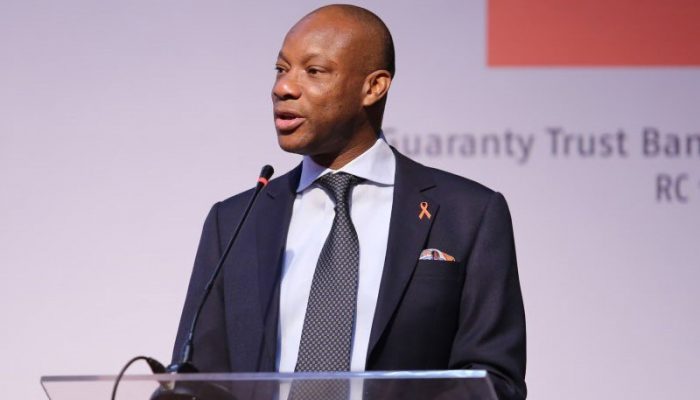
While the Central Bank of Nigeria led by Governor Godwin Emefiele has kept its monetary policy rate at a high 14 percent that should in theory make returns on savings more attractive, banks have failed to translate that into higher savings rates, calling into question the monetary policy transmission mechanism. “Only an uninformed individual will save a huge amount of money for a long time in a bank,” said Okechukwu Adili a motor parts dealer in the Trade Fair district of Lagos. “I usually re-invest my profits in my business or use it to buy property in the East,” Adili said, referring to the Eastern part of Nigeria where he moved to Lagos from. Nigeria’s GDP growth in the first quarter of 2016 was negative 0.4 percent. Boosting the savings rate, which can then be channeled into badly needed infrastructure, is a necessary condition to attain before the nation’s economic potential can be fulfilled, according to most analysts. “People are not incentivised to save, and it is financial development that ultimately suffers,” Khan said.

Join BusinessDay whatsapp Channel, to stay up to date
Open In Whatsapp