The decision of the Federal Ministry of Education to infuse what were formerly Christian Religious Studies, Islamic Studies, Civic Education, Social Studies and Security Education into the new compulsory “Religious and National values” modules is generating reactions from stakeholders.
This new curriculum is meant to be delivered to pupils of the universal basic education programme, in the first nine years from primary one to Junior Secondary 3 and some stakeholders claim it violates some fundamental rights of children.
Some of the content found disturbing in many quarters include the purported supremacy of prophet Muhammad (pbuh) over all other prophets or religious icons; that the glorious Quran is the final authority of Allah; children could disobey their parents if they refuse them to follow Allah; prophet Isa (pbuh) that Christians know as Jesus Christ neither died nor was crucified; all the children including those of other faiths apart from Islam are to learn, memorise and recite the Quran/Arabic language.
Experts say regular curriculum review is welcome. However, the above outcome of the National Educational Research and Development Council (NERDC) violates sections of the United Nations Universal Declaration on human and people’s rights (article 18). This article was reproduced almost verbatim by section 38 (1) of the Constitutions of the Federal Republic of Nigeria and 38(2) gives more details. It says, “No person attending any place of education shall be required to receive religious instruction or to take part in or attend any religious ceremony or observance if such instruction, ceremony or observance relates to a religion other than his own, or religion not approved by his parent or guardian.”
Child Right Act 2003, section 7(1) reads “ every child has the right to freedom of thought, conscience and religion; 7(2) says, “parents, and where applicable legal guardians shall provide guidance and direction in the exercise of those rights having regard to the evolving capacities and best interest of the child.”
Olabanji Dosumu, education secretary, Lagos Universal Basic Education Board, Apapa Local Government Education Area Authority, when contacted by BusinessDay, said “we have not seen copies of the said new curriculum. Besides I am really not in a position to comment on this,I know however that the curriculum is reviewed annually. The Ministry of Education is in a better position to comment on that.”
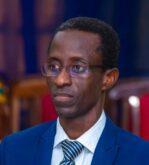
Tunji Abimbola, director of education at TMAB, Education Consulting and former special adviser to the Ogun State Governor on Education, is indeed worried about state of education in Nigeria.
Abimbola asks, “why don’t we have the right people in our education system, why do we politicise education? We are failing these children. Our education system needs reflect the future not the past.”
Abimbola added, “We must begin with a clear understanding of what kind of Nigeria we want. Without mincing words we need to declare a state of emergency in education. We seem to have the wrong people in the Ministry of Education.”
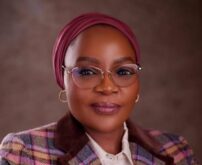
Folashade Adefisayo, CEO Lead Learning, contended that “conferences on curriculum development are designed and supervised by professors who left the classroom 30 years ago. These professors cling to ideas that are out of touch with contemporary realities. A national conference on education is urgently needed. A national conversation on what we want the basic and secondary education to deliver is critical. This should involve a representation of all stakeholders: parents, active players in both the public and private sectors and education experts.”
Analysts recommend Christian Religious Studies and Islamic Religious Studies should be allowed to stand separately and be studied as independent subjects with separate textbooks, just like the Nigerian languages (Hausa, Ibo and Yoruba) in line with the previous curriculum.
They also say that there should be a public hearing on this to galvanise the opinion of parents on a matter as sensitive as this.
Furthermore, the disadvantage of this omnibus integration outweighs whatever could be the advantage, they say.
“When five subjects are merged into one, it is obvious that detailed work cannot be achieved, both in writing of the textbook and the teaching. The child would be made to struggle to learn and comprehend five-in-one subject, which is not going to be easy. The result would be penny wise, pound foolish, as excellence would be sacrificed at the altar of social integration,” said a source in the Ministry of Education who was speaking anonymously.
STEPHEN ONYEKWELU

Join BusinessDay whatsapp Channel, to stay up to date
Open In Whatsapp