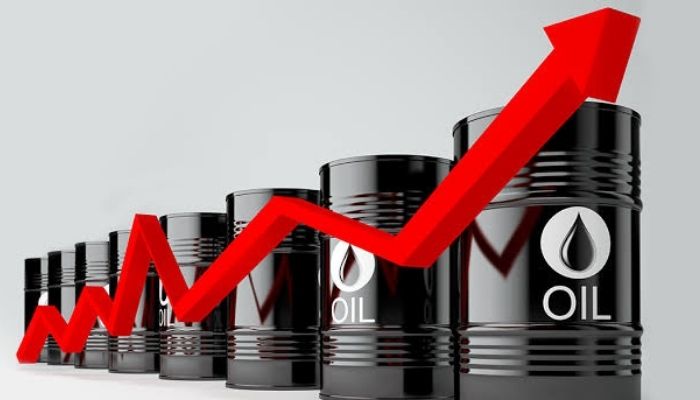
The United Arab Emirates will continue building and upgrading its oil facilities to maintain its role as a major producer amid the decline and volatility in prices, Energy Minister Suhail Al Mazrouei said.
“Many are saying because of what’s happening around us in terms of the commodity prices, companies should rethink what they invest in their infrastructure. I disagree with that,” Al Mazrouei said in a speech at a conference in Abu Dhabi, the UAE’s capital and largest emirate. “I think the investment in the infrastructure and the upgrade of infrastructure has to continue.”
The UAE pumped 2.7 million barrels a day of oil in December, making it the fifth-biggest supplier in the Organisation of Petroleum Exporting Countries, according to data compiled by Bloomberg.
The Persian Gulf nation can produce 3 million barrels a day, the data show, and it plans to boost capacity to 3.5 million barrels a day in 2017.
Brent crude has dropped 55 percent in the last 12 months and was trading at $48.13 a barrel at 7:25 a.m. in London.
Oil slumped last year by the most since the 2008 financial crisis, with the UAE and Qatar estimating surplus supply at 2 million barrels a day. OPEC is battling a US shale boom by resisting production cuts, signalling its readiness to let prices fall to a level that slows US output, which has risen at its fastest pace in three decades.
“Our investments are on track to make sure our standing as a major oil producer stays in the future,” Al Mazrouei said, without providing details.
Read also: Europe, Asia lead global housing markets as Dubai prices plunge
Sultan Bin Saeed Al Mansoori, the UAE economy minister, said the country has sufficient financial reserves to weather the current slump in oil prices for as long as two years.
“If it extends beyond two to three years, it becomes an issue that challenges all of us,” Al Mansoori told reporters at a separate event in Abu Dhabi. “By the middle of this year, we should see some positive turn in the prices of oil due to the expected positive turn in the economies of the major blocs,” such as the European Union, the US and China, he said.
OPEC cut estimates for the crude it will need to produce this year by 100,000 barrels a day, to 28.8 million a day, in its monthly market report on January 15.
The group, which supplies about 40 percent of the world’s oil, decided on November 27 to maintain its collective output target at 30 million barrels a day. It exceeded that target for a seventh consecutive month in December, when it pumped 30.2 million a day, data compiled by Bloomberg show.
The United Arab Emirates will continue building and upgrading its oil facilities to maintain its role as a major producer amid the decline and volatility in prices, Energy Minister Suhail Al Mazrouei said.
“Many are saying because of what’s happening around us in terms of the UAEcommodity prices, companies should rethink what they invest in their infrastructure. I disagree with that,” Al Mazrouei said today in a speech at a conference in Abu Dhabi, the UAE’s capital and largest emirate. “I think the investment in the infrastructure and the upgrade of infrastructure has to continue.”
The UAE pumped 2.7 million barrels a day of oil in December, making it the fifth-biggest supplier in the Organisation of Petroleum Exporting Countries, according to data compiled by Bloomberg.
Oil slumped last year by the most since the 2008 financial crisis, with the UAE and Qatar estimating surplus supply at 2 million barrels a day. OPEC is battling a US shale boom by resisting production cuts, signalling its readiness to let prices fall to a level that slows US output, which has risen at its fastest pace in three decades.
“Our investments are on track to make sure our standing as a major oil producer stays in the future,” Al Mazrouei said, without providing details.
OPEC cut estimates for the crude it will need to produce this year by 100,000 barrels a day, to 28.8 million a day, in its monthly market report on Jan. 15. The group, which supplies about 40 percent of the world’s oil, decided onNovember 27 to maintain its collective output target at 30 million barrels a day. It exceeded that target for a seventh consecutive month in December, when it pumped 30.2 million a day, data compiled by Bloomberg show.

Join BusinessDay whatsapp Channel, to stay up to date
Open In Whatsapp