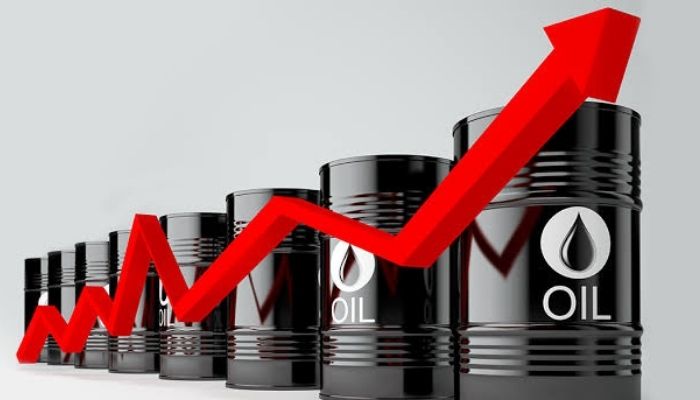
Brent crude climbed above $100 per barrel on Thursday for the first time in nearly two months after Houthi attacks on Saudi oil tankers in the Red Sea intensified concerns that the Middle East conflict is threatening another critical global energy shipping route.
In midday European trading, Brent crude rose 6.57 percent to $100.30 per barrel, while the US benchmark, West Texas Intermediate (WTI), gained 5.31 percent to $91.44 per barrel, extending oil’s rally to a fifth consecutive trading session.
The latest surge has lifted crude prices by nearly 20 percent since hostilities between the United States and Iran escalated two weeks ago, adding a sizeable geopolitical risk premium to the market.
The rally followed reports that the Iran-backed Houthi movement attacked two Saudi oil tankers near the Bab el-Mandeb Strait, one of the world’s most strategic oil transit routes linking the Red Sea to the Gulf of Aden.
According to reports, one tanker was carrying Saudi crude destined for India, while the other was transporting oil to China.
“We targeted two Saudi oil tankers, named Encelia and Layla, for their violation of the blockade decision issued by the armed forces,” Houthi military spokesman Yahya Saree said.
The attacks prompted at least two commercial tankers to reverse course before entering the Bab el-Mandeb Strait, raising fears that shipping companies could increasingly avoid the route.
The Bab el-Mandeb has become a critical export corridor for Saudi Arabia after the kingdom redirected more than 70 percent of crude exports that previously transited the Strait of Hormuz to the Red Sea port of Yanbu amid rising tensions in the Gulf.
A prolonged disruption at the Bab el-Mandeb would therefore undermine one of the few alternative routes available to Gulf producers seeking to bypass Hormuz, heightening concerns over global oil supplies.
“The fact that the Houthi rebels reportedly attacked two Saudi tankers near the Bab el-Mandeb Strait outside Yemen has increased concerns about escalation,” Maya Westerlund, Strategy and Macro Research Intern at Sweden’s SEB, said in a market note.
Analysts said the latest attacks suggest the conflict is expanding beyond the Strait of Hormuz, exposing multiple energy corridors to disruption and increasing the risk of supply shortages.

Join BusinessDay whatsapp Channel, to stay up to date
Open In Whatsapp