Nigeria’s electricity challenge is not a story of a country without reforms. It is a story of a sector that has undergone significant transformation over the past two decades yet continues to grapple to address one persistent development challenge: access to reliable electricity.
From the Electric Power Sector Reform Act of 2005 to the privatisation of generation and distribution assets in 2013, Nigeria’s power sector has moved through several important phases designed to improve efficiency, attract private investment and strengthen electricity delivery. However, the experience of the past two decades has demonstrated that solving this challenge requires more than expanding generation capacity.
The real challenge lies in building an interconnected ecosystem capable of regulatory certainty, investment frameworks and the technical capacity to develop and sustain large-scale projects. The Electricity Act 2023 represents the most significant attempt yet to address this challenge. By decentralising key aspects of electricity regulation and creating opportunities for states, private investors, and subnational entities to participate more actively in the power sector. Importantly, it enables local actors and state governments to participate directly in electricity generation and distribution, creating a clearer pathway for tailored solutions designed to expand access to unserved and underserved communities.
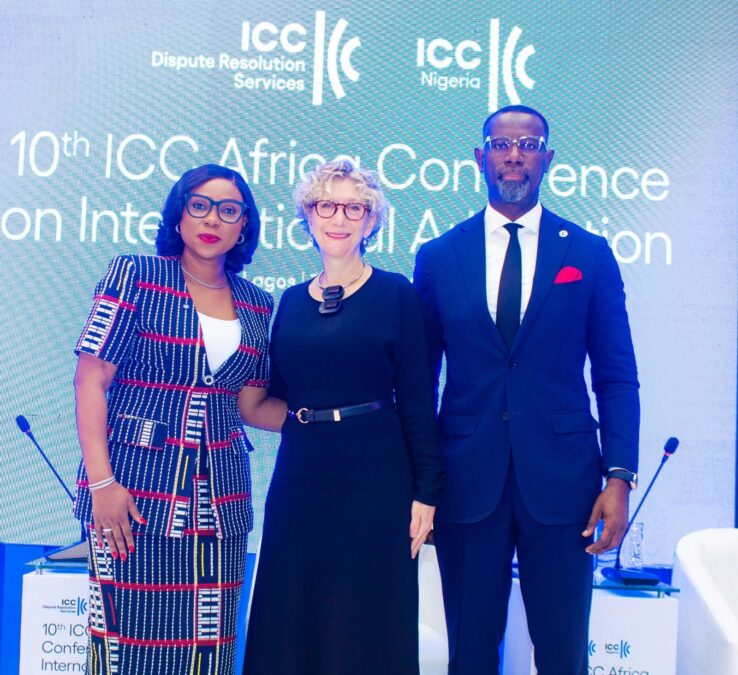
This formed a key undercurrent at the 10th ICC Africa Conference on International Arbitration. In a fireside chat, conversations centred on a defining issue for Africa’s next growth phase. The message was consistent: Africa’s investment challenge is no longer about opportunity discovery; it is about confidence in systems. This distinction is particularly critical for the energy sector, where attracting the scale of investment required to develop infrastructure depends on clear regulatory frameworks, predictable market structures and institutions that can support long-term participation.
What Experience Has Taught Us
At Genesis Energy Group, our work has always been guided by a simple but defining principle: energy is life. While operating as an oil trading business in the early 2000s, we began asking a fundamental question: what truly energises economies and transforms societies? One reality became clear – without access to modern electricity, sustainable economic growth and social development remain constrained.
Since 2005, we have worked on power projects designed to address specific energy needs across different sectors and communities. These experiences have provided valuable insights into the realities of delivering reliable power in Nigeria’s operating environment. The emergence of the Electricity Act 2023 presents an opportunity to build on these experiences. As states explore new electricity markets and businesses seek more reliable energy solutions, there is a need for collaboration between government, regulators, investors and experienced energy companies to ensure that reform translates into measurable outcomes.
A practical example is our recent partnership with the Katsina State Government through a multi-phase energy infrastructure programme that includes solar photovoltaic generation, battery energy storage systems and complementary energy solutions. Through this partnership, two grid-connected solar farms have been commissioned, alongside the solarisation of General Hospital Katsina, which is now powered by a combination of solar photovoltaic generation and battery energy storage systems.
Projects such as Katsina demonstrate why the Electricity Act matters. The future of electricity access in Nigeria is unlikely to come from a single national solution. It will come from a combination of grid expansion, decentralised generation, renewable energy deployment, energy storage technologies and state-led initiatives tailored to local realities. By creating a framework for greater state participation, the Act provides a pathway for these approaches to coexist and scale.
Importantly, Katsina is not an isolated case. It reflects our broader execution footprint across Africa, where our focus has consistently been on deploying first-of-its-kind energy solutions at scale such as: the first LPG-to-power energy solution in Mali, the first independent power project in Benin Republic currently under implementation, the first micro LNG-to-power solution in Africa, the first and largest hydro-powered residential mini-grid deployment in Banana Island, Lagos Nigeria, and the first African energy company to receive an unconditional guarantee from the United States government.
In 2019, we further reinforced this trajectory by issuing a $36.1 million clean energy infrastructure bond in Nigeria, backed by InfraCredit and the U.S. International Development Finance Corporation. At the time, it was the largest clean energy infrastructure bond in West Africa and demonstrated the growing role that innovative financing structures can play in supporting energy development.
The momentum has continued. Today, Genesis has more than 300MW of operational and implementation assets, over 800MW of contracted capacity and a development pipeline exceeding 4GW across eleven African countries. In 2024, the company further expanded its regional footprint through a strategic partnership with the West African Development Bank (BOAD) to develop more than 1GW of clean energy infrastructure across Francophone West Africa. These developments underscore an important reality: attracting investment into Africa’s energy sector increasingly depends on experienced developers with the technical, financial and execution capabilities to deliver projects at scale.
As Nigeria continues its pursuit of economic transformation, access to dependable electricity will remain a defining factor. The future of the sector will depend not only on new policies and investments but also on the experience and expertise of organisations that have spent years developing practical solutions to the country’s power challenges. In this regard, companies like Genesis Energy Group represent more than participants in an evolving market; they represent evidence that many of the answers to Nigeria’s energy future are already being built today.
– Akinwole II Omoboriowo, Chairman and CEO, Genesis Energy Group


Join BusinessDay whatsapp Channel, to stay up to date
Open In Whatsapp