The United Arab Emirates will formally withdraw from the OPEC+ alliance effective May 1, a seismic shift that signals the end of an era for coordinated oil market management with implications stretching from global price stability to Nigeria’s fiscal outlook.
The decision, which follows years of simmering tension between Abu Dhabi’s aggressive production targets and the restrictive quotas of the Vienna-based alliance, represents a fundamental repositioning by the Gulf’s second-largest economy.
By decoupling from the group, the UAE is betting that its long-term financial future lies in monetising its vast natural resources before the global energy transition erodes fossil fuel demand.
The move marks a definitive victory for the “capacity-driven” camp within the Emirati leadership, led by the Abu Dhabi National Oil Co. (Adnoc). While the UAE has long been a core pillar of the alliance, its frustrations have become increasingly public as it has poured billions of dollars into upstream projects that it was then forbidden to fully utilise.
A buffer diminished
The immediate effect on the global energy balance is a significant weakening of the world’s main safety valve. Data from Rystad Energy shows that the UAE provided around 1.54 million barrels per day (bpd) of spare capacity as of February 2026, accounting for about 25 percent of the total OPEC+ buffer.
With Abu Dhabi now acting independently, the remaining OPEC+ members lose direct control over a quarter of their collective ability to respond to supply shocks.
Read also: UAE announces exit from OPEC after more than 60 years
“The UAE’s exit does not change near-term supply availability significantly, but it reflects a longer-term shift toward greater production flexibility,” said Priya Walia, vice president of Commodity Markets at Rystad Energy. “By moving outside the quota framework, it reshapes future expectations and weakens OPEC+’s control over spare capacity.”
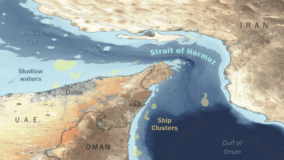
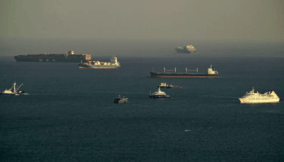
For a market already nervous due to ongoing volatility in the Strait of Hormuz, the lack of a coordinated response adds new uncertainty.
While the UAE is unlikely to flood the market right away, mainly because of current logistical limits from regional conflicts, the “policy floor” that has historically stabilized prices is now structurally compromised.
The Adnoc factor
The reason for this split lies in the scale of the UAE’s investment plans. Adnoc is currently carrying out several major “brownfield” expansions that clash with the OPEC+ framework.
Upcoming major projects include the Upper Zakum Expansion 2, expected to add 200,000 bpd this year, and nearly 220,000 bpd from the Bu Hasa and South East Bab fields by 2028. With a target of reaching 5 million bpd of capacity by 2027, and aiming for 6 million bpd after that, the UAE’s leadership viewed the existing quota system as a limitation on its business goals.
“The UAE has consistently operated below its installed capacity for years,” noted Rystad analysts. They pointed out a persistent gap that even recent quota adjustments have not filled. Before recent regional disruptions, the UAE was producing 3.4 million bpd, a number well below its potential.
Implications for Nigeria and the “OPEC-7”
For other major producers like Nigeria, the UAE’s exit creates a riskier environment. With the “OPEC+ 8” shrinking to an “OPEC+ 7,” the group’s share of global crude and condensate supply is expected to drop by roughly 4 percentage points.
Muda Yusuf, chief executive of the Centre for the Promotion of Private Enterprise, noted that the UAE’s departure could be a negative development for Nigeria.
“The goal of OPEC is to ensure we have good prices so we can get good revenue. Now that a major member has left, their ability to influence prices has weakened,” Yusuf said.
He warned of a “double tragedy” if Nigeria does not increase output while prices drop. “If prices are weak because OPEC is now weaker and production is still low, that is a double tragedy for the country,” he said.
Nigeria has often struggled to meet its own production targets due to infrastructure issues and security challenges. Now it finds itself in a group with less collective power.
The UAE’s exit raises uncomfortable questions about the alliance’s future: if a core, low-cost producer sees the group’s restrictions as too burdensome, other members might reconsider their participation.
“The current talk about a possible UAE exit reveals a deeper issue: growing tension between expanded production capacity and quota restrictions within OPEC+,” said Wumi Iledare, professor emeritus of petroleum economics, in a note titled “OPEC Cohesion Under Strain: A Note for Nigeria.”
He added, “If this trend continues, OPEC’s ability to enforce discipline may weaken gradually, not suddenly, but through increasing non-compliance.”
The March 2026 compliance data show how distorted the landscape has become. Total OPEC+ output fell to 27.68 million bpd, nearly 9 million bpd below its monthly quota. While much of this decline came from war-related disruptions rather than voluntary restraint, the lack of unity makes it harder for the group to project strength to the markets.
“The risk is twofold,” Iledare warned. “First, there could be downward pressure on oil prices in a less coordinated market. Second, and more importantly, our own underperformance, production shortfalls, high costs, and leakages limit our ability to benefit even when prices are favorable.”


Join BusinessDay whatsapp Channel, to stay up to date
Open In Whatsapp