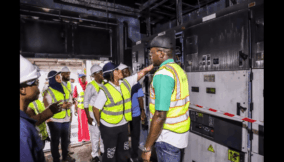
…Build 32.8MW of captive generation
Nigeria’s universities are abandoning the national grid and joining manufacturers, steel companies and government agencies in building their own power plants as the country’s electricity crisis deepens and confidence in public power supply continues to erode.
Data from the Nigerian Electricity Regulatory Commission (NERC) showed that tertiary institutions accounted for 32.8 megawatts (MW), or more than 80 percent, of the 40.82MW of captive generation capacity approved by the regulator in the first quarter of 2026, making universities the largest drivers of self-generation during the period.
The commission issued seven captive generation permits in the quarter, six of which went to universities and university-affiliated institutions, underscoring the growing shift by large electricity consumers away from reliance on the national grid.
The University of Port Harcourt and the University of Port Harcourt Teaching Hospital secured the largest approvals at 10.7MW each, accounting for more than half of the captive generation capacity approved in the quarter.
Other beneficiaries include Modibbo Adama University, Yola, which received approval for a 5MW plant, while the Federal University of Uyo, Federal University Dutsin-Ma and Federal University of Lafia secured permits for 2.9MW, 1.9MW and 1.6MW, respectively.
The only private sector company on the list was Nigerian Breweries, which obtained approval for an 8.02MW captive power facility for its Kaduna operations.
The latest approvals suggest universities are following a path already taken by some of Nigeria’s biggest industrial and commercial power users.
In the fourth quarter of 2025, at least 11 major organisations secured captive generation permits with a combined installed capacity of 130.19MW, reflecting a broadening flight from the national grid by businesses facing rising production costs and unreliable electricity supply.
The companies included Abuja Steel Mill Nigeria Limited, Yongxing Steel Company Limited, Standard Plastic Industry Nigeria Limited, Watson’s Bakery Nigeria Limited, Nigerian Spanish Engineering Limited, Vinylon Footwear Industry Limited and Superior Eva Footwear Nigeria Limited.
Perhaps more striking was the appearance of the Federal Inland Revenue Service (FIRS), now the Nigeria Revenue Service (NRS), among the permit holders after the agency secured approval for a 6.08MW captive plant for its Abuja headquarters.
“When you see a tax authority plugging itself off the grid, that tells you everything,” an energy consultant advising multinational firms in West Africa said. “It is no longer a private sector problem. It is a national productivity problem.”
The migration of universities into captive generation comes as operational performance across the electricity sector weakened during the quarter.
NERC reported that average available generation capacity fell by 17.45 percent to 4,457.96MW in the first quarter of 2026 from 5,400.38MW in the preceding quarter, while average hourly generation declined by 7.64 percent to 4,112.72 MWh/h from 4,452.71 MWh/h. Total electricity generation also dropped by 9.64 percent to 8,883.47GWh.
The national grid suffered two disturbances during the period, including a total system collapse on January 23 and a partial collapse on January 27, further disrupting supply to homes, businesses and institutions nationwide.
For universities, where uninterrupted electricity is required to power laboratories, research facilities, digital learning infrastructure, student hostels and teaching hospitals, dependence on the grid is increasingly becoming difficult to sustain.
Adetayo Adegbemle, executive director of PowerUp Nigeria, said the growing exit of large consumers from the grid could create new challenges for the electricity market.
“I have said repeatedly that if we truly want a stable and affordable grid, a major priority should be bringing these companies back,” Adegbemle said.
According to him, the departure of large industrial and institutional customers weakens demand stability and erodes the revenue base needed to support investment across the electricity value chain.
Industry analysts said the trend reflects a broader restructuring of Nigeria’s electricity market, where energy security is becoming more important than access to public electricity supply.
“Every permit you see in that NERC register represents an organisation that has given up waiting,” a Lagos-based power sector analyst said. “They have done the numbers. The cost of self-generation increasingly makes more economic sense than depending on a grid that cannot guarantee a reliable supply.”
The commission disclosed that it issued a total of 48 licences, permits and certifications in the first quarter, including one embedded generation licence, six mini-grid permits and seven captive generation permits.


Join BusinessDay whatsapp Channel, to stay up to date
Open In Whatsapp