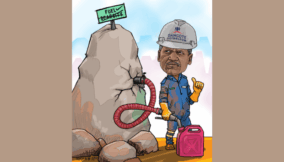
Nigeria has granted Shell Plc a production-linked tax credit for a deepwater oil project, an incentive that may be extended to other major oil companies as Africa’s biggest crude producer works to reverse years of declining output, according to people familiar with the matter.
Terms approved by President Bola Tinubu to push the Bonga Southwest Aparo project toward a final investment decision give Shell and its partners a rebate of $11.50 a barrel of crude produced, said the people, who asked not to be identified because the information isn’t public. That’s more than double the standard rate.
The sign-off clears one of the last hurdles for a project that has been in limbo for close to two decades. Nigeria’s state oil company, NNPC Ltd., said the approval marks the first final investment decision on a Nigerian deepwater production-sharing contract asset since 2008, a gap that has weighed on the country’s efforts to keep pace with deepwater rivals such as Angola, Brazil and Guyana.
The fiscal package Tinubu signed off on also resolves a dispute-settlement agreement dating to 2021, removing another obstacle that had kept Shell and its partners from committing capital to the field, located roughly 120 kilometres off Nigeria’s coast.
Bonga Southwest Aparo is expected to be a significant addition to Nigeria’s production base. NNPC has said the project could draw about $20 billion in foreign direct investment and, once online, deliver roughly 150,000 barrels of oil a day along with about 140 million cubic feet of gas daily, while supporting more than 5,000 direct and indirect jobs.
Nigeria has struggled for years to arrest a decline in oil output as ageing fields mature, theft and pipeline vandalism disrupt supply, and international majors redirect deepwater budgets toward faster-payback basins elsewhere. Output has recovered somewhat under Tinubu, who has pushed the state oil company and revenue authorities to sweeten terms for investors willing to commit to new offshore developments.
The negotiations that produced the enhanced credit involved NNPC as concessionaire, the Nigeria Revenue Service, presidential energy adviser Olu Verheijen, and Shell Chief Executive Officer Wael Sawan, following a courtesy visit by Sawan to the presidential villa that people close to the talks said helped accelerate months of technical and commercial back-and-forth.
Bayo Ojulari, group CEO of NNPC, cast the approval as a breakthrough after years of stasis. “For nearly two decades, the Bonga Southwest project remained stalled,” he said, crediting the administration’s push and the company’s advocacy for unlocking the deal.
Extending the $11.50-a-barrel rebate beyond Bonga Southwest Aparo would mark a broader shift in how Nigeria courts deepwater capital.
The standard production tax credit under the country’s petroleum industry law is less than half that amount, meaning other operators, including majors such as ExxonMobil, Chevron and TotalEnergies, all of which hold deepwater acreage off Nigeria, could seek similar terms for their own stalled or prospective projects.
That prospect underscores the trade-off facing Tinubu’s government: sacrificing near-term revenue per barrel in exchange for unlocking investment that has sat on the sidelines for years. Nigeria’s 2027 budget assumptions already lean on higher output to offset a heavy debt-service burden, and officials have signalled they view new deepwater final investment decisions as central to hitting production targets that have repeatedly slipped in recent years.
Shell didn’t immediately respond to a request for comment. NNPC representatives referred questions to public statements on the approval.


Join BusinessDay whatsapp Channel, to stay up to date
Open In Whatsapp