It is safe to assume that the fact that we need to balance theories with practice is common knowledge. But what strikes me the most is why this still falls under the category of one of those things we know we should do but never really do. We know we should not rely solely on theories, because they are never enough, because they only mirror real-world experiences to the extent to which their proponents understood real occurrences at a particular time. Why, then, do Nigerian universities teach only theories?
The world is a very complex place. To understand it would require a complex set of solutions, not the kind of wishy-washy education system we have in Nigeria today (this does not in any way discount the efforts of private universities and the individual efforts of some lecturers). We are not unfamiliar with stories of lazy lecturers who like to assume that they are gods, most of them regurgitating ancient knowledge that their grandfathers taught their fathers who taught them, and disoriented students scrambling for grades, for certificates, and then graduating without a single marketable skill that employers are eager to pay for.
This is stale news, true. We know too well what the current education system is capable of doing to Nigerian graduates. What must be the issue then? If we know that this approach to education is detrimental to us, to society, why then have we carried on with it? Why do our professors seem adamant about the prospect of challenging the status quo? Why do our policy makers seem to know what should be done but lack the will to do it?
I remember now my undergraduate years, when we studied Economics without really discussing the Nigerian economy. We would talk about how corrupt our politicians were, how greedy, but there was never a day when we brought Nigeria’s Budget to class – whether hard or soft copy – and carefully analysed it. Of course, we were taught about the budget – definitions, types, components of a budget, things that a secondary school student can sit down at home and get into his head.
We talked about the Stock Exchange in theory, but never as though there was something called the Nigerian Stock Exchange where stocks are traded and certain indices are used to monitor the movement of the stock market. We talked about a lot of things in abstract, as though they were castles in the air.
Imagine that education was more practice-oriented, more balanced. Imagine that education was more focused on building skill sets, rather than on merely passing examinations and acquiring certificates. What balanced graduates we must have!
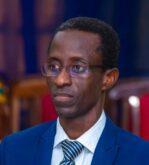
Recently, as part of the requirements of one of the courses in my Masters Programme (the course is called Business Journalism), we invited a special guest to a television-style interview, and this guest was special in every way – the Executive Director/Chief Executive Officer of the Nigerian Export Promotion Council (NEPC), Olusegun Awolowo.
For the very first time in my life, I imagined what it would feel like to be a business reporter, the kinds of questions I should ask, the kinds of information I should look out for. The interview, which served to balance what we learnt in class about business reporting with real life practice, opened up my mind in many ways and filled me with a lot of ideas.
My group for another course, Organisational Communication, turned in a report on Coca-Cola Nigeria. To write that report, the Facilitator of the Course, arranged for all of us to visit the headquarters of Coca-Cola at Ikoyi and talk with the Director of Public Affairs and Communication, Clem Ugorji. It was not the normal kind of excursion where you walk around office spaces aimlessly, admiring building and architecture. We went there armed with questions (the Facilitator had already indicated things he wanted us to look out for).
The aim of the visit was to bridge the gap between theoretical knowledge and practice. We had learnt about strategic communication, organizational structure, culture, decision-making, conflict communication and management, crisis communication, et cetera. It was time to see how those elements played out in real organizations, and visiting Coca-Cola and talking with the Director of Communications was the hallmark of the learning experience for that course. (In our report, we discussed Strengths, Weaknesses, Opportunities, and Threats (SWOT) of the organization’s communication system, and hopefully, our recommendations will be useful in developing a new communication strategy.)
What does a Master’s programme like this demand from you? Well, it forces you to see things differently. And we must do things differently, especially as the world is constantly evolving in response to technological and demographic changes.
Yes, theories are important. They are the foundational elements. But at some point in the learning process – and this must be planned into the system – we need to move a little bit away from theories to the real world. We need to ask ourselves: how does this apply in a real organization, in an economy, in the society? How does everything connect in the grand scheme of things?
Why do Nigerian parents send their children to schools abroad? Why do young people start looking outside after their Bachelor’s degree? Why do our people keep running to other countries for education? In fact, someone I know said that any country at all is better than Nigeria. Why so? What are we looking for in other education systems that we cannot find in Nigeria’s education system? The answers and solutions to these questions lie in the palms of our hands.
Munachim Amah
Munachim Amah is a Master’s student at the School of Media and Communication, Pan-Atlantic University, Lagos. He worked as a research assistant at the Lagos Business School and has had his writings published on several platforms. He is an alumnus of the 2016 Farafina Trust Creative Writing Workshop organized by Chimamanda Ngozi Adichie.

Join BusinessDay whatsapp Channel, to stay up to date
Open In Whatsapp