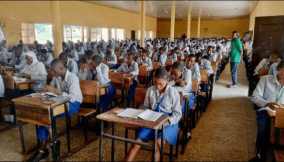
Nigeria’s worsening cost-of-living crisis is increasingly shaping where families believe their children can access decent education. A new SBM Intelligence report found that affordability, not prestige, is becoming the defining factor in school quality perceptions across surveyed states.
The report, which surveyed residents across eight states and the Federal Capital Territory, found that families rated Kano, Abuja and Rivers highest for schools considered “realistically affordable”, while Lagos underperformed despite its reputation as Nigeria’s education hub because many quality schools remain beyond the reach of average households.
The findings come as inflation, rising housing costs, transport expenses and broader economic pressures continue to squeeze household budgets, forcing parents to prioritise affordability and proximity over elite education options.
Gift Osikoya, a teacher, affirmed that the rising cost of living in Nigeria is greatly affecting children’s access to quality education.
“Many parents today are struggling to survive financially, so affordability has become their major concern when choosing schools. In many cases, parents are not intentionally rejecting quality education; they are simply trying to balance quality with what they can afford.
“Trading quality for affordability will affect children negatively, especially when schools lack qualified teachers, learning materials, good facilities, and proper supervision. Quality education plays a vital role in shaping a child’s future, values, confidence, and academic growth,” she said.
The economic hardship in the country has placed many families under serious pressure. Even schools are struggling with high operational costs, which leads to increased school fees.
Mercy Nnokam, a school owner in Port Harcourt, similarly said the current economy is reshaping everything for the low-income earners.
“So many parents can’t afford textbooks and exercise books. They opt for the relevant ones and ask their children to use a note for two subjects. For schools that have customised notebooks, the parents are forced to buy them.
“Hence, many parents would prefer cheaper school even with less quality just to have their children in school. Some parents believe a child would still do better in the university no matter the school they attended,” she noted.
The SBM report, titled “Where Nigerian Families Actually Thrive”, examined quality-of-life indicators affecting families, including school quality, childcare access, healthcare, safety, electricity supply and affordability across Abuja, Anambra, Bauchi, Cross River, Kano, Lagos, Oyo and Rivers states.
Its findings suggest that for many Nigerian households, especially amid persistent inflationary pressures, access to quality education is increasingly tied not to the presence of elite schools, but to whether ordinary families can realistically afford decent options close to where they live.
“Kano scores 3.61 on school quality, and Abuja 3.55. Rivers (3.53) also performs strongly,” the report stated, noting that respondents in those locations were more likely to describe affordable schools available to them as “good” or “excellent”.
Lagos provides quality but inaccessible education for the masses
The report’s most striking finding may, however, be Lagos’s relatively weak performance on school quality despite its concentration of prestigious private institutions.
“Lagos scores 2.92, below the midpoint. The key qualifier in the question is ‘realistically affordable’. The schools that drive Lagos’s reputation for education are not accessible to most families,” SBM stated.
That affordability crisis extends beyond school fees. The report found that Lagos ranked among the least affordable places for families to live, with housing and daily living costs consuming increasing portions of household income.
“In Lagos, housing costs alone consume most family budgets,” the report stated, adding that rent inflation and rising living expenses are forcing many families to rethink where they can sustainably raise children.
According to Nigeria Property Centre report, the average price of three bedroom flats for rent in Surulere, Lagos is N5million per annum. The prices vary by location, size and features and range from N2.5 million to N10 million per annum.
In the face of new fuel pump price hike from N890 to N1,400 per litre of petrol, transportation in various routes have increased by 20 to 50 percent. For instance, bus fare from Ojuelegba to Yaba is now N200, as against N100. From Jakande Gate to CMS costs N1,700, as against N1,300, and Oshodi to Ikotun cost N700 as against N400.
Cooking gas sales for N2,000 per Kilo, as against N1,100 it was in the beginning of the year.
While some top international schools in Lagos charge millions of naira annually, even mid-range private schools increasingly demand fees far beyond the reach of average wage earners already battling food inflation, transport costs and rising utility bills.
The report also highlighted the growing importance of childcare and family support systems in determining children’s wellbeing, especially as economic conditions worsen.
Kano leads on childcare access
Kano emerged strongly on childcare access and safety, with researchers linking this partly to stronger community support systems and relatively lower living costs.
This positive report on Kano is coming at the heels of the state topping the north-west region in the overall education allocation of 2026 budgets; Kano is the only state to exceed Nigeria’s prescribed 26 percent education benchmark.
BusinessDay checks show that the state also budgeted for multiple Almajiri projects and programmes, including school renovation, feeding initiatives, and teacher training, with a combined allocation of N2.81 billion, in line with the National Policy on Enhancement of Almajiri Education (2025).
Kano State’s 2026 budget also confirms education to be a priority with 31percent allocation of the gross budget, well above the UNESCO’s recommended benchmark of 15 to 20 percent of total public expenditure on education.
SBM noted in the report that Abuja, despite ranking highly on income levels, still suffers from affordability pressures that reduce the quality of life for many households.
“High income does not guarantee a better life,” it stated, pointing to rent, transport and utility costs that increasingly erode disposable income for urban families.
Recall that in 2025, over 700 primary schools were shut down in Abuja as teachers went on strike for three months. There has, however, been a massive infrastructural overhauls in public schools since early 2026, even as the labour disputes were being addressed.
The report findings come at a time when many Nigerian parents are facing difficult trade-offs between education quality, housing, transport and proximity to work, particularly in major cities where inflation continues to outpace income growth.
The report warned that these pressures risk deepening inequality in access to quality education, with children from middle- and lower-income households increasingly excluded from schools considered high-performing.
A bigger problem beyond finding quality schools
Cross River emerged as the weakest-performing state in the survey on education and broader family welfare indicators. SBM linked the state’s poor education outcomes to deteriorating school infrastructure, weak public services and broader governance failures.
The report said the state ranked last or near-last on most quality-of-life measures assessed, including education, healthcare, safety and infrastructure.
Reports show that as of 2025, Cross River’s WAEC ranking had tumbled into the bottom ten nationally, while public primary schools reportedly became ‘poultry shelters, leaking roofs, no chairs, no chalk’. Several public commentaries also alleged that the state’s free education policy exists only on faded billboards while parents pay ‘voluntary’ levies that rival private school fees.
Analysts say the broader implication of the findings is that Nigeria’s education crisis is no longer only about school enrolment, but increasingly about whether families can economically sustain access to decent learning environments for their children.
For many households, especially in urban centres, the challenge is no longer simply finding schools, but finding schools they can afford without sacrificing housing, feeding or transportation needs.

Join BusinessDay whatsapp Channel, to stay up to date
Open In Whatsapp