The federal government has unveiled a new education policy aimed at curbing Nigeria’s surging out-of-school children crisis, with the introduction of Alternative Learning Pathways to expand access to education for children, youth, and adults across the country.
The initiative is expected to strengthen the delivery of basic education and reduce the number of children currently excluded from the classroom.
John Edeh, the director of literacy and development, National Commission for Mass Literacy, Adult and Non-Formal Education (NMEC), made this known in Abuja.
He described the initiative as a major reform capable of significantly reducing the country’s large population of out-of-school youths while also addressing unemployment, insecurity, banditry, and other social challenges linked to illiteracy.
“The policy is simply addressing some of the main areas of mainstreaming. It talks about the certification, how a learner can easily migrate or mainstream into another level.
“The whole vision is to address the large number of out-of-school youth and children significantly,” Edeh said.
In addition, he said, “It will also ensure that the people are not only provided with education, but also empower them to reduce unemployment, insecurity, banditry, and all forms of vices in the country.
“The policy is already operational, and stakeholders in the literacy and non-formal education sector must ensure strict compliance with its provisions.”
Edeh emphasised that the policy, recently unveiled by Tunji Alausa, the minister of education, was designed to close long-standing gaps within Nigeria’s non-formal education system.
The commission’s boss reiterated that the policy focuses on mainstreaming learners, improving certification processes, and creating flexible pathways that allow beneficiaries to transition easily into higher education or vocational opportunities.
Besides, he noted that the policy compresses the learning period, enabling individuals who missed formal schooling to complete equivalent education within three to four years rather than spending over a decade in conventional school settings.
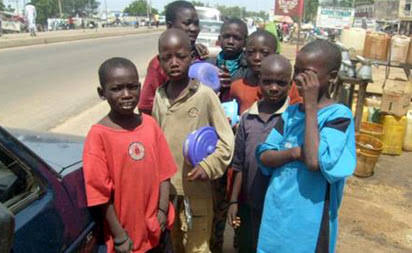
According to a UNICEF report published in 2024, Nigeria has the highest tally of out-of-school children globally.
The report stated that no fewer than 10.2 million children are not in school at the primary level, while 8.1 million others are similarly absent at the junior secondary school level.
The dataset indicated that 66 percent of this huge figure is from the North-West and North-East geopolitical regions.

Join BusinessDay whatsapp Channel, to stay up to date
Open In Whatsapp