In Nigeria, conversations about men’s mental health remain largely unspoken. Cultural expectations continue to reward stoicism, emotional restraint, and silent endurance, leaving many boys and young men without the language or the permission to express vulnerability. While the consequences of this silence are widely felt, they are rarely addressed with urgency.
Yet change is emerging in unexpected spaces.
One such space is pageantry.
As the Misters of Nigeria competition unfolds, Adetuwo Temitope Alex, representing Oyo State, is using the platform not merely as a showcase of physical presence, but as a vehicle for advocacy, leadership, and cultural re-examination. His participation signals a broader shift in how masculinity, vulnerability, and public influence can coexist in contemporary African society.
Born in Lagos in 1997 and raised within a culturally rooted Yoruba family, Temitope’s life reflects the intersections of tradition and modernity. He is professionally trained as a microbiologist and works as a procurement and supply-chain specialist in Nigeria’s oil and gas sector, an industry governed by precision, structure, and high-stakes decision-making.

Alongside this analytical career, Temitope has cultivated a deep commitment to creative expression and storytelling. Where his professional environment demands control and certainty, his creative pursuits allow reflection, emotional exploration, and narrative clarity. This duality, logic balanced with emotional intelligence, has become central to his public identity and advocacy.
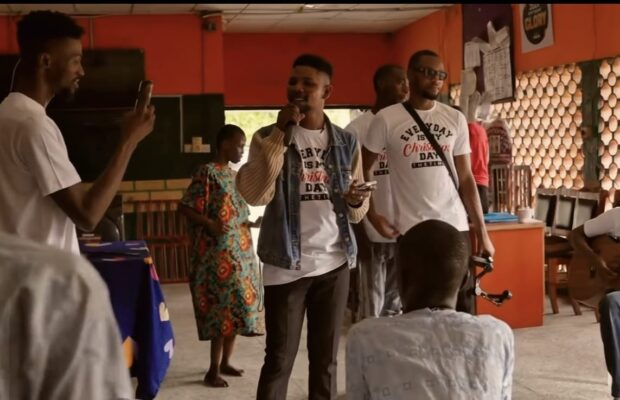
In 2024, Temitope founded Men Can Be Vulnerable, a mental health and mentorship initiative designed to support boys and young men through structured conversations, mentorship programmes, and community engagement. The initiative responds to a critical but often overlooked reality: many young men are navigating adulthood without safe spaces to articulate emotional challenges or access guidance.
In Nigeria, social expectations often condition men to suppress vulnerability, while mental health resources remain limited and unevenly distributed. Men Can Be Vulnerable addresses this gap by reframing emotional awareness as strength and mentorship as a fundamental pillar of personal development.
Through targeted outreach, partnerships, and community-based engagements, the initiative focuses on emotional literacy, confidence-building, and positive role modelling. Its approach is preventative rather than reactive, emphasising direction, self-understanding, and long-term wellbeing over crisis intervention alone.
“Many young men don’t lack ambition or intelligence — they lack safe spaces,” Temitope notes.
“Sometimes, access to honest conversation and guidance is enough to change the direction of a life.”
This philosophy shapes his presence within Misters of Nigeria.
For Temitope, pageantry is not defined by aesthetics alone, but by representation and responsibility. The national platform offers visibility, and with visibility comes the opportunity to influence cultural narratives. By participating, he is positioning pageantry as a space where professional excellence, cultural identity, emotional intelligence, and social impact intersect.
Representing Oyo State, he draws on Yoruba values that emphasise community, mentorship, and collective responsibility. His interpretation of masculinity prioritises service over dominance and discipline alongside empathy, offering a broader and more inclusive model of leadership.
In a cultural context where men are often encouraged to endure rather than express, Temitope’s journey raises a resonant question for a global audience: what becomes possible when visibility is used not only to impress, but to advocate?
As the competition progresses, Adetuwo Temitope Alex stands out not solely for composure or presence, but for purpose. His story illustrates how a new generation of African men are redefining leadership across corporate, creative, and social-impact spaces, and how platforms traditionally associated with image can be repurposed to advance conversations that matter.
Ultimately, his message is both simple and profound: strength is not diminished by vulnerability, and leadership is most powerful when it leaves room for humanity.

Join BusinessDay whatsapp Channel, to stay up to date
Open In Whatsapp