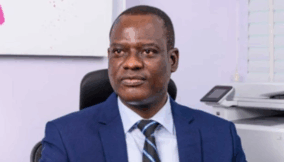
Zaviyalov Dmitry is the Managing Director of the Aluminium Smelter Company of Nigeria (ALSCON) in Ikot Abasi, Akwa Ibom State. The plant is managed by RUSAL, a Russian firm reputed to be the world leader in Aluminium production. It took over ALSCON in 2007 and has rehabilitated the plant but many issues have remained unresolved which led to the smelter being shut in 2013. In this interview with ANIEFIOK UDONQUAK conducted in the company’s head office, Dmitry spoke about conditions that should be in place before Nigeria’s only smelter can return to full operations and other issues. Excerpts.
How would you assess the operating environment of the aluminium industry in Nigeria
Nigeria is Africa’s biggest economy with Gross Domestic Product (GDP) in 2014 estimated at US$ 479 billion. This country has a tremendous growth potential. Unfortunately, despite strong, I would even say fundamental backgrounds for the economy growth, inadequate level of infrastructure or sometimes it’s total absence, an inconsistent regulatory environment, a slow and ineffective judicial system, unreliable dispute resolution mechanisms, as well as insecurity do not allow Nigeria to fully realize its huge economic potential. ALSCON, the only aluminium smelter in Nigeria, has faced these obstacles through the years of its operation. As a result, we had to suspend aluminium production and currently the smelter remains idle. Having said this, I would reiterate that Nigeria has all the potentials for full economic growth. We only have to remove all the obstacles and make the environment conducive for business to grow.
What prospects should RUSAL look forward to in the industry?
The Nigerian economy has been growing at a rapid rate of 6-8% per annum, and the medium-term outlook for Nigeria is good. This means that in Nigeria the demand for aluminium will continue to grow, and your country will constantly face a shortage of aluminium on the domestic market. RUSAL took over ALSCON in 2007. The smelter was dormant for almost 10 years. Aluminium companies in Nigeria had to import their primary aluminium. However, the coming on first stream of ALSCON in 2008 and the subsequent commencement of international and domestic sales opened a new window of opportunity for Nigerian manufacturers, some of them today obtain the remainders of primary aluminium from the ALSCON smelter in Ikot Abasi. Manufacture and sale of high-quality aluminium produced at ALSCON in Nigeria will give a good opportunity for the development of the region and the country’s economy. The local companies that provide services to the smelter are evolving. During the ALSCON’s working period of 2007-2013, about 700 local companies had mutually beneficial contracts with ALSCON; new jobs were created and the local economy strengthened while the cost of finished goods for all consumers was reduced.
In Nigeria our objective is to increase our sales in domestic market. Nigeria is a country with speedy growing economy which demands considerable quantity of aluminium. We have intention to sell more primary aluminium to Nigerian manufacturing companies so that our contribution to development of Nigerian economy could be more noticeable.
At present, RUSAL is conducting Nigerian market research. We are studying the volume of aluminium goods consumed, evaluating new demand and opportunities to produce and distribute not only the primary aluminium, but also value added products such as wire rod for the manufacture of overhead power lines, cables of different kinds and aluminium profiles..
Speaking about the prospects of industrial development in Nigeria, it should be borne in mind that today ALSCON being a part of RUSAL’s strategic asset stands as the image of Nigeria on the international aluminium market.
Your company has been around for more than eight years now and had to deal with many challenges such as irregular power supply and repeated gas shortages, is there any end insight to these challenges?
ALSCON was established in the framework of the gas flaring reduction program, and its further processing for aluminium production needs. The official motto of ALSCON at its creation was “We turn this waste to wealth”. Unfortunately, this goal could not have been achieved yet due to the lack of progress in resolving key issues with ensuring uninterrupted gas supplies to the smelter.
While the smelter was operational, numerous disruptions in gas supply (6 times) resulted in partial and several times even full suspension of operations. As a result, we suffered huge losses costing millions of US Dollars that we had to spend on remedial works and recovery of production process. In addition, the smelter incurred unquantifiable losses in man-hours since our qualified personnel couldn’t perform their duties, and the loss of other resources involved in the supply chain of raw materials for the aluminium production.
The production of aluminium requires stability – starting from the gas supply and ending with market sources. We expect that in this matter the new government of Nigeria will be in solidarity with us and take a constructive stance, supporting the activities of RUSAL in Nigeria. Endorsement of industrial companies is a common practice around the world which is due firstly to the interest of the states themselves in the development of production.
The London Court of Industrial Arbitration (LCIA) ruled in favour of RUSAL assuming ownership of ALSCON, what is delaying the resumption of operations?
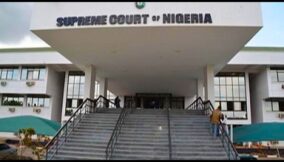
Indeed, the LCIA confirmed RUSAL’s legal right on ALSCON. We have received the appropriate decision of the LCIA. Nevertheless, we believe it is necessary to respect the national laws of the State in which RUSAL operates. So, at the moment, we are protecting our legal rights to the asset in the general procedural order, gradually, from one court authority to another moving to the highest judicial body in Nigeria – the Supreme Court. Being convinced of acting honestly and in good faith, we expect that the Supreme Court of Nigeria will take our side, just as the LCIA.
Just to remind you, on 15 October 2014, a three-member LCIA arbitral tribunal in London rendered an award in favour of UC RUSAL in its case against four Nigerian state entities: the Bureau of Public Enterprises, the Federal Government of Nigeria, the Ministry of Finance, and the National Council for Privatisation. This award is the culmination of a case brought by the Company in August 2012 against the respondents to confirm the legal status of certain shares in ALSCON that were purchased by the Company from the respondents in 2006.
In the consent award of 15 October 2014 the tribunal confirmed the parties’ agreement to the effect, inter alia, that the Share Purchase Agreement (SPA) between the Company and the respondents of 3 February 2006 (“SPA”) is valid, binding, and in full force and effect according to its terms; that under the SPA the company acquired full legal and beneficial title to the relevant ALSCON shares free and clear of all encumbrances; and that the respondents’ counterclaims were dismissed.
Production was suspended at ALSCON more than three years with the plant remaining idle ever since, how soon do you hope to restart the plant
At the moment the situation is changing for the better. That means a bright future for ALSCON. RUSAL is in talks with the Nigerian authorities to re-launch the smelter after the renewal of gas supplies. This will enable ALSCON to produce metal again and contribute to the Nigerian economy.
Another way of ALSCON’s future development is generation of electricity at ALSCON’s power plant and distributing it to the national grid in order to bring power to the local industries of Nigeria, which in turn will give impetus to the development of the Nigerian economy. The Government has committed to intensive construction of facilities vital for the transmission of electricity from the power plant to the national power grid. The Government expects it to be completed by the autumn of 2015, and then the ALSCON power plant will be able to provide light to the Nigerian towns and villages. RUSAl has a new development strategy for ALSCON for the short-term: it wants ALSCON to bring maximum benefit to the Nigerian people by supplying metal into the domestic market. This will mean that Nigerian metal will help build Nigeria’s future.
RUSAL is optimistic about the future plans because an arbitration tribunal in London upheld its legal ownership of the smelter. A similar judgment is expected from the Nigerian courts. The normal operation of the smelter will open the way to further investment in Akwa Ibom, however there should be RUSAL and the Government of Nigeria, in collaboration with the state government, who have to jointly work on the development of the Akwa Ibom state.
What is critical for the production of aluminium which should be in place for the smelter to return to operations?
For the production of aluminium, there has to be constant power supply. We are hopeful that the new government of President Muhammadu Buhari will see reasons with us and constructively help us in resolving the issues and equally support our operations in Nigeria. Currently we are in talks with the new government for possible supply of uninterrupted supply of gas to the plant. I must say again that without the help and support from government, we might be able to restart the plant.
What concrete steps has your company taken to ensure that it operates in environmentally responsible manner?
When modernizing ALSCON, RUSAL brought the very best of its in-house technologies and equipment, both in the laboratory and in the aluminium production workshops. These guaranteed that the smelter’s operations met all environmental standards. RUSAL is the leader of the global aluminium industry and we have brought our best expertise to re-launch ALSCON, including in terms of sustainability.
When Rusal took over ALSCON in 2007, it promised to deploy modern technology at ALSCON, but it does seem that nothing has changed since, what went wrong?
By the time when RUSAL purchased the smelter in 2007, the production had been idle for 10 years.Since the acquisition of ALSCON, RUSAL had been implementing a large-scale modernization to turn ALSCON into a highly efficient and modern manufacturing enterprise. Modernization took place at all the relevant departments of the smelter: pot rooms and foundry, port, power plant. The company invested in the smelter modernization more than 130 million US dollars.To launch production, RUSAL made capital repairs of all the equipment and machinery that had not been used for nearly a decade, replacing outdated equipment with modern one. New reduction cell design was introduced on the line, capital repairs of 93 pots containing hard metal were accomplished; furnaces in the foundry and electrode production workshop were repaired, as well as a pipeline 5 km in length that was designed for transportation of raw materials from the port to the storage bins was repaired. All support systems and laboratories to meet the needs of production and restored sewage treatment were modernized. As a result of these measures, within a year after the acquisition, ALSCON started to produce aluminium. To answer your question, RUSAL delivered on its promises. What went wrong we’ve already discussed: the gas supply interruptions, security issues, as well as legal challenges.
One controversy that has trailed ALSCON is the real worth of its assets, how much was the plant worth as at the time of RUSAL assumed ownership in 2007 and what is the worth now?
It’s quite a controversial question, I’m afraid I cannot give you an asset value estimate, however, I can assure you that despite all existing problems the equipment is being secured and maintained with the view to start production effectively. In case of settlement of the current obstacles to the normal operation of ALSCON, working together with our Nigerian partners we will be able to restore the production of aluminium and properly ensure the domestic demand of the Nigerian economy for aluminium. From our experience, we can equally test-run our equipment and machines to start production if these challenges are resolved together with our Nigerian partners, We can restart production and by so doing render our contributions to the growth of the economy.
ANIEFIOK UDONQUAK

Join BusinessDay whatsapp Channel, to stay up to date
Open In Whatsapp