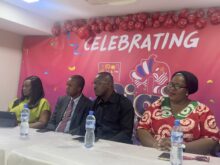
Nigeria has marched forward towards its migration from analogue to digital switchover (DSO) target of 2017 with the signing of Memorandum of Understanding (MoU) between Media Concepts International (MCI) and South Korean firm, KAON for the establishment of N197 billion ($1bn) Set Top Box (STB) manufacturing plant in Lagos.
MCI is one of the 13 indigenous companies licensed by National Broadcasting Commission (NBC)) for the manufacturing of STBs in the country. The STBs will be used to convert analogue television sets to show digital channels at the homes of millions of Nigerians. The construction of the manufacturing plant will begin in December this year and will be completed by the end of 2016 thereafter, manufacturing activities will kick off.
It is envisaged that the STB plant will employ over 1000 technical staff that will be trained on local assembly in the first instance and full manufacturing of set top boxes locally. Nigeria’s digital switchover (DSO) driven by the private sector will lead to production of set-top boxes and viewing of digital channels by TV viewers in line with the directive of the International Telecommunications Union (ITU).
Speaking at the MoU signing agreement, Babatope Agbeyo, chairman of Media Concepts International (MCI) said their technical partner, KAON of South Korea which is among the top three STB manufacturers in the world will not just bring its expertise but will ensure technology transfer in the manufacturing and maintenance of STBs as well as invest as an equity holder in the Nigerian plant.
He said it is a massive project that will redefine digital media broadcasting and fast track the digital migration process with the conversion of analogue television sets digital broadcasting. “We chose KOAN as our technical partner because it is among the top three STB manufacturers in the world with footprints in Asia, Europe, Latin America and now Africa.”
Agbeyo said KOAN recently established set top box manufacturing plant in South Africa and will be helping the digital migration processes in South Africa, Kenya, and Senegal and in addition to Nigeria. “In the less than one year, we will come back and show the STBs manufactured locally” he said.
Young Kang, sales director, Europe, Middle East and Africa region for KAON said on the long term, the manufacturing which will be located in Abule Egba, Lagos will be expanded to manufacture mobile phones, tablets, routers and television sets in the country to encourage technology transfer. “It is a really big step for Nigeria to build its STB factory.
“We are here to invest and ensure technology transfer. We are here for the long term as an investor in the plant and the Nigerian broadcasting industry. We will not limit ourselves to technology transfer but encourage local production of STBs, phones, tablets, TV sets, routers, etc. We have just opened a factory in South Africa and we will team up with MIC to open another here that will produce STBs that are full high definition (HD)” he said.
On his part, the DG of NBC, said MCI was the first STB manufacturer licences that paid its N50 million authorisation fee over a year ago and has now commenced the process for local manufacturing of set top boxes.” As you know, we missed the June 17, 2015 deadline but we have made progress since to ensure that will meet the 2017 target.
“We see a digital future driven by set top boxes that can give digital channels, internet access and enhance digital lifestyle and shorten the digital divide in Nigeria. We believe this is the future which requires bold steps. Local investors like MCI are making investments that will create technology transfer that will permeate beyond television to bring job creation and economic growth” he said.
Mba however noted that “the efforts of NBC former director generals on DSO are bearing fruit. DSO is monumental. It is a national project of how people receive digital channels. The biggest challenge we have is that Nigeria is the biggest market with 26 million TV households. We have to manage the digital migration process carefully to carry all stakeholders along,” he said.
Digital TV broadcasting offers many advantages over analogue systems for end-users, operators and regulators. Apart from increasing the number of programmes, it allows for interactive TV, electronic programme guides and mobile TV as well as transmitting image and sound in high-definition (HDTV) and ultra-high definition (UHDTV).
Digital TV requires less energy to ensure the same coverage as for analogue while decreasing overall costs of transmission. The more efficient use of radio spectrum brought on by digital TV also allows for the so-called Digital Dividend resulting from the freeing up of much-needed spectrum for use by other services, such as mobile broadband.
Digital Dividend spectrum is released when television broadcasters switch from analogue platforms to digital only platforms; part of the electromagnetic spectrum that has been used for broadcasting will be freed up because digital TV needs fewer spectrums than analogue television. After the auction, GSM operators on the 2100MHz bands will move to the new band slots.
NBC recently awarded digital pay TV broadcasting services licence to MTN Nigeria. Digital migration is expected to add N320 billion yearly to the Nigerian economy, creating over 55,000 direct and indirect jobs.
Modestus Anaesoronye

Join BusinessDay whatsapp Channel, to stay up to date
Open In Whatsapp