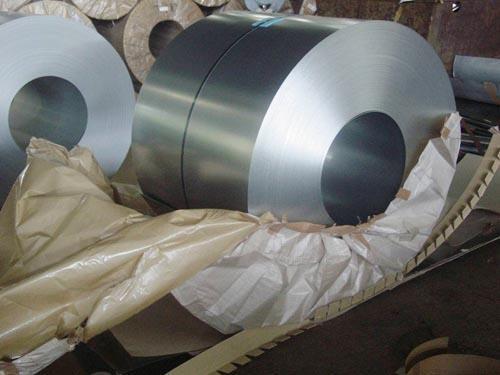
GREIF Nigeria Plc, manufacturer of steel, is grasping for air and groaning under rising production costs and administrative expenses as the economy of Africa’s most populous nation slides into recession.
The Nigerian steel maker blamed its poor performance on the high cost of doing business, a factor which is stalling companies in Nigeria from thriving and meeting their strategic goal profit maximisation.
“Lack of adequate supportive infrastructure, persistence in erratic power supply even after privatisation of the electricity distribution, rampant uplifting of FOB values by customs in import duty calculations and multiple taxation/charges by state and local government authorities have all contributed to high cost of doing business in the country,” said Louis Wentzel, Chairman and CEO of the company.
For the third quarter period ended 31 July 2016, GREIF recorded a loss after tax of N32.87 million from N12.35 million profit after tax recorded the previous year.
The loss position was due to N708.75 million total production and administrative costs swallowing all of gross profit of N115.91 million.
Cost of sales increased by 20.91 percent to N577.13 million while administrative expenses were up 66.96 percent to N131.82 million.
Apart from epileptic power supply at factories, manufacturers are hard hit by a weak consumer spending, rising inflation and foreign exchange scarcity.
Inflation rate has risen to 17.10 percent in July 2016, the highest in 11 years, according to the National Bureau of Statistics (NBS).
The economy of Nigeria declined by -2.06 percent (year-on-year) in real terms. This was lower by 1.70 percent points from the growth rate of –0.36 percent recorded in the preceding quarter, according to the statistical body. The central bank says it is the worse since 2005.
Nominal GDP growth in Manufacturing in the Second Quarter of 2016 was recorded at negative 1.02 percent (year-on-year), 1.09 percent points lower than the 0.07 percent recorded in the corresponding period of 2015, according to data from the NBS.
“This was partly as a result of higher operating costs related to higher costs of inputs and alternative energy sources,” said the data.
GREIF’s sales increased by 6.68 percent to N693.04 million.
Analysts are calling on the government to save the private steel industry where many operators are operating below 30 percent capacity. Experts attribute the underperformance of firms in the sector to high interest costs, multiple taxation and decrepit infrastructure.
Power generation is less than 5000 mega watts for a population of 170 million, which spirals the overhead costs of manufacturers as they spend more money on diesel oil. South Africa, with a population of one third of Nigeria, generates 40000 mega watts.
BALA AUGIE

Join BusinessDay whatsapp Channel, to stay up to date
Open In Whatsapp